

Union Budget 2026-27 Expectations: Key Focus on Infrastructure, Taxes, and Growth
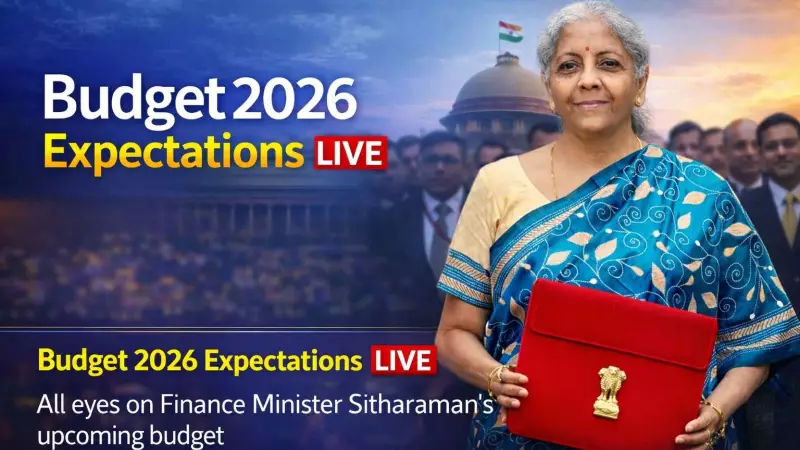
As India gears up for the Union Budget 2026-27, all eyes are on Finance Minister Nirmala Sitharaman, who will present the budget on February 1, 2026. This marks her ninth consecutive budget and the third full budget under the Modi-led NDA 3.0 government, highlighting a critical moment for economic policy amidst global and domestic challenges.
Budget Session and Economic Context
The Budget Session of Parliament is scheduled to run from January 28 to April 2, 2026, with a recess between February 13 and March 9. This session sets the stage for the government's fiscal roadmap, outlining how public expenditure will be allocated across various ministries and schemes. The Union Budget serves as a comprehensive document that assesses economic growth, details revenue-raising strategies through taxes like income and corporate tax, and non-tax sources such as PSU dividends and asset monetisation. It also specifies the borrowing required to bridge the fiscal deficit, ensuring a balanced approach to financial management.
Addressing Macro Risks: Infrastructure, Taxes, and Growth
In the lead-up to Budget 2026-27, expectations are high as the Finance Minister tackles three key macro risks: infrastructure development, tax reforms, and sustainable growth. Infrastructure remains a top priority, with investments aimed at boosting connectivity and industrial output. Tax policies are under scrutiny, with potential adjustments to stimulate economic activity and enhance revenue collection. Growth strategies are centered on revitalizing sectors like manufacturing and agriculture, which have shown mixed progress in recent years.

Agriculture and Manufacturing: Unfinished Agendas
As preparations intensify, several agriculture-related announcements from the 2025-26 Budget remain unimplemented. Last year, Sitharaman described agriculture as the first engine of growth and unveiled multiple initiatives, yet many have not translated into on-ground outcomes. This budget is expected to address these gaps with renewed focus and actionable plans.
Manufacturing will be another critical area of emphasis. India's factories have emerged as a key growth driver over the past decade, with output expanding at around 6% annually and crossing $450 billion. Despite this impressive growth, manufacturing's share of GDP has stagnated at roughly 15–17%. The upcoming budget is anticipated to introduce measures to boost this sector, potentially through incentives, policy reforms, and infrastructure support to enhance competitiveness and job creation.
Live Updates and Public Expectations
Stay tuned for live updates as the budget presentation unfolds, providing insights into how the government plans to navigate economic uncertainties and drive progress. With infrastructure, taxes, and growth at the forefront, Budget 2026-27 is poised to shape India's economic trajectory in the coming year, addressing both immediate challenges and long-term goals.






