

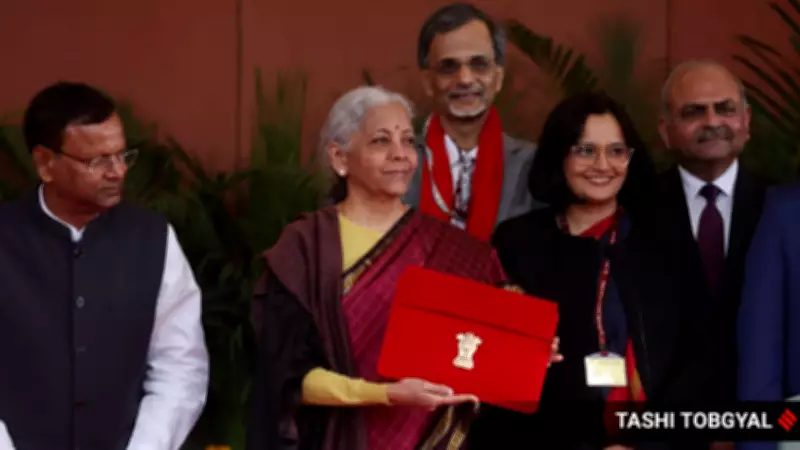
Budget 2026 Positions India to Govern Growth with Strategic Judgement and Resilience
In a world marked by increasing geopolitical uncertainty and economic fragmentation, India's Union Budget for 2026 emerges as a crucial document that goes beyond mere fiscal planning. Authored by N.K. Singh, President of the Institute of Economic Growth and former Chairman of the Fifteenth Finance Commission, along with Nicholas Stern, Chairman of the Grantham Research Institute on Climate Change and the Environment, this analysis examines how the budget addresses the complex challenges facing India's "Goldilocks" economy.
Revisiting India's Policy Framework in a Changing Global Landscape
Building upon their previous examination of India's policy challenges in an unsettled global environment, the authors find that Budget 2026 demonstrates greater openness to recognizing trade as a fundamental engine of growth. Finance Minister Nirmala Sitharaman's emphasis on capital, technology, and export competitiveness has translated into strategic trade agreements with key partners including the European Union, United Kingdom, Australia, UAE, and Oman.
Yet, the global context remains challenging. As the United States and China deploy tariffs, export controls, and licensing regimes while restricting advanced technologies, the world faces a fragmented economic order. This intensifies debates around inflation management, growth strategies, capital flows, currency stability, and India's attractiveness as an investment destination.

Navigating Fiscal Credibility and Economic Constraints
The Economic Survey's caution about persistent current account deficits raising India's macro risk premium and keeping interest rates elevated presents a delicate balancing act. While eliminating the 1.3 percent of GDP CAD recorded in Q2 FY26 might seem tempting, doing so by depleting reserves would prove counterproductive. Historical evidence shows India has successfully managed larger deficits while maintaining adequate reserve buffers.
Fiscal credibility must be assessed through multiple lenses beyond headline deficit reduction. The composition and economy-wide effects of public spending matter significantly. Since FY21, the Centre has achieved substantial fiscal adjustment, reducing the deficit from 9.2 percent of GDP to 4.8 percent in FY25 and further to 4.4 percent for FY26. Concurrently, public capital expenditure has risen to Rs 11.21 lakh crore, while the general government debt-to-GDP ratio has declined by over seven percentage points.
The Goods and Services Tax (GST) system now serves dual purposes: providing both revenue and valuable economic information while encouraging the transition from informal to formal economic activities. However, fiscal policy must also consider domestic savings constraints, as government borrowing absorbs a significant portion of net household financial savings.

The Four-Pillar Blueprint for India's Economic Future
- Fiscal Discipline That Crowds In Private Investment: The shift in household savings toward riskier stock market investments could paradoxically raise borrowing costs rather than larger deficits. This particularly affects manufacturing and smaller firms where capital costs remain elevated. Public investment in efficient, clean infrastructure must create opportunities for new private investment rather than pre-empting it.
- Strengthening State Finances Through Cooperative Federalism: State deficits have risen since FY22, reaching approximately 3.2 percent of GDP in FY25, with state debt hovering near 28 percent of GDP. In integrated sovereign debt markets, sub-national fiscal slippages increase borrowing costs for all entities. Cooperative fiscal federalism must evolve beyond mere transfers toward shared discipline and credible rules.
- Private Investment as the Bridge to Sustained Growth: With the investment rate stabilizing near 30 percent of GDP, strengthened corporate balance sheets, and improved capacity utilization, private investment remains crucial. The Centre leads by example with additional grants of Rs 1.6 lakh crore to boost states' capital expenditure. Budget 2026 emphasizes simplified regulations, faster contract enforcement, and lowering economy-wide capital costs.
- Climate-Competitive Trade and Manufacturing: Industrial gross value added grew by 7 percent in the first half of FY26, with medium- and high-technology manufacturing accounting for nearly half this growth. The budget strengthens competitiveness through rationalized customs duties, corrected inverted duty structures, faster MSME payments, and enhanced private R&D support. Addressing climate risks to manufacturing, particularly reducing emissions from cement and steel through carbon capture utilization and storage, will benefit both domestic industry and export competitiveness.
Human Capital and Urban Development as Growth Pillars
India's workforce exceeding 56 crore, unemployment declining to 4.8 percent, and female labor force participation crossing 41 percent create a strong foundation for growth. Artificial Intelligence is projected to significantly lift productivity, with the Economic Survey forecasting total factor productivity growth of 1.9 percent annually.
Cities generate a disproportionate share of output and foreign direct investment, making urban development critical. The Finance Minister's budget speech highlighted the development of City Economic Regions (CERs), with funding of Rs 5,000 crore per CER over five years linked to performance outcomes. Between 2017 and 2025, municipal bonds—further incentivized in this budget—raised Rs 2,834 crore, while property taxes now constitute about 60 percent of urban local body revenues.
Without stronger municipal finance and governance, India risks losing agglomeration benefits in labor absorption and capital attraction. Pollution and congestion present major constraints on talent retention, investment attraction, and growth potential. Urban infrastructure reforms must simultaneously reduce emissions, manage mobility, and improve service delivery. Enhanced public transportation systems spur inclusion and create opportunities for economically disadvantaged populations to benefit from urban growth.
Positioning India in a Harsher Global Environment
Budget 2026 positions India not merely to achieve growth but to govern growth with strategic judgement and resilience. In what the authors describe as a classic Schumpeterian scenario of "creative destruction," the budget creates new opportunities for investing in innovation and enhancing India's creative potential.
As global influence increasingly accrues to nations capable of forming agile alliances across trade, energy, and security domains, India must balance strategic autonomy (atmanirbharta) with deepening ties with trusted partners, particularly within the Asian economy. The budget implicitly acknowledges the interconnected challenges of finance, investment, energy, climate, biodiversity, and security while seeking to protect and promote sustainable growth.
In conclusion, Budget 2026 represents a comprehensive approach to navigating India's complex economic landscape, addressing immediate fiscal concerns while laying groundwork for long-term competitiveness and resilience in an increasingly fragmented global order.





