

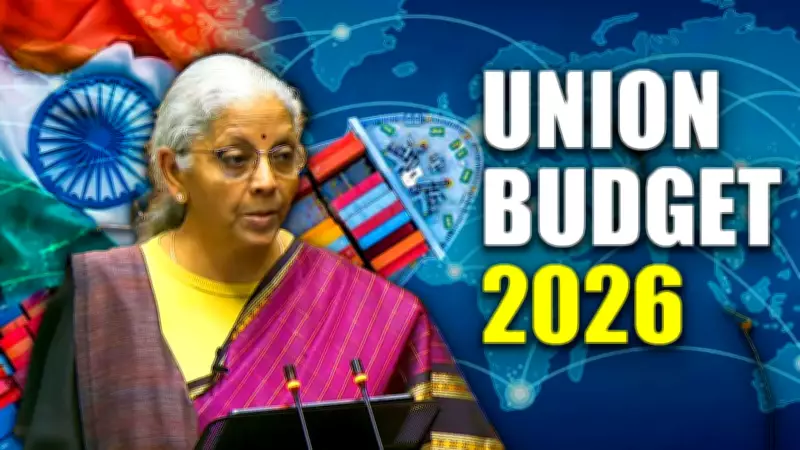
Budget 2026: India's Strategic Response to Global Trade Challenges
In an era marked by weakened international trade frameworks and rising geopolitical tensions, India's Budget 2026, presented by Finance Minister Nirmala Sitharaman, stands as a pivotal document outlining the nation's economic trajectory. The budget articulates a clear vision for navigating global uncertainties while steadfastly pursuing domestic growth objectives.
Focus on Structural Reforms and Fiscal Prudence
Finance Minister Sitharaman underscored that despite ongoing global disruptions, India remains committed to taking confident and measured steps towards achieving the Viksit Bharat vision. This commitment is reflected in the budget's emphasis on:
- Structural economic reforms to enhance competitiveness and efficiency.
- Fiscal discipline to maintain macroeconomic stability and investor confidence.
- Strategic public investment in critical infrastructure and human capital development.
The finance minister highlighted that policy continuity has been instrumental in delivering robust economic growth, lifting millions out of poverty, and expanding access to essential services across the country.

Atmanirbharta as a Guiding Principle
Budget 2026 reiterates a strong focus on Atmanirbharta (self-reliance) as a core guiding principle for India's economic strategy. This approach is designed to build resilience and reduce vulnerabilities in key sectors. Key initiatives include:
- Enhancing manufacturing capacity to boost domestic production and create employment opportunities.
- Ensuring energy security through diversified sources and reduced dependence on imports.
- Cutting critical import dependencies in strategic areas to safeguard national interests.
This focus on self-reliance is not about isolation but about strengthening India's economic foundations to engage more effectively with the global economy.
Balancing Global Engagement with Domestic Priorities
While emphasizing self-reliance, Budget 2026 also positions India as a reform-driven and resilient nation that aims to stay globally connected. The budget outlines strategies to:
- Increase exports by leveraging India's competitive advantages in various sectors.
- Attract long-term foreign capital by creating a stable and predictable policy environment.
- Navigate global uncertainty through agile and responsive economic policies.
Finance Minister Sitharaman's budget presentation makes it clear that India seeks to be an active and constructive participant in the global economy, rather than an inward-looking entity. The budget's comprehensive approach aims to harness opportunities while mitigating risks posed by the evolving international trade landscape.






