

Economic Survey 2025-26 Maps Telangana's Robust Growth Across Key Sectors
The Centre's Economic Survey for the fiscal year 2025-26 has comprehensively mapped Telangana's economic growth trajectory, highlighting significant advancements in agriculture, industry, and services during the tenure of the former BRS government. The survey provides a detailed analysis of the state's performance, underscoring a sharp expansion in irrigated area, strong industrial depth, and rising productivity levels that have positioned Telangana as a key contributor to India's economy.
Agricultural Expansion Driven by Irrigation Initiatives
A key takeaway from the Economic Survey is the remarkable increase in cultivated area in Telangana. The state's cultivated area expanded dramatically from 1.31 crore acres in 2014 to 2.20 crore acres by the fiscal year 2023, bringing nearly 90 lakh additional acres under cultivation. This substantial growth has been attributed primarily to large-scale irrigation initiatives that transformed the agricultural landscape.
The survey specifically highlights the impact of flagship programs such as the Kaleshwaram lift irrigation project and Mission Kakatiya, along with other major and minor irrigation works. According to the report, improved irrigation coverage, strategic alignment of crops with natural resources, and the adoption of climate-resilient, high-yield seed varieties played critical roles in boosting agricultural productivity. These measures have effectively insulated farmers from rainfall volatility, particularly in regions that were once considered drought-prone, thereby enhancing food security and rural livelihoods.

Infrastructure Concerns Amid Agricultural Success
The Economic Survey's endorsement of Telangana's irrigation-led agricultural expansion comes at a time when serious questions have been raised regarding the structural stability and utility of key infrastructure projects. Recently, the National Dam Safety Authority flagged significant concerns over the safety of the Medigadda, Annaram, and Sundilla barrages associated with the Kaleshwaram project. The authority noted that Medigadda, in particular, requires reconstruction after a portion of the structure sank, highlighting potential challenges in maintaining the irrigation gains documented in the survey.
Industrial and Manufacturing Prowess
Beyond agriculture, the Economic Survey highlighted Telangana's broader economic footprint, particularly in the industrial sector. Despite accounting for less than 3% of India's population, Telangana contributes approximately 5% of the country's manufacturing employment. This achievement places the state among the top seven manufacturing states in India, alongside much larger peers, demonstrating its industrial depth and capacity.
The survey also pointed to Telangana's prominence in specific sectors such as cement manufacturing, where the state hosts a dense cluster of plants. These facilities support infrastructure and construction activity across the region, further cementing Telangana's role as an industrial hub. The state's strategic investments in industrial corridors and supportive policies have fostered an environment conducive to manufacturing growth and job creation.
Services Sector Leadership
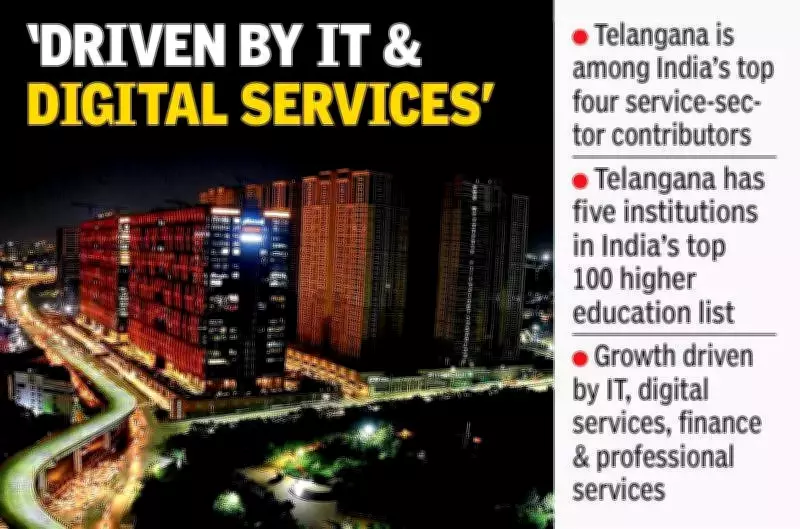
On the services front, the report positions Telangana among India's top four service-sector contributors, alongside Karnataka, Maharashtra, and Tamil Nadu. According to the survey, "Telangana stands tall as one of India's top four service sector contributors, along with Karnataka, Maharashtra, and Tamil Nadu. Together, these states account for nearly 40% of India's services output."
The growth in services is driven by robust performance in IT and digital services, finance and professional services, and high-value urban productivity. Hyderabad, as the state capital, has emerged as a major IT and innovation hub, attracting global companies and talent. This sectoral strength has not only boosted economic output but also created numerous high-skilled employment opportunities, contributing to overall economic resilience.

Governance and Institutional Strengths
The Economic Survey also acknowledged Telangana's governance and institutional strengths that underpin its economic progress. The state boasts five institutions ranked among the top 100 higher education institutions in the country, reflecting a strong foundation for human capital development. Additionally, Telangana is one of only six states to implement a GPS-based vehicle location tracking system to monitor the real-time movement of food grain transport vehicles, enhancing transparency and efficiency in public distribution.
Among social sector initiatives, the survey showcased WE-Hub as a national best practice. This platform has been praised for effectively connecting women entrepreneurs with start-up ecosystems and investors, and for promoting workforce participation through innovative public-private partnership models. Such initiatives highlight the state's commitment to inclusive growth and gender equity in economic development.
Macroeconomic Stability and Inflation Control
The survey tracked key macroeconomic indicators, noting a significant improvement in price stability within Telangana. The state's inflation rate, which stood at 8.5% a few years ago, has declined to 2.6%, reflecting effective monetary and fiscal management. This reduction in inflation contributes to a more stable economic environment, benefiting consumers and businesses alike, and supports sustainable growth across sectors.
Political Reactions and Future Implications
Responding to the Economic Survey findings, the BRS issued a statement emphasizing that the survey documented Telangana's expansion in cultivable area, driven by irrigation investments including Kaleshwaram and Mission Kakatiya. The party noted, "The survey credits these flagship programmes for improving irrigation access, stabilising crop patterns, and enhancing agricultural productivity."
Reacting to criticism from rival parties, the BRS added, "No amount of selective outrage or Goebbels-style misinformation by the Congress and BJP can erase Telangana's remarkable progress under KCR (former CM K Chandrasekhar Rao), as clearly documented by the Union govt's Economic Survey." This political discourse underscores the significance of the survey's findings in shaping public perception and policy debates regarding Telangana's development trajectory.
In summary, the Economic Survey 2025-26 presents a comprehensive picture of Telangana's economic growth, highlighting successes in agriculture, industry, and services while also noting infrastructure challenges. The state's achievements, particularly in irrigation-led agricultural expansion and service sector contributions, position it as a key player in India's economic landscape, with implications for future policy directions and developmental strategies.





