

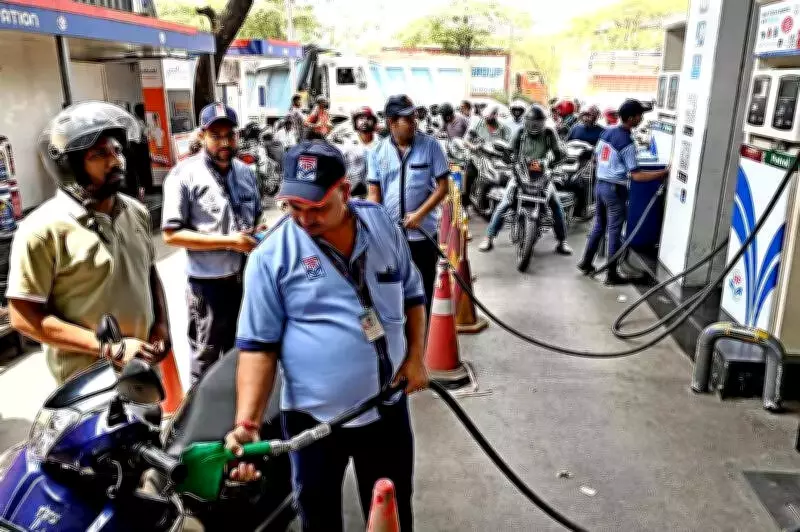
Fuel Tax Cut Fails to Deliver Consumer Relief in Mumbai
The Central government's recent reduction of excise duty on petrol and diesel by Rs 10 per litre has failed to provide immediate relief to consumers in Mumbai, with retail fuel prices remaining stubbornly unchanged. Industry experts reveal that oil marketing companies have effectively absorbed the tax cut benefit through simultaneous adjustments in base depot prices.
Price Neutralization Mechanism Exposed
Detailed industry data analysis shows a concerning pattern: while the central excise duty was officially reduced, the base depot price of petrol was concurrently increased by exactly Rs 10 per litre. This strategic adjustment has completely neutralized the intended tax cut, leaving Mumbai consumers paying approximately Rs 103.45 per litre for petrol—the same price as before the policy change.
Complex Excise Duty Structure Explained
Petroleum pricing experts clarify that the excise duty framework comprises four distinct components. The recent reduction applies only to the special additional excise duty, while the other three levies—basic excise duty, agriculture infrastructure and development cess, and road and infrastructure cess—remain completely unchanged.

Following the revision effective March 27, total excise duty on petrol has decreased from Rs 21.90 to Rs 11.90 per litre. Similarly, diesel excise duty has been reduced from Rs 17.80 to Rs 7.80 per litre. However, claims suggesting diesel excise duty has been eliminated to zero are misleading, as multiple components of the levy continue to be charged.
Expert Analysis Reveals Internal Adjustment Strategy
Kedar Chandak, a Mumbai-based petroleum dealer and pricing expert, provides crucial insight: "The reduction represents largely an internal adjustment designed to cushion oil companies against higher crude costs. There is absolutely no certainty that this benefit will be passed on to consumers in the form of lower retail prices."
Chandak's analysis suggests the tax adjustment serves primarily as a protective measure for oil marketing companies rather than a consumer relief initiative.
State Taxes Remain Unchanged
While the central tax component has seen reduction, state-level taxes including Value Added Tax (VAT) and various cesses continue unchanged. In Mumbai specifically, these state levies persist at Rs 23.98 per litre, with dealer commissions holding steady at Rs 4.01.
Consequently, the overall tax burden on petrol has technically decreased from Rs 45.88 to Rs 35.88 per litre. However, this theoretical reduction has produced no tangible impact on what consumers actually pay at the pump.
Broader Implications for Fuel Pricing
The current situation highlights several critical aspects of India's fuel pricing mechanism:
- Multiple taxation layers at both central and state levels
- Limited transparency in how tax adjustments translate to retail prices
- The significant role of oil marketing companies in determining final consumer costs
- The complex relationship between international crude prices and domestic fuel pricing
This development raises important questions about the effectiveness of tax policy interventions in providing genuine consumer relief during periods of economic pressure.






