

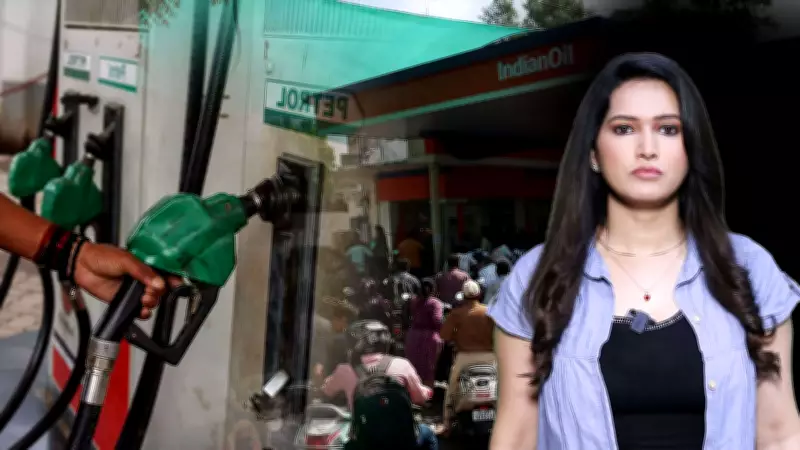
Government Announces Major Fuel Tax Reduction, But Consumers See No Price Relief
In a significant policy move, the central government has implemented a substantial excise duty cut of ₹10 per liter on both petrol and diesel. This decision, announced on March 27, 2026, was initially anticipated to bring immediate relief to consumers facing high fuel costs. However, contrary to expectations, retail prices at petrol pumps across India have remained unchanged, leaving many citizens questioning the effectiveness of this measure.
Why Fuel Prices Remain Stable Despite Tax Reduction
The explanation for this apparent paradox lies in the complex interplay of global market dynamics and domestic economic strategy. While the tax cut represents a genuine reduction in government levies, its benefits are not being directly passed on to consumers at this time. Instead, the government has adopted a calculated approach to utilize this fiscal space for stabilizing the broader economy.
The primary reason for unchanged retail prices is the dramatic surge in global crude oil prices, which have climbed past $100 per barrel due to ongoing conflicts in West Asia. This sharp increase has placed tremendous financial pressure on Indian oil marketing companies, both public and private sector entities, who are facing substantial losses on every liter of fuel they sell.

Government Strategy: Absorbing Global Shocks First
Rather than allowing the tax reduction to translate into lower pump prices, the government is strategically using this fiscal relief to cushion oil companies from the impact of soaring international crude costs. This approach serves multiple economic objectives simultaneously:
- Preventing inflation spikes: By maintaining stable fuel prices, the government avoids triggering a sudden increase in transportation and production costs that would ripple through the entire economy, potentially accelerating inflation across multiple sectors.
- Supporting oil companies: The tax cut provides much-needed financial breathing room for oil marketing companies that would otherwise face unsustainable losses given the disparity between rising procurement costs and fixed retail prices.
- Ensuring supply stability: India's heavy dependence on imported crude oil—coupled with disruptions in global supply routes—makes price stability a critical priority for national energy security.
Diverging Approaches Between Public and Private Sector
An interesting development in this scenario is the emerging divergence between public and private sector fuel retailers. While some private players have already begun incrementally raising their fuel prices in response to market pressures, state-run oil companies have maintained their prices at current levels. This discrepancy highlights the government's directive to public sector entities to prioritize stability over immediate profitability.
The current strategy reflects a deliberate policy choice: absorb global market shocks first, and consider passing benefits to consumers only when international crude prices stabilize at more manageable levels. This measured approach acknowledges India's vulnerable position in the global energy market while attempting to balance multiple competing economic priorities.
Ultimately, the ₹10 per liter excise duty cut represents not an immediate consumer relief measure, but rather a strategic intervention designed to buffer the Indian economy from volatile global energy markets while supporting the financial health of domestic oil companies during a period of exceptional international price pressure.






