

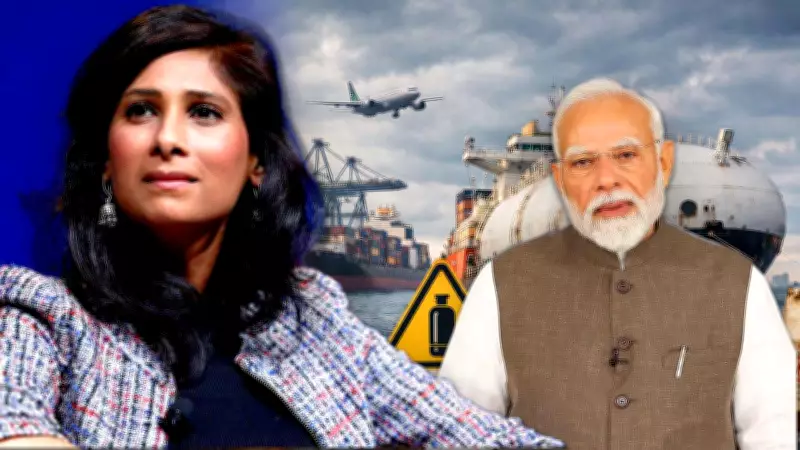
IMF Economist Gita Gopinath Issues Critical Warning To Indian Government
India's economic trajectory faces renewed uncertainty as escalating global tensions drive oil prices upward, prompting a significant warning from International Monetary Fund's Gita Gopinath. The prominent economist has cautioned that India's growth prospects could diminish by "closer to half a percent" if current geopolitical and market trends persist.
The Dual Impact Of Rising Crude Prices
Gopinath's analysis reveals how deeply interconnected global energy markets are with India's domestic stability. The surge in crude prices translates directly to multiple economic pressures:
- Increased fuel costs for consumers and industries
- Mounting inflationary pressures across the economy
- Significant stress on household budgets nationwide
- Potential disruption to remittances from Indian workers in Gulf regions
The economist characterized the current economic environment as a "very uncertain outlook" and described it as a "tough time to be a policymaker," acknowledging the complex balancing act required of government officials managing multiple economic risks simultaneously.

The Path To Economic Resilience
Gopinath's proposed solution centers on strengthening India's domestic economic foundations. She emphasizes that in an increasingly volatile global landscape, internal stability represents the most effective defense against external shocks. Her recommendations include:
- Accelerating economic reforms to improve efficiency and competitiveness
- Boosting systemic resilience through strategic policy interventions
- Maintaining strong economic fundamentals through prudent fiscal management
- Developing contingency plans for energy security and price volatility
The warning comes at a critical juncture for India's economy, which must navigate both domestic challenges and international uncertainties. Gopinath's analysis underscores the importance of proactive economic management and structural improvements to safeguard growth momentum.
As global tensions surrounding the Iran conflict continue to influence energy markets, India's policymakers face the dual challenge of mitigating immediate inflationary pressures while implementing long-term strategies to enhance economic self-sufficiency and resilience against future global disruptions.






