

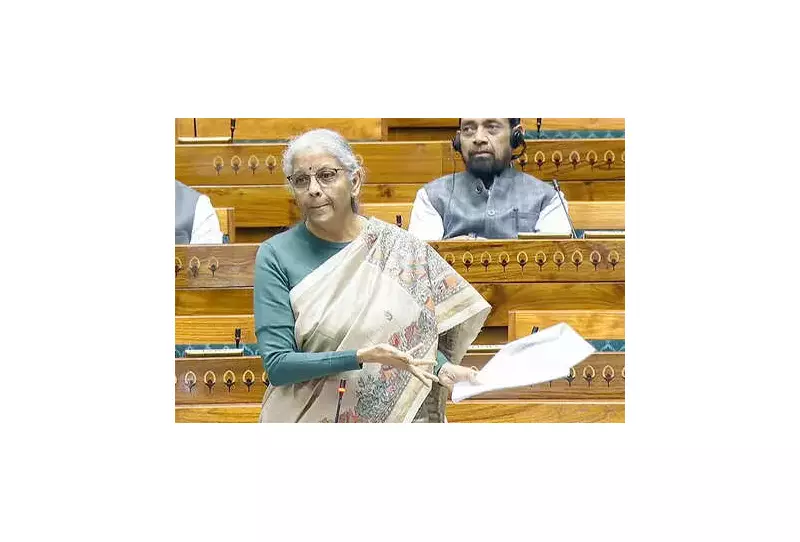
Finance Minister Nirmala Sitharaman announced on Wednesday a significant overhaul of India's economic data framework. The government is moving to update the base year for calculating the Gross Domestic Product (GDP) from the current 2011-12 to 2022-23. This move aims to better capture the structural changes in the economy over the last decade and a half.
Addressing Data Modernization and IMF Critique
Responding to concerns raised in the Lok Sabha regarding a recent International Monetary Fund (IMF) report, Sitharaman clarified the government's position. The IMF's annual report on India had assigned a 'C' grade to the country's national accounts data, citing the use of an outdated base year as a key reason. The minister emphasized that the report did not question India's strong growth figures but highlighted the need for updated data systems.
Sitharaman stated that the 'C' grade was assigned solely because the data is based on the 2011-12 base year. She pointed out that the IMF report largely praised India's economic performance, projecting a GDP growth of 6.5% for 2025-26 and recognizing private sector growth, macroeconomic stability, and financial sector resilience.

Details of the Statistical Revamp
The update is a comprehensive exercise. Alongside the new base year, the basket of goods and services used to measure economic activity will be revised. This is crucial to reflect the dramatic shifts in consumption patterns and the rise of the digital economy since the last update over a decade ago.
The first set of data based on the new 2022-23 series will be released on February 27, 2025. Prior to that, the first advance estimate for the current fiscal year, based on the existing series, will be published on January 7, 2025. The government also plans to update the base years for calculating inflation and industrial production indices in the coming year.
Context of Robust Growth and Future Implications
This statistical modernization comes against the backdrop of India's strong economic momentum. The latest data from the National Statistical Office (NSO) estimated GDP growth at a scorching 8.2% in the July-September quarter of the current financial year, following a robust 7.8% expansion in the April-June quarter.
The revision is expected to provide a more accurate and contemporary picture of the economy's size, structure, and growth trajectory. By incorporating new economic activities and changing consumption habits, the updated GDP series will enhance policy-making and bolster confidence in India's economic data integrity on the global stage.






