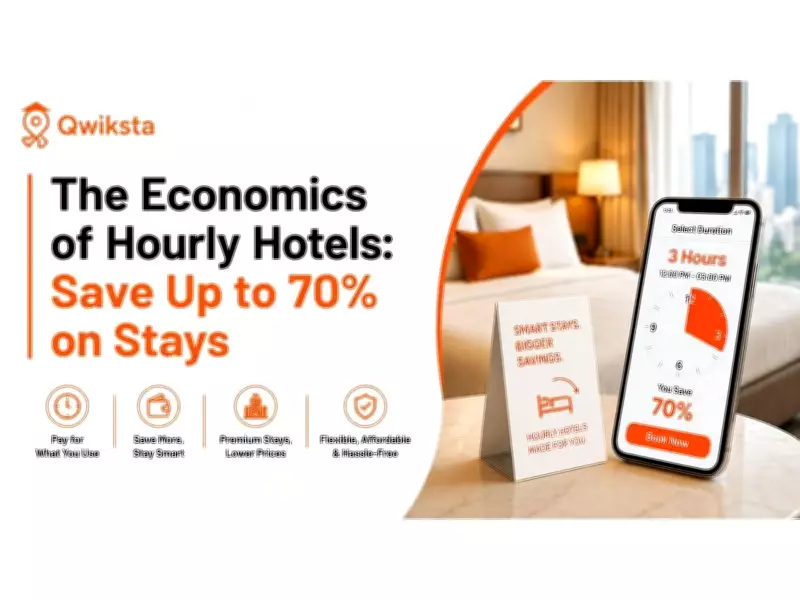
Hourly hotel booking allows travellers to reserve rooms for 3, 6, or 12 hours instead of paying for a full night, cutting accommodation expenses by 40% to 70% while enjoying the same amenities. Platforms like Qwiksta are driving this shift, connecting travellers with hotels offering short-duration stays and day-use rooms across India.
The Problem with Traditional Hotel Pricing
Traditional hotels charge the same rate whether a guest stays for four hours or twenty-four. A traveller arriving in Mumbai at 8 AM for a 2 PM meeting needs a shower, Wi-Fi, a workspace, and rest—not an entire night. Yet they often pay for an extra night or endure discomfort in public areas. This inefficiency has been accepted for decades, but hourly booking now offers a practical alternative.
How Hourly Hotels Work
The model follows a pay-for-usage principle, similar to ride-hailing or streaming services. Travellers select a duration—3, 6, or 12 hours—and pay only for that time. This is especially beneficial in cities like Bangalore, where a standard hotel check-in at 2 PM forces early arrivals to wait. Traditionally, options include waiting for free (costing fatigue and lost productivity) or booking an extra night for ₹6,000+. An hourly booking costs ₹1,500–₹2,500, providing access to the same amenities at a fraction of the price.

Growing Demand Across India
India's travel ecosystem now includes diverse needs beyond overnight stays. Business professionals require rooms between meetings, airport transit passengers need short stays during layovers, remote workers seek temporary workspaces with privacy, and couples look for safe, verified hotels without committing to a full night. Medical travellers also use rooms for a few hours between consultations. This shift has fuelled demand for short-stay hotels, day-use rooms, and flexible booking options.
Service Apartments as an Alternative
For longer visits, service apartments offer added space, privacy, and flexibility. Unlike traditional hotel rooms, they provide furnished living spaces and essential amenities for extended stays. Qwiksta helps travellers find studio apartments and serviced accommodations in cities like Mumbai, catering to business trips, relocations, remote work, or long-term travel.
Smart Travel Spending
Today's travellers increasingly ask, "What's the smartest way to spend my travel budget?" rather than "What's the cheapest hotel?" Hourly stays align accommodation expenses with actual usage, allowing savings to be redirected toward flights, experiences, dining, or business expenses. Budget hotel booking is no longer about the lowest rate but about avoiding unnecessary costs.
Choosing the Right Platform
When selecting an hourly hotel booking platform, consider hotel verification, flexible time slots (3, 6, 12 hours, or day-use), easy online booking with instant confirmation and secure payments, and location coverage near airports, business districts, transit hubs, and tourist areas. Qwiksta addresses these needs by connecting travellers with verified properties and transparent policies.
Conclusion
Hourly hotel booking is a practical innovation that reduces travel costs and improves convenience. Whether for hourly rooms, early check-in, short stays, day use, or budget booking, paying only for the hours needed is becoming the smarter standard for modern travellers.
(ADVERTORIAL DISCLAIMER: The above press release has been provided by VMPL. ANI will not be responsible in any way for the content of the same.)