

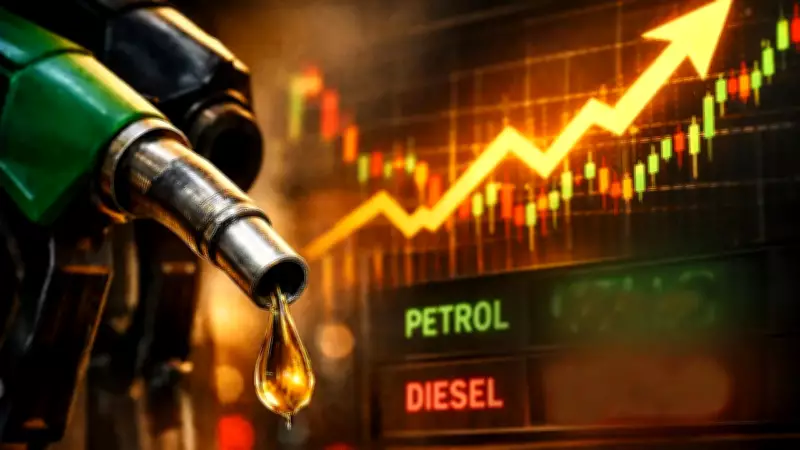
India Slashes Fuel Taxes to Cushion Consumers from Global Oil Price Shock
The Indian government has announced a significant reduction in excise duties on petrol and diesel, aiming to absorb the impact of soaring global crude oil prices triggered by escalating conflicts in the Middle East. This move is designed to prevent retail fuel prices from rising and protect consumers from economic strain.
Global Crude Price Surge Triggers Policy Response
International crude oil prices have climbed nearly 50% since late February, when the United States and Israel conducted strikes on Iran, prompting retaliatory actions from Tehran. Prices briefly surged to $119 per barrel earlier this month amid heightened tensions before easing to around $100 per barrel.
India, which imports approximately 88% of its crude oil requirements and about half of its natural gas needs, faces particular vulnerability. Much of this supply passes through the Strait of Hormuz, where Tehran's warnings to vessels and withdrawal of insurance coverage have disrupted tanker movements following attacks on Iranian facilities.

Details of the Excise Duty Reduction
In a notification issued on March 26, the Finance Ministry implemented immediate changes:
- Petrol: Excise duty cut from Rs 13 per litre to Rs 3 per litre.
- Diesel: Excise duty reduced from Rs 10 per litre to zero.
Following this reduction, the total tax incidence on petrol now stands at Rs 11.9 per litre, comprising:
- Basic excise duty: Rs 1.40
- Special additional excise duty: Rs 3
- Agriculture infrastructure and development cess: Rs 2.50
- Road and infrastructure cess: Rs 5
For diesel, the overall duty has been reduced to Rs 7.80 per litre, including:
- Basic excise duty: Rs 1.80
- Agriculture infrastructure and development cess: Rs 4
- Road and infrastructure cess: Rs 2
Financial Impact and Consumer Protection
Based on India's annual consumption of approximately 175 billion litres of automotive fuel (115 billion litres of diesel and 60 billion litres of petrol), the duty reduction is estimated to have a financial impact of about Rs 1.75 lakh crore annually. This relief offsets potential price increases of roughly Rs 24 per litre for petrol and Rs 30 per litre for diesel that would otherwise have been necessary due to rising global crude prices.
The government's primary intention is to prevent the pass-on of higher crude prices to consumers, maintaining stability at the pump despite international volatility.
Will Retail Fuel Prices Decrease?
Despite the excise duty cuts, retail prices of petrol and diesel are not expected to decline. Instead, the reduction helps oil marketing companies offset rising crude costs without increasing prices, thereby easing financial pressure on these firms while keeping consumer burdens manageable.
State-run fuel retailers, which account for around 90% of the market, are expected to maintain current prices. In Delhi, petrol continues at Rs 94.77 per litre and diesel at Rs 87.67 per litre.
Market Reactions and Variations
Private fuel retailer Nayara Energy, operating 6,967 outlets, has partially passed on higher input costs by increasing petrol prices by Rs 5 per litre and diesel by Rs 3 per litre. Petrol at its outlets now costs Rs 100.71 per litre, while diesel is priced at Rs 91.31 per litre.
Meanwhile, Jio-bp, the joint venture between Reliance Industries and BP Plc with 2,185 outlets, has not raised prices despite facing significant losses on fuel sales.
Additionally, state-owned oil marketing companies recently raised prices of premium petrol variants by over Rs 2 per litre, affecting high-performance fuels like BPCL's Speed, HPCL's Power, and IOCL's XP95.
Government Statements and Rationale
Finance Minister Nirmala Sitharaman stated that the excise duty reduction "will provide protection to consumers from rise in prices," emphasizing the government's commitment to shielding citizens from fluctuations in essential commodity costs. She also noted the imposition of export duties on diesel and aviation turbine fuel to ensure sufficient domestic availability.

Oil Minister Hardeep Singh Puri highlighted that global crude prices have surged from around $70 per barrel to nearly $122 over the past month, with fuel prices rising 30-50% in Southeast Asia, 30% in North America, 20% in Europe, and approximately 50% in Africa. He explained that the government chose to absorb the financial burden rather than sharply raise domestic prices, following the approach adopted since the Russia-Ukraine conflict began.
"The government has taken a huge hit on its taxation revenues to ensure very high losses of oil companies are reduced at this time of sky-high international prices," Puri said, referencing estimated losses of Rs 24 per litre for petrol and Rs 30 per litre for diesel.
Broader Economic Context
Rating agency ICRA had previously indicated that if crude prices average between $100 and $105 per barrel, fuel retailers could face losses of around Rs 11 per litre on petrol and Rs 14 per litre on diesel. The excise duty cuts are seen as a measure to help maintain stable retail prices while giving companies more room to offset refining losses.
This policy intervention underscores India's strategic response to global energy market disruptions, prioritizing consumer protection and economic stability amid international geopolitical tensions.





