

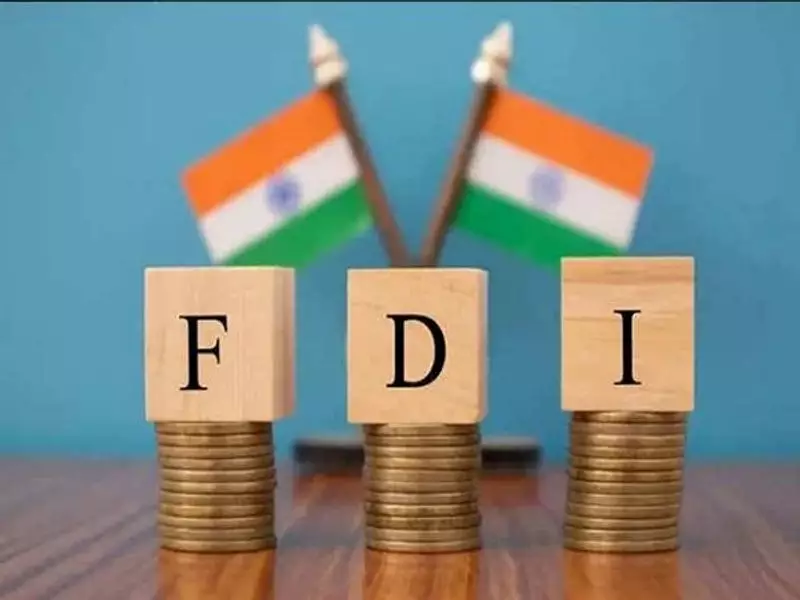
India's foreign direct investment (FDI) landscape is set for a powerful upswing in 2026, according to a major global report. The nation's robust economic fundamentals and a pipeline of large-scale project announcements position it as a standout destination for international capital, even as global flows face headwinds.
Global Context and India's Promising Position
The United Nations Conference on Trade and Development (UNCTAD), in its latest World Investment Report 2024, projects a challenging environment for global FDI in the near term. However, it highlights India as a bright spot with strong growth potential for the coming years. The report indicates that global foreign direct investment flows fell by 2% in 2023, to an estimated $1.3 trillion.
This decline is attributed to a combination of factors, including economic fragility and rising geopolitical tensions. The report further warns that the modest growth forecast for 2024 is fraught with significant downside risks, including potential further geopolitical instability, high interest rates, and growing trade protectionism.

India's Fundamentals and Project Pipeline Fuel Optimism
Despite the global slowdown, UNCTAD expresses considerable optimism for India's FDI prospects. This confidence is rooted in the country's strong economic growth trajectory and a steady stream of significant investment announcements. The report specifically notes that the number of international project finance deals in India saw a notable increase, which is a key indicator of future investment flows.
"For India, FDI prospects for 2026 are much brighter," the UNCTAD report states emphatically. It credits this positive outlook to the country's solid macroeconomic indicators and the continuous announcement of new, large-scale projects across various sectors. This positions India favorably to attract a larger share of global capital seeking stable and high-growth markets.
Sectoral Focus and the Road Ahead
The report underscores that global investment is increasingly flowing into sectors linked to the green energy transition and technological innovation. For a nation like India, which is actively pushing initiatives in renewable energy, semiconductor manufacturing, and digital infrastructure, this global trend aligns well with domestic priorities.
To fully capitalize on this opportunity, the report suggests that India, along with other developing economies, must focus on improving its investment promotion ecosystem. This involves not only showcasing its large market and growth potential but also streamlining regulatory processes and ensuring policy stability to convert announcements into realized investments.
In conclusion, while the global investment climate remains uncertain, India's economic resilience and proactive project development have set the stage for a potential FDI boom in 2026. The country's ability to execute these projects and maintain a conducive business environment will be critical in turning this promising forecast into a tangible economic reality.






