

India's economic landscape is witnessing a concerning structural shift: the rise of duopolies, where markets are controlled by just two major suppliers. While better than a monopoly, this concentration of power poses significant threats to consumer welfare, fair pricing, and disruptive innovation, necessitating a close policy examination.
The Duopoly Phenomenon Across Indian Sectors
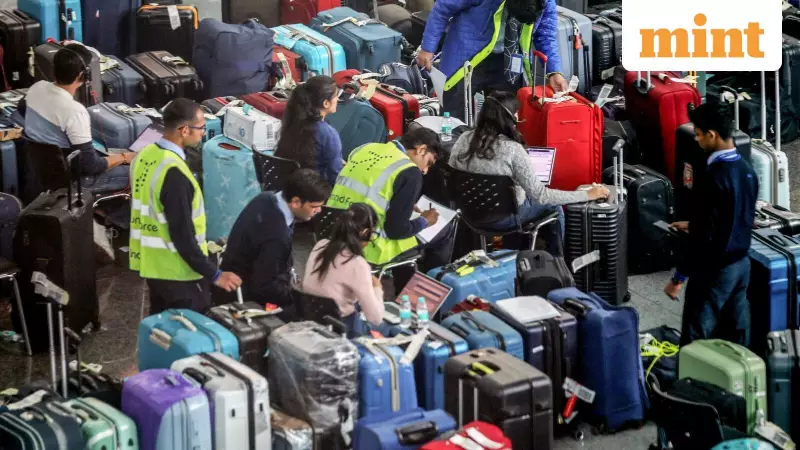
The recent operational fiasco at IndiGo served as a stark, real-time example of duopoly dynamics. When one player stumbles, the rival faces a sudden surge in demand, often leading to immediate price hikes and leaving a portion of consumer demand unmet. This scenario erodes consumer welfare while delivering super-normal profits to the functioning player.
This pattern is not confined to aviation. In telecom, Reliance Jio and Bharti Airtel collectively dominate India's subscriber base and revenue market share. The food delivery segment, a key part of the gig economy, is commanded almost entirely by Zomato and Swiggy. Similarly, Ola and Uber rule cab-hailing, while Flipkart and Amazon account for over 80% of the organized e-commerce market. Even digital payments see PhonePe and Google Pay handling a vast majority of UPI transactions.

Mega infrastructure businesses, particularly in ports and logistics, also show increasing concentration between two major conglomerates, raising alarms about centralized control in critical sectors.
Why Are Duopolies Emerging?
Industrial organization theories point to several drivers behind this trend. First, extremely high capital requirements create formidable barriers to entry and survival for smaller firms. This is compounded when global investors preferentially fund early market leaders, cementing their advantage.
Second, network effects in digital and service industries inherently reward scale. Large firms spend aggressively upfront to acquire customers, effectively squeezing out competitors. A third factor involves regulatory gaps that allow dominance to deepen, especially when consolidation occurs through mergers, acquisitions, or takeovers of bankrupt firms.
The Regulatory Challenge and Consumer Impact
The core problem for policymakers is the highly circumstantial nature of duopoly behaviour. Economic theory provides extensive oligopoly research, but predicting firm actions in specific contexts with reliability remains difficult. This uncertainty complicates formulating effective public policy interventions.
Regulation, therefore, must be grounded in an in-depth, consumer-welfare-oriented cost-benefit analysis of firm behaviour in these concentrated markets. With minimal rivalry, the incentive to aggressively lower prices diminishes. Consumers face fewer choices and may end up paying more than they would in a competitive market, making price regulation a critical consideration.
Innovation suffers too. In a duopoly, firms often innovate merely to maintain their lead rather than from the fear of being disrupted by a new entrant. This leads to incremental changes instead of groundbreaking, disruptive innovation. Furthermore, powerful duopoly firms wield significant lobbying power, which can stifle the emergence of smaller players or new technologies.
If markets become more concentrated even as deregulation aims to ease new entry, it may signal that lobbying power is serving narrow interests over broader economic health. The episode in the airline industry should be taken as a warning signal for other sectors. Addressing India's duopoly trend requires a nuanced, evidence-based policy response to safeguard competition, consumer interests, and long-term economic dynamism.
This analysis is based on the personal views of M. Suresh Babu, director of the Madras Institute of Development Studies, published on 31 December 2025.






