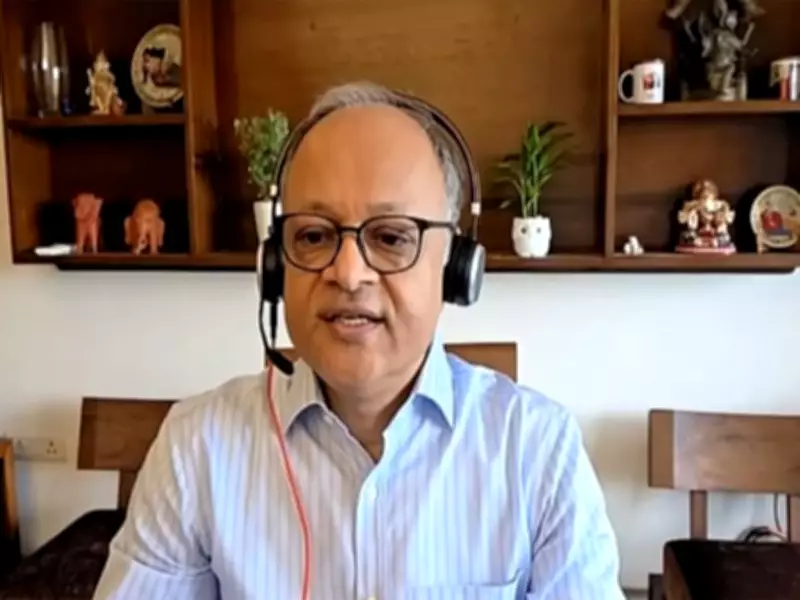
India's handling of the Strait of Hormuz crisis underscores the importance of diversification, infrastructure upgrades, and sustained policy support to shield the economy from future supply shocks, according to Vivek Kumar, Additional Chief Secretary of the Land and Land Reforms Department, West Bengal.
Swift government response to supply disruptions
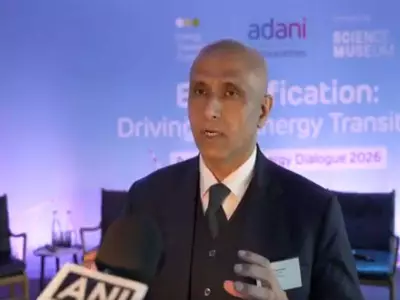
In an interview with ANI, Kumar highlighted the timely and measured steps taken by the government to address supply disruptions caused by the West Asia crisis. He emphasized the need to diversify sourcing, strengthen seaborne crude and LNG infrastructure, and reduce dependence on imported oil and gas by expanding renewable and nuclear energy.
Kumar also called for policy changes to attract global technology and capital into upstream exploration, noting that the exploration and production (E&P) sector is highly technology-dependent and that tweaks to attract foreign investment could boost domestic production.

India's heavy reliance on Hormuz
“Strait of Hormuz is very important for India's energy security. While nearly 20% of the world's oil and gas flow through this Strait, even for India, these figures are rather high. Our dependence was so high that 90% of all the crude that was coming to India was coming from the Strait of Hormuz and for LPG the figure is 60%,” Kumar said. He noted that when the war began in February, India faced a difficult prospect for energy security.
“What was the most important thing that Government of India did? One of course was that very swiftly in fact, within 8-9 days of the crisis erupting, the government responded by bringing in very tough supply side and demand side management controls,” he added.
Supply and demand measures implemented
Kumar explained that the government issued orders concerning LPG in the first week of March, quickly followed by the LNG Gas Control Order. “There were quantitative restrictions placed on the users of commercial and bulk users of LPG and we were encouraged, the consumers were encouraged where possible, to move to PNG. Nearly 300 cities are now covered with pipe natural gas in India and consumers in these cities were told not to depend on the LPG cylinders where applicable and to move to the piped connections and pipe network as far as possible,” he said.
The official noted that state governments worked in tandem with the central government. “This LPG gas control order had a very specific mandate for the Indian refineries. It said that we had to boost the domestic production of LPG and this could be done by tweaking the product slate... Within 7-8 days of this order being issued, the production of LPG rose from 35,000 metric tons per day to 54,000 metric tons per day,” he said.
Diversification of crude sources
Kumar said that within the three-and-a-half-month period, non-Hormuz sourcing of crude oil increased from 55% to 70%. New suppliers include countries in North and South America and West Africa such as Nigeria, Brazil, Argentina, and Ghana.
Infrastructure expansion
Kumar pointed out that LPG import terminals have risen from about 11 or 12 in 2014 to 22 now, while LNG terminals have also expanded. The LPG pipeline network expanded sharply from 2,300 km to over 6,200 km. He stressed that this infrastructure is invisible to consumers but essential, and oil companies need healthy margins to fund such capacity expansion.
Retail price impact and excise duty cuts
On retail prices, Kumar said the government chose to absorb the shock instead of passing it to consumers. While Myanmar saw retail prices rise 90%, Pakistan 50%, and the US 44%, India's increase was limited to 7% for petrol and 8% for diesel during the crisis. Excise duty cuts of about Rs 10 per litre on both fuels helped cushion the impact. He noted that price under-recoveries still stand at around Rs 500 crore per day for fuels and close to Rs 650 crore per day for LPG.
Diplomatic coordination and naval deployment
Diplomatic coordination ensured supply lines stayed open. “Our oil diplomacy plays a very important role... the synergy shown by the Ministry of Petroleum and Natural Gas and the Ministry of External Affairs is something that deserves credit,” Kumar said. He cited Indian Navy deployment under Operation Sankalp and efforts to escort Indian flagged carriers through the region.

Kumar said work on long-term resilience has already begun.