

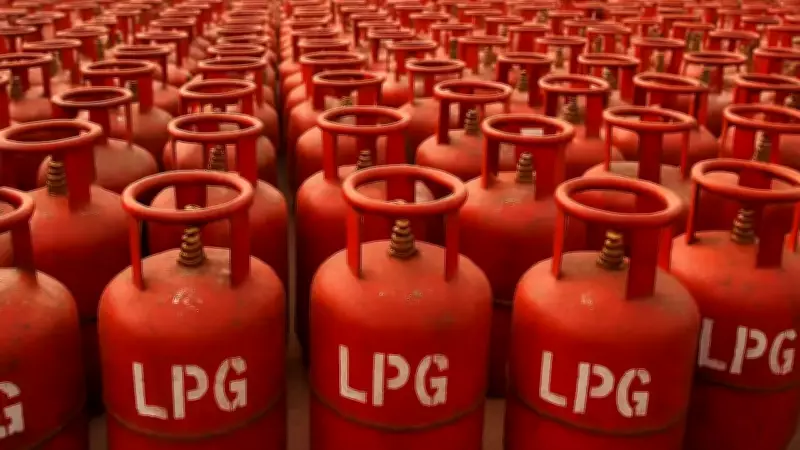
India's Cooking Gas Consumption Sees Sharp 13% Decline in March Amid Supply Disruptions
India's liquefied petroleum gas (LPG) consumption experienced a significant downturn in March, with official data revealing a sharp 13 percent year-on-year decrease. This substantial decline is directly attributed to supply chain disruptions linked to the ongoing Middle East conflict, which has severely impacted fuel imports through critical maritime routes.
Supply Chain Disruptions Impact Key Import Routes
The data indicates that LPG consumption stood at 2.379 million tonnes in March, a notable drop from 2.729 million tonnes recorded during the same month last year. This decline coincides with significant disruptions in the Strait of Hormuz, a vital maritime passage that serves as a crucial route for India's fuel imports. The conflict has particularly affected supplies from major exporting nations including Saudi Arabia and the United Arab Emirates, creating substantial challenges for India's energy sector.
Government Prioritizes Household Supply Over Commercial Usage
To manage the emerging shortages, government authorities implemented strategic measures to curtail LPG supply to commercial establishments. This included significant reductions to hotels, restaurants, and various industrial operations, with priority given to maintaining household consumption. According to reports from the Press Trust of India, LPG sales to domestic users still experienced an 8.1 percent decline, falling to 2.219 million tonnes during the month.

The impact on non-domestic segments proved far more severe. LPG sales to commercial users plummeted by nearly 48 percent, while bulk LPG consumption witnessed an extraordinary 75.5 percent decrease. These figures from the Petroleum Planning and Analysis Cell present a contrasting picture to government assertions that household demand was being fully met during this period of supply constraint.
Domestic Production Boosted to Offset Import Shortfalls
With India importing approximately 60 percent of its total LPG requirements, the disruption forced authorities to implement emergency measures to ramp up domestic production. Refineries received directives to divert feedstock from petrochemical manufacturing processes toward increased LPG production, creating a strategic shift in industrial priorities.
This concerted effort yielded measurable results, with LPG production rising to 1.4 million tonnes in March compared to 1.1 million tonnes during the same period the previous year. For the entire 2025-26 fiscal year, production increased to 13.1 million tonnes, showing improvement from the 12.8 million tonnes recorded in the preceding two fiscal years.
Mixed Fuel Consumption Trends Across Different Sectors
Despite the March downturn, overall LPG consumption for the fiscal year demonstrated resilience with a 6 percent increase to 33.212 million tonnes. This reflects steady long-term growth driven by continued adoption of cleaner fuel alternatives across the country.
The Middle East conflict also influenced aviation fuel demand, with jet fuel (ATF) consumption remaining nearly flat at 807,000 tonnes in March. This stagnation resulted from airspace restrictions implemented across Gulf countries that affected international flight operations.
In contrast, petrol and diesel demand maintained strong performance. Petrol consumption increased by 7.6 percent to reach 3.78 million tonnes, while diesel usage grew by 8.1 percent to 8.727 million tonnes during the same period.
Among industrial fuels, varied trends emerged with naphtha consumption declining 9.9 percent and fuel oil decreasing by 1.4 percent. Meanwhile, bitumen demand increased by 3 percent throughout the fiscal year, indicating sustained activity in road construction and infrastructure development projects across the nation.






