

India's Private Sector Economy Shows Robust Recovery in January
After experiencing some deceleration towards the end of calendar year 2025, growth across India's private sector economy has made a significant comeback in January. Early survey data reveals a particularly pronounced upturn for manufacturers, who are outpacing service providers in the recovery trajectory. This positive shift signals renewed momentum in the country's economic landscape.
HSBC Flash PMI Points to Accelerated Expansion
According to the HSBC Flash India Purchasing Managers' Index (PMI) released on Friday, January witnessed quicker increases in both new orders and output. The survey, which serves as an advance estimate ahead of final PMI readings, provides crucial early insights into economic sentiment and production trends. Notably, the data indicates the reinstatement of job creation and a rebound in business confidence across private sector enterprises.
The HSBC Flash India Composite PMI Output Index, compiled by S&P Global, is projected to rise to 59.5 in January from an 11-month low of 57.8 in December. This substantial increase clearly signals an uptick in overall private sector growth. Importantly, the reading remains comfortably above the critical 50-point threshold that separates expansion from contraction, indicating sustained positive momentum.

Manufacturing Sector Leads the Recovery Charge
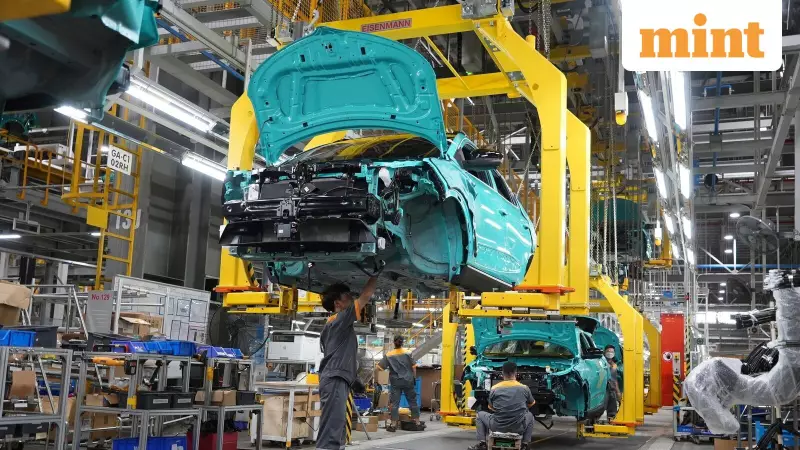
The manufacturing sector has demonstrated particularly strong performance, with the HSBC Flash India Manufacturing Output Index forecast to rise to 59.9 in January from 57.3 in December. This improvement signals enhanced momentum in factory production and suggests that industrial activity is gaining steam after the year-end slowdown.
The broader HSBC Flash India Manufacturing PMI is expected to climb from 55.0 in December to 56.8 in January, marking the best improvement in operating conditions since October 2025. This manufacturing resurgence appears to be driving the overall economic recovery.
Services Sector Maintains Steady Strength
While manufacturing leads the recovery, the services sector continues to show considerable strength. The Flash Services Business Activity Index is projected to rise to 59.3 in January from 58 in December, reflecting steady demand and healthy business confidence among service providers. The sector's sustained performance contributes significantly to the overall economic rebound.
Cost Pressures and Inflation Dynamics
The survey reveals interesting developments in cost pressures. Input costs rose at the weakest rate in nearly five-and-a-half years, while output charge inflation eased to an eight-month low. Despite some acceleration since December, aggregate rates of input cost and output charge inflation remained moderate, indicating stability in growth patterns.
At the composite level, input prices rose at the quickest pace in four months during January, though this increase remained modest by historical standards. Underlying data suggests that cost pressures were more pronounced in the service economy compared to manufacturing.
New Business and International Orders Show Improvement
The acceleration in private sector activity was underpinned by a faster expansion in overall new business intakes. Survey participants reported that sales were fueled by strengthening demand conditions and aggressive marketing campaigns. Manufacturers noted a quicker upturn than service providers, though growth picked up pace in both sectors.
January data also showed a marked upturn in aggregate international orders – the greatest improvement in four months. According to qualitative survey responses, Asia, Australia, Europe, Latin America, and the Middle East featured as the main destinations for Indian goods and services during the latest month.
Job Creation Resumes Across Private Sector
Hiring across India's private sector resumed in January after no change in employment during December. Although the pace of job creation was slight, it aligned broadly with the series trend. Anecdotal evidence indicated that recruitment stemmed from efforts to better align resources with business requirements. Companies specifically mentioned adding junior- and mid-level workers to their teams.

Expert Analysis and Business Outlook
Pranjul Bhandari, chief India economist at HSBC, commented on the findings: "Growth, as signalled by the HSBC flash PMI, picked up pace for both manufacturing and services. Despite the rise in the manufacturing PMI, January's figure remained below the 2025 average. After losing some momentum at the end of 2025, new orders rose more rapidly – led by a faster pick up in domestic orders. Input cost pressures rose quickly, though more for goods producers than for service providers."
When assessing the 12-month outlook for business activity, Indian private sector companies expressed optimism. The overall level of positive sentiment remained below its long-run average but rose to a three-month high. Survey participants cited efficiency gains and demand buoyancy as factors boding well for future growth. Allocated marketing budgets and favourable exchange rates were also identified as potential tailwinds.
Broader Economic Context and GDP Projections
Earlier this month, the statistics ministry estimated that India's economy is likely to grow 7.4% in the current financial year. This projection is supported by strong growth in manufacturing and services output, healthy household spending, and robust investments in fixed assets.
This estimate exceeds the 6.3-6.8% growth forecast by the government in the Economic Survey 2024-25. While GDP in real terms has exceeded expectations, growth in nominal terms lags behind the 10.1% projected in the union budget for this fiscal year. The first advance estimate released this month projected 8% nominal growth, representing the softest performance since the pandemic-induced slump of 2021.
Softer nominal GDP growth is projected in the context of consumer price index (CPI)-based inflation remaining below the Reserve Bank of India's target of 4%. This trend has been aided by a fall in food prices, with retail price inflation standing at just 1.3% in December. The RBI last month projected CPI-based inflation at 2% for the current financial year.
The final PMI data for January will be released in early February, providing more comprehensive insights into the private sector's performance. The flash PMI data is based on responses from approximately 400 manufacturers and 400 service providers across India.





