

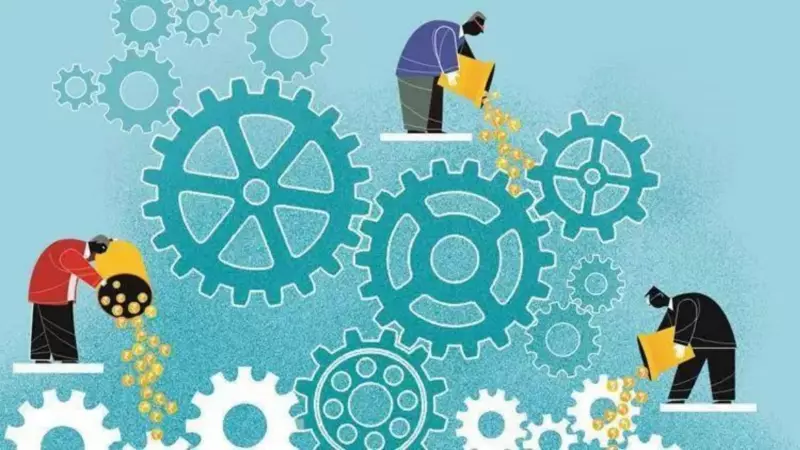
As the calendar turns to 2026, nations worldwide are engaged in deep introspection. Societies are grappling with fundamental questions about work, community, and progress, driven by challenges like aging populations, automation, and a pervasive sense of isolation. In this global context, India steps into the new year presenting a distinct and adaptable national approach.
The Global Dichotomy: Individualism vs. Collectivism
Most advanced economies tend to orient themselves towards one of two dominant philosophies. On one side, individualistic models prioritize personal freedom, competition, and ambition. These systems have fueled remarkable innovation and wealth creation. However, they carry a significant social cost. For instance, in the United States, nearly half of all adults report experiencing chronic loneliness, highlighting a crisis of belonging amidst material abundance.
On the opposite end, collectivist systems emphasize social harmony, order, and stability. While they provide a strong sense of security and reduce uncertainty for individuals, they can sometimes stifle bold innovation and risk-taking. Progress in such frameworks often becomes incremental, as deviation from the norm is discouraged.

India's Third Way: A Dynamic Balance
India, as noted by author and IAS officer Ranjan Yumnam in his December 31, 2025 analysis, does not conform strictly to either doctrine. Instead, the country has cultivated a more fluid and pragmatic balance. This model actively encourages ambition and enterprise but ensures these forces are not isolated. Competition exists, yet it is consistently cushioned by the intertwined support systems of family, community, and state policy.
This dual focus is clearly visible in India's core development strategies. Initiatives like Make in India champion manufacturing, global competitiveness, and individual risk-taking. Concurrently, the vision of Viksit Bharat (Developed India) is framed not just by GDP targets but by principles of inclusion, dignity, and shared progress. The goal is broad-based growth that leaves no one behind.
The Foundational Role of Welfare
A critical component of this balance is the parallel and massive expansion of welfare architecture. Programs guaranteeing food security, housing, sanitation, health insurance, and direct benefit transfers are no longer seen as mere safety nets. They are treated as foundational structures that underpin the entire economy. By absorbing risk and preventing destitution at the base, these systems empower individuals to aspire and venture without the fear of catastrophic personal failure—a safety net rarely found in purely individualistic societies.
The data underscores the success of this lived experiment. Despite a modest per-capita income, India is now home to over 150,000 recognized startups, creating one of the world's largest entrepreneurial ecosystems. This boom is not solely a product of capital or perfect institutions. It is innovation enabled by social cushioning—families that share risk, communities that tolerate trial and error, and welfare that prevents collapse.
Resilience Through Flexible Work
The structure of India's workforce further illustrates this resilient model. The International Labour Organisation estimates that more than half of India's workforce is self-employed. Often labeled as the informal sector, this vast pool of flexible labor is central to the nation's economic shock absorption. When faced with economic, technological, or personal disruptions, people adapt and reconfigure rather than falling out of the system entirely.
Importantly, this embeddedness in social structures has not dulled global ambition. Indian professionals continue to ascend to leadership roles across global technology, finance, medicine, and research sectors. The nation's public discourse remains vibrant and noisy, with norms constantly negotiated and authority contested. Progress may be uneven, but stagnation is rare.

Conclusion: Strength in Refusing Purity
As 2026 unfolds, the world's societies are forced to reassess their core assumptions. The future may not belong to those who maximize either unchecked freedom or rigid order, but to those who master the balance between the two. India's institutions and governance face their own strains, yet its social fabric demonstrates remarkable elasticity. Rules exist, but improvisation is permitted. Belonging does not cancel ambition, and ambition does not demand isolation.
India's optimism, therefore, lies not in claiming a perfect model. It resides in the continued commitment to a complex, difficult, and dynamic experiment—one that deliberately blends enterprise with welfare, personal ambition with collective security, and economic growth with a profound sense of belonging. In a world increasingly drawn to absolutes, India's core strength may well be its enduring refusal to be pure.





