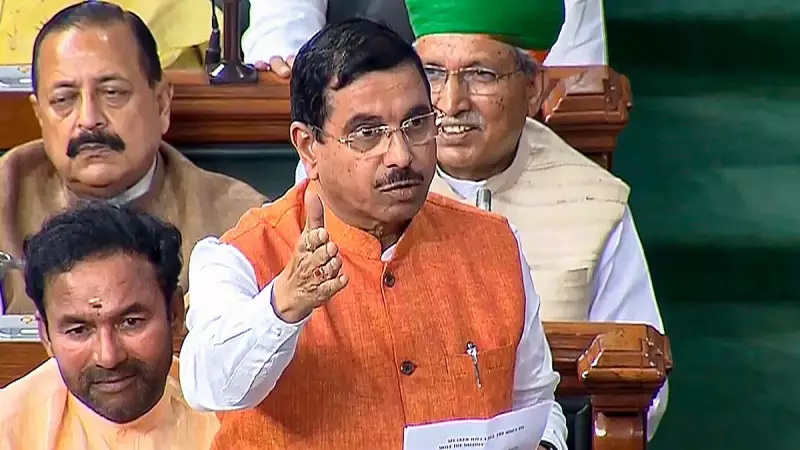
Union Food Minister Pralhad Joshi has provided a firm assurance to the Parliament regarding the ongoing procurement of paddy across the country. In a statement made in the Rajya Sabha on 16 December 2025, the minister categorically stated that there is no shortage in the government's paddy procurement operations.
Minister's Assurance on Procurement
Addressing the upper house, Minister Pralhad Joshi emphasized that the procurement process for paddy is proceeding smoothly and without any deficits. This statement serves to allay concerns among farmers and stakeholders about potential gaps in the government's Minimum Support Price (MSP) operations for the current season. The minister's clarification is significant in maintaining confidence in the central procurement system, which is a cornerstone of India's food security policy.
Call for Enhanced Storage Infrastructure
Alongside the procurement assurance, Minister Joshi issued a crucial directive to all state governments. He has asked them to focus on creating additional storage facilities for foodgrains. This directive comes against the backdrop of rising procurement levels of both wheat and paddy crops in recent years.

The increasing procurement, while a positive indicator of agricultural output and farmer participation in MSP schemes, puts immense pressure on existing storage infrastructure. Adequate storage is essential to prevent post-harvest losses, maintain grain quality, and ensure efficient distribution under various government welfare programs.
Implications and the Road Ahead
The minister's dual focus highlights the government's approach to managing India's food economy. On one hand, it reaffirms the commitment to procuring crops at MSP, a critical promise to the farming community. On the other, it proactively addresses the logistical challenge of storing the procured surplus.
The push for more storage facilities is expected to involve the construction of new godowns and modern silos under schemes like the Agriculture Infrastructure Fund. This move is not just about creating space; it is about building a resilient supply chain that can handle bumper harvests, reduce wastage, and ensure national food security in the long term. The success of this initiative will now depend on collaborative efforts between the central and state governments.