

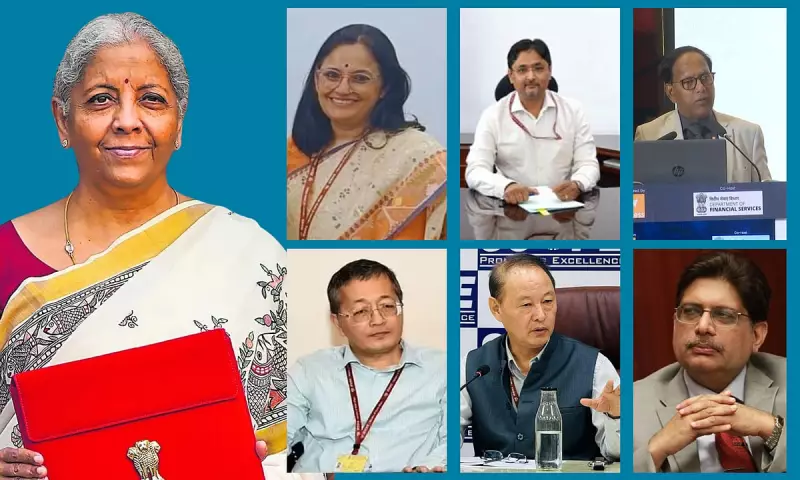
Union Budget 2026: The Key Bureaucrats Shaping India's Economic Future
As Finance Minister Nirmala Sitharaman prepares to present the Union Budget 2026 in the Lok Sabha on February 1, the spotlight extends beyond the minister herself to the dedicated team of bureaucrats working tirelessly behind the scenes. This budget comes at a critical juncture, with India's economy growing at a robust 7.4 per cent rate, yet facing significant challenges from an uncertain geopolitical environment. The strategic planning and execution of this budget are powered by six key officials who play pivotal roles in formulating policies that will drive India's growth trajectory in the coming fiscal year.
The Backbone of India's Economic Strategy
While the Finance Minister delivers the budget speech, it is the collective effort of senior bureaucrats that transforms vision into actionable policy. These officials bring decades of experience in economic management, fiscal planning, and administrative oversight. Their work involves meticulous analysis of economic data, forecasting trends, and designing measures that balance growth with stability. In the context of global uncertainties, their role becomes even more crucial as they navigate complex international dynamics while focusing on domestic priorities.
Key Challenges and Opportunities
The Union Budget 2026 is being crafted against a backdrop of both optimism and caution. On one hand, India's 7.4 per cent growth rate provides a strong foundation for ambitious initiatives. On the other, geopolitical tensions and global economic volatility require careful risk management. The bureaucrats involved must address several critical areas:

- Sustaining High Growth: Designing policies to maintain and accelerate economic momentum.
- Fiscal Discipline: Balancing expenditure with revenue generation to ensure long-term sustainability.
- Inclusive Development: Ensuring that growth benefits all sections of society, particularly marginalized communities.
- Global Integration: Positioning India favorably in international trade and investment flows despite external challenges.
These professionals work in close coordination with the Finance Minister, providing technical expertise and ground-level insights that shape the final budget document. Their contributions span various domains, including taxation, public expenditure, economic research, and implementation monitoring.
The Human Element in Policy Making
Beyond the numbers and policies, the Union Budget 2026 reflects the dedication and expertise of India's civil services. These bureaucrats often operate away from the public eye, yet their decisions have far-reaching impacts on the nation's economy and the lives of its citizens. Their ability to interpret complex economic indicators, anticipate future trends, and devise pragmatic solutions is instrumental in translating political vision into tangible outcomes. As the budget presentation approaches, their behind-the-scenes efforts underscore the collaborative nature of India's governance model, where political leadership and administrative expertise converge to address national priorities.






