

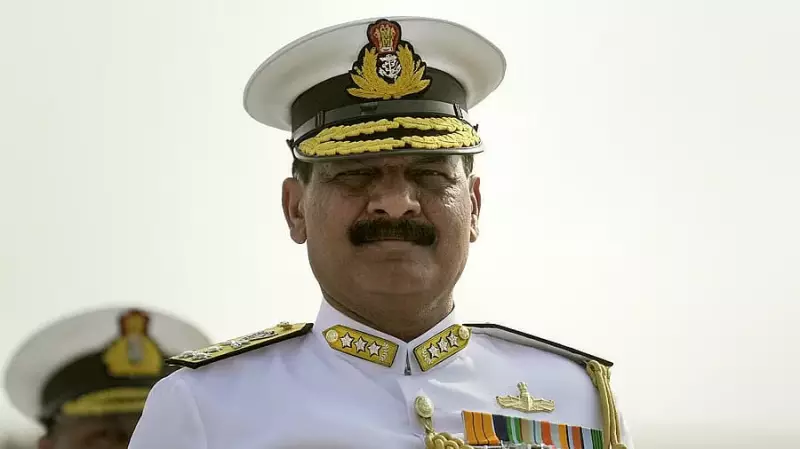
In a significant declaration that underscores the strategic importance of the seas for India's economic ambitions, Navy Chief Admiral Dinesh Kumar Tripathi has stated that the vision of Viksit Bharat is no longer merely a policy framework but has transformed into a tangible maritime reality. This assertion highlights the critical role that oceanic routes play in powering the nation's growth trajectory towards its 2047 development goals.
Oceans as the Lifeline of India's Economic Aspirations
Admiral Tripathi emphasized that the vast expanse of the world's oceans serves as the primary medium through which India can achieve its Viksit Bharat objectives. He provided compelling statistics to back this claim, noting that an overwhelming 90% of global EXIM (Export-Import) trade is conducted via maritime pathways. This global dependence on sea routes underscores their universal significance in international commerce and connectivity.
India's Heavy Reliance on Maritime Trade Routes
Delving into India's specific context, the Navy Chief revealed that 95% of India's total trade volume is carried through sea routes. This staggering figure illustrates the country's deep-seated reliance on its maritime infrastructure for sustaining and expanding its economic activities. The oceans are not just peripheral channels but central arteries that fuel the nation's trade engine, making them indispensable for realizing the Viksit Bharat vision.

The timing of this statement is particularly poignant as India progresses towards its 2047 milestone, which marks a century of independence and the target date for becoming a fully developed nation. Admiral Tripathi's remarks serve as a reminder that maritime security and efficiency are paramount to safeguarding this economic lifeline. A robust naval presence and advanced port facilities are essential to protect these vital trade routes from potential disruptions and threats.
Strategic Implications for National Development
This maritime-centric approach to Viksit Bharat carries several strategic implications:
- Enhanced Naval Capabilities: Strengthening the Indian Navy to ensure secure and free navigation in key sea lanes.
- Port Modernization: Investing in port infrastructure to handle increasing trade volumes efficiently.
- Blue Economy Initiatives: Leveraging oceanic resources sustainably to boost economic growth.
- International Partnerships: Collaborating with other nations to maintain maritime security and trade stability.
By framing Viksit Bharat as a maritime reality, Admiral Tripathi shifts the narrative from abstract policy goals to concrete, actionable domains. It calls for a concerted focus on maritime strategy as a cornerstone of national development, ensuring that India's economic aspirations are firmly anchored in the security and prosperity of its surrounding seas.






