

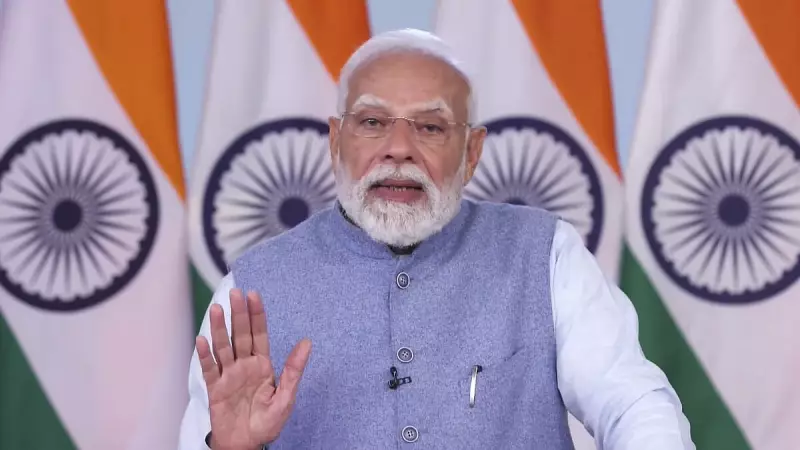
As India prepares for the pivotal 2026-27 Union Budget, Prime Minister Narendra Modi and his administration are confronting a formidable economic challenge. The upcoming fiscal blueprint is widely viewed as a critical juncture for reinforcing the nation's growth momentum, which has shown resilience but faces headwinds from both international and domestic fronts.
A Delicate Balancing Act for Fiscal Policy
The government must navigate a complex landscape where stimulating economic expansion must be carefully weighed against maintaining fiscal discipline. With global economic conditions remaining volatile due to geopolitical tensions and trade disruptions, India's budget planners are under immense pressure to craft policies that can insulate the domestic economy while capitalizing on emerging opportunities.
Key Growth Imperatives for 2026-27
Several crucial areas demand focused attention in the forthcoming budget to ensure sustained growth:

- Infrastructure Development: Accelerating investments in transportation, energy, and digital infrastructure to enhance productivity and connectivity across sectors.
- Manufacturing Boost: Strengthening initiatives like Production Linked Incentive (PLI) schemes to position India as a global manufacturing hub and create employment opportunities.
- Agricultural Modernization: Implementing reforms and technological interventions to improve farm productivity and rural incomes, which remain vital for inclusive growth.
- Export Competitiveness: Developing strategies to enhance India's export capabilities amidst shifting global supply chains and protectionist tendencies in major markets.
Revenue Generation and Fiscal Prudence
Financing growth-oriented expenditures while adhering to fiscal consolidation targets presents another significant challenge. The budget will need to explore innovative revenue streams through tax reforms, disinvestment initiatives, and improved compliance mechanisms. Simultaneously, expenditure rationalization and targeted subsidy delivery will be essential to optimize resource allocation without compromising social welfare objectives.
Global Context and Domestic Expectations
International financial institutions and rating agencies will closely scrutinize the 2026-27 budget for its commitment to macroeconomic stability. At the same time, domestic stakeholders including industry bodies, farmers' organizations, and state governments have heightened expectations for policy support in their respective domains. The budget's success will largely depend on its ability to balance these diverse, often competing, priorities while maintaining a clear focus on long-term growth sustainability.
As the Modi government approaches this crucial budgetary exercise, the economic team faces the tough task of designing interventions that can simultaneously address immediate growth concerns while laying the groundwork for India's transformation into a developed economy by 2047. The 2026-27 Union Budget represents not just another annual financial statement, but a strategic document that could define India's economic trajectory for years to come.






