

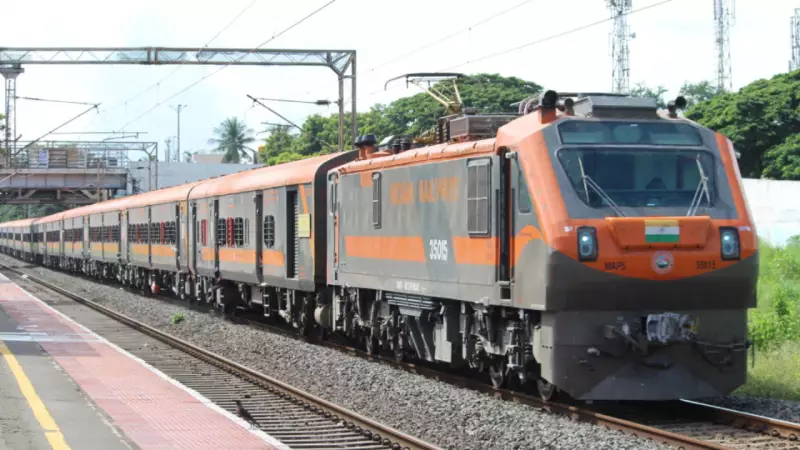
Ahead of the Union Budget 2026, a decade of sustained capital expenditure by Indian Railways is offering a clear and comprehensive snapshot of what long-term investment in the sector has delivered. From the introduction of modern Vande Bharat and Amrit Bharat trains to near-total network electrification and the rollout of Kavach safety systems, the outcomes are visible and transformative. With budgetary allocations expected to remain range-bound in 2026–27, recent data highlights how consistent capex over the last ten years has translated into significant upgrades across safety, new trains, and core railway infrastructure.
Modern Passenger Trains Take Centre Stage
According to an analysis of Indian Railways data, capital expenditure over the last decade has led to the introduction of 164 Vande Bharat trains and 30 Amrit Bharat train services. This signals a strong push towards modern, faster, and more passenger-friendly rail travel. In recent years, Indian Railways has introduced several new passenger trains, including Vande Bharat, Vande Bharat sleeper, Tejas Express, Amrit Bharat Express, Namo Bharat trains, Vistadome coaches, and Antyodaya Express. These additions reflect a strategic shift in focus from incremental upgrades to a more transformation-driven approach in passenger services.
Looking Ahead to 2026 Priorities
Looking ahead, priorities for 2026 will likely include reducing consequential accidents to single digits, improving food and onboard services, implementing 52 reforms in 52 weeks, and increasing the use of artificial intelligence and advanced technologies. This forward-looking agenda underscores the commitment to continuous improvement and innovation in the railway sector.

Safety Upgrades Gain Momentum
Safety has emerged as a major outcome of this spending cycle. The implementation of Kavach, the automatic train protection system, stands out as a key achievement aimed at reducing accidents and enhancing operational safety. However, the rollout is still in its initial stages and requires concerted effort to cover a major portion of the Indian Railways network. This aligns with the broader spending pattern, where safety has seen Rs 1,16,470 crore spent, or 84 per cent utilisation of allocated funds till December-end, amounting to over 80% of the total gross budgetary support of Rs 2.52 lakh crore.
Network Electrification and Core Infrastructure Strengthening
Network-level upgrades form another core outcome of the capex push. Over 99 per cent of the broad-gauge network has now been electrified, marking a near-complete transition away from diesel traction. Extensive works covering railway tracks have also been carried out, underscoring the emphasis on strengthening core infrastructure alongside service upgrades. This electrification drive not only enhances efficiency but also contributes to environmental sustainability.
Capacity Expansion and Fleet Augmentation
Capacity expansion has moved in parallel with safety and modernisation efforts. Capacity augmentation spending has reached Rs 1,09,238 crore, or 69 per cent utilisation, indicating steady progress in easing congestion and improving operational efficiency across the network. The scale of investment is further reflected in rolling stock additions, with Indian Railways planning to add 4,838 coaches in 2025–26 and 4,802 coaches in 2026–27. This points to a continued emphasis on fleet expansion even as major network milestones are achieved, ensuring that the railway system can meet growing passenger and freight demands.






