

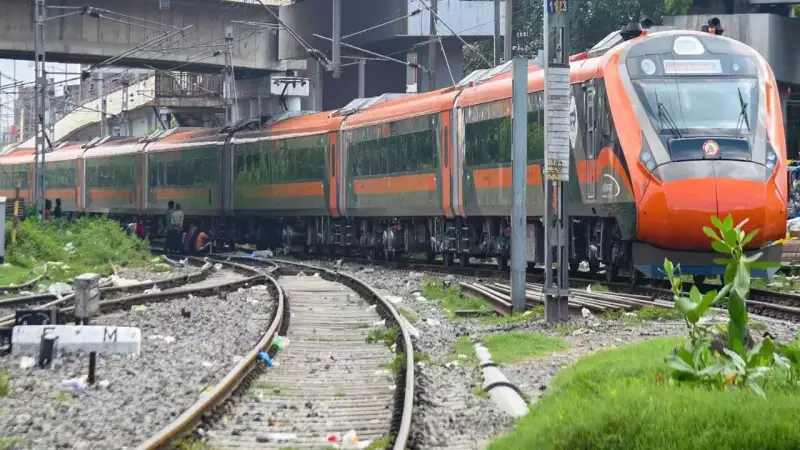
Railways Poised for Major Capital Push in Upcoming Union Budget
As Finance Minister Nirmala Sitharaman prepares to present the Union Budget on February 1, all eyes are on Indian Railways, which is expected to remain a cornerstone of the government's capital expenditure strategy. This focus aligns with the broader Viksit Bharat @2047 vision, positioning railways as a critical driver of national development and economic integration.
Sustained Investment in Rail Infrastructure
The transport and logistics sector continues to be viewed as a vital growth engine, with Indian Railways playing an indispensable role in connecting remote regions, facilitating freight movement, and offering a sustainable, cost-effective transportation alternative. Over the past five years, successive budgets have consistently prioritized rail infrastructure development, even as challenges persist in areas such as operational speed, efficiency enhancement, and private sector engagement.
Railway capital allocations have demonstrated a remarkable upward trajectory since the pandemic years, reflecting the government's unwavering commitment to infrastructure-led economic growth:

- FY21: Allocation of Rs 1.70 lakh crore
- FY22: Nearly doubled to Rs 3.26 lakh crore
- FY23: Increased further to Rs 4.00 lakh crore
- FY24: Rose to Rs 5.15 lakh crore
- FY25 (Revised Estimates): Pegged at Rs 5.43 lakh crore
- FY26 (Budget Estimates): Projected at Rs 5.64 lakh crore
Current Fiscal Year Priorities and PPP Focus
In the current fiscal year, Indian Railways' planned capital expenditure includes substantial allocations for various critical areas. Specifically, Rs 50,903 crore has been earmarked for rolling stock, while Rs 1.2 lakh crore is designated for capacity enhancement projects encompassing new railway lines, gauge conversion, track doubling, electrification initiatives, and metropolitan transport systems. Additionally, safety-related works have received Rs 34,412 crore, underscoring the government's commitment to passenger and operational security.
Public-private partnership models are emerging as a key strategic focus area. Indian Railways had established a PPP capital expenditure target of Rs 10,000 crore for the current fiscal year, with reports indicating that nearly 90 percent of this target had been achieved by mid-January. This demonstrates growing private sector interest in railway infrastructure development.
Simultaneously, the government has allocated Rs 21,000 crore to the National High Speed Rail Corporation Ltd for FY25 to accelerate progress on the ambitious bullet train project. Further funding is anticipated as infrastructure development gains momentum across the sector.
Structural Reforms and Efficiency Challenges
Despite sustained public investment, significant challenges remain in improving railway efficiency. Average train speeds have shown minimal improvement over the past decade, with freight trains typically operating at 20–25 kmph and mail or express passenger trains averaging 50–52 kmph. Furthermore, rail freight's share in overall cargo movement continues to hover below 30 percent, substantially short of the 45 percent target established for 2030.
Industry experts anticipate that the upcoming Budget will need to extend beyond headline allocation figures and address structural reforms to unlock efficiency gains and attract private investment. Key expectations include:

- Development of more investor-friendly PPP models with transparent risk-sharing frameworks
- Incentives for domestic manufacturing of rolling stock, signaling systems, and rail components
- Industry-aligned tariff structures designed to attract non-bulk and containerized freight
- Accelerated rollout of Dedicated Freight Corridors and intermodal terminals
- Strengthening institutional and regulatory frameworks to enhance asset utilization and safety implementation
Economic Context and Future Outlook
These railway budget expectations emerge against a backdrop of economic moderation. India's GDP growth is projected to slow to 6.4 percent in the current fiscal year, down from 8.2 percent in FY24, representing a four-year low. The government had allocated Rs 11.1 lakh crore for overall capital expenditure in FY25, up from Rs 10 lakh crore in the previous year, highlighting the continued reliance on public spending to sustain economic growth.
With FY26 expected to witness a renewed emphasis on PPP investments, Indian Railways are likely to maintain their central position in the government's infrastructure strategy. This approach seeks to balance substantial capital creation with comprehensive reforms aimed at enhancing efficiency, improving competitiveness, and ensuring long-term sustainability in line with national development objectives.





