

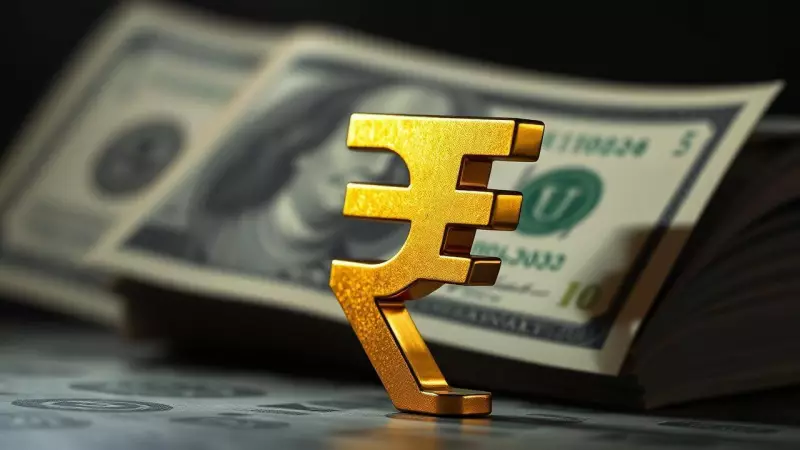
The Indian rupee extended its losses on Wednesday, opening at an all-time low of 91.07 against the US dollar. This marked a decline of 0.05% from its previous close, as the currency remained under intense pressure from sustained foreign capital withdrawals and unresolved trade tensions between India and the United States.
Persistent Pressure Despite Global Cues
Currency traders noted that the rupee's weakness persisted even in the face of supportive global factors. The US dollar itself showed signs of weakness, and global crude oil prices experienced a sharp decline, which typically benefits a net oil importer like India. Despite these potentially positive cues, the domestic currency could not find a footing.
The rupee's struggle is not new to the current session. On Tuesday, it had already plunged to a fresh historic low of 91.14 per dollar before managing a partial recovery to close 15 paise down at 90.93. This week's trend has been decisively negative, with the currency breaching the psychologically significant 90-per-dollar mark on Monday and setting record lows for three consecutive sessions.

Root Causes of the Rupee's Decline
Several interconnected factors are driving the rupee's sustained depreciation. Foremost among them are the persistent foreign portfolio outflows, where overseas investors are pulling money out of Indian markets. This creates a direct demand for dollars, weakening the rupee.
Compounding this is the cloud of uncertainty hanging over the US-India trade negotiations. A prolonged deadlock in these talks is damaging investor sentiment, as markets fear potential escalations in trade barriers. This anxiety is reflected in the currency's performance.
So far in the current calendar year, the Indian rupee stands out as one of the worst-performing major currencies globally, having depreciated by approximately 6% against the US dollar. A widening trade deficit, the threat of punitive US tariffs—including specific 50% duties on certain goods—and the steady stream of investment outflows have collectively dragged the currency down to the 91-level region.
Broader Economic Implications
The rupee's fall to record lows has significant implications for the Indian economy. While it may benefit exporters by making their goods cheaper overseas, it increases the cost of imports, notably crude oil and electronics. This can feed into higher domestic inflation. For companies with foreign debt, repayment becomes more expensive, squeezing their finances.
The market will be closely watching the actions of the Reserve Bank of India (RBI) for any potential intervention to curb excessive volatility. However, with global factors and external trade relations playing a dominant role, the rupee's near-term trajectory appears heavily dependent on developments in the India-US trade dialogue and the direction of global fund flows.






