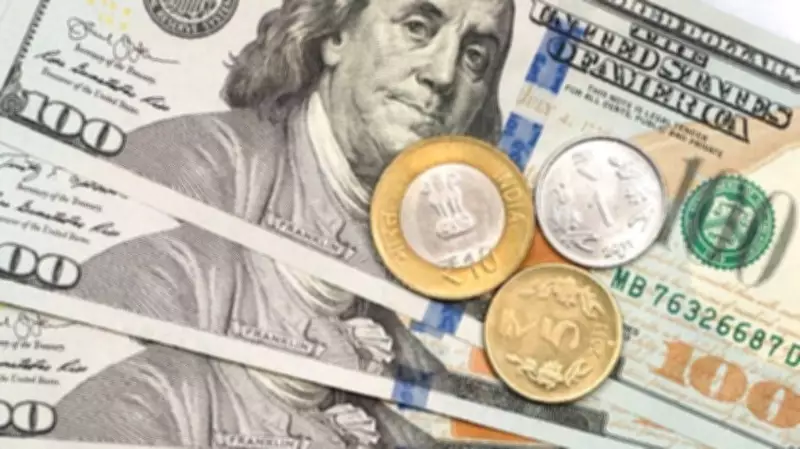
The Indian rupee plunged to a historic low of 96.47 against the US dollar in intraday trade on Friday, surpassing its previous record low. The decline was driven by robust demand for the dollar from importers and foreign portfolio outflows, amid global risk aversion.
Factors Behind the Fall
Market analysts attributed the rupee's weakness to several factors, including a strong US dollar index, rising crude oil prices, and persistent foreign capital outflows. The dollar index, which measures the greenback against a basket of six major currencies, remained elevated near recent highs, putting pressure on emerging market currencies.
Additionally, the surge in global crude oil prices added to India's import bill, further weighing on the rupee. Foreign institutional investors (FIIs) continued to pull money out of Indian equities, adding to the selling pressure on the domestic currency.

Impact on Economy
A weaker rupee makes imports more expensive, potentially fueling inflation. It also increases the cost of foreign debt servicing for Indian companies. However, export-oriented sectors such as IT and pharmaceuticals may benefit from a weaker currency, as their overseas earnings become more valuable in rupee terms.
The Reserve Bank of India (RBI) is widely expected to intervene in the forex market to curb excessive volatility. The central bank has been selling dollars through state-run banks to prevent a sharp depreciation, but its ability to stem the slide is limited given the strong global headwinds.
Market Reaction
The domestic equity markets also came under pressure, with the benchmark Sensex and Nifty indices declining in line with the rupee's fall. Bond yields edged higher as investors sought safe-haven assets.
Currency traders expect the rupee to remain under pressure in the near term, with the next key support level seen at 97.00. The market will closely monitor the RBI's actions and any policy measures from the government to support the currency.