

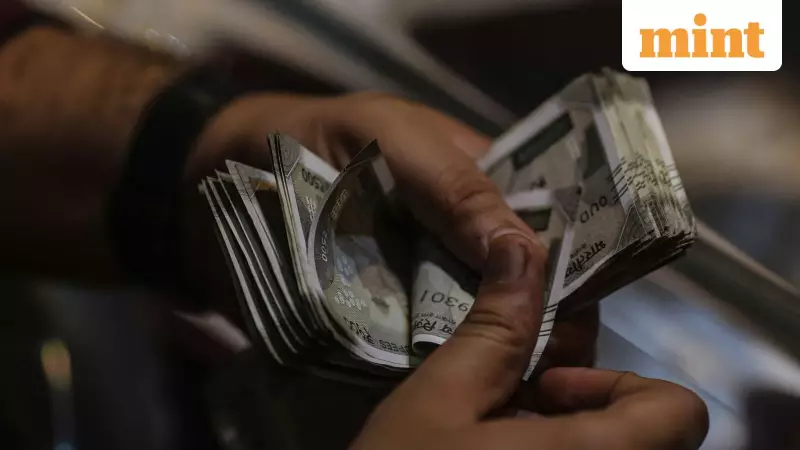
Indian Rupee Recovers Marginally Amid Dollar Softness and EU Trade Deal Optimism
The Indian rupee exhibited a modest recovery against the US dollar during trading on Tuesday, January 27, finding support from a combination of a softer American currency and improved market sentiment following the announcement of a landmark trade agreement between India and the European Union by Prime Minister Narendra Modi.
Rupee's Trading Position and Recent Performance
As of 12:45 p.m. Indian Standard Time, the domestic currency was trading at 91.724 per US dollar, marking a gain of 0.06 percent. This represents a mild rebound for the rupee, which had touched a record low of 91.9650 against the dollar just last week, highlighting the currency's recent volatility.
Key Factors Influencing the Rupee's Movement
Dollar Index Weakness: A significant supportive factor for the rupee was the performance of the US dollar index, which remained close to a four-month low during the session. This broader dollar weakness provided a favorable environment for emerging market currencies like the rupee.

India-EU Free Trade Agreement: The successful conclusion of negotiations on a comprehensive Free Trade Agreement between India and the European Union after an 18-year pause served as a major positive catalyst. The agreement involves broad tariff reductions and eliminations, with the EU expressing confidence that it will significantly boost its exports to India and strengthen bilateral economic ties amidst a volatile global trade landscape.
Persistent Headwinds: Despite these positive developments, the rupee continued to face pressure from ongoing weakness in foreign capital inflows. Steady hedging activity by importers, driven by fears of further currency depreciation, coupled with exporters delaying dollar sales, created flows that worked against the rupee's appreciation.
External Developments and Market Sentiment
Adding to the improved market mood were comments from U.S. Treasury Secretary Scott Bessent on Friday, suggesting that an additional 25 percent tariff on India could potentially be rolled back. This possibility emerged following a sharp decline in India's imports of Russian oil, providing another boost to investor sentiment regarding India's economic prospects.
Analyst Outlook: Rupee Stabilization Around ₹90 Level
According to analysis from Emkay Wealth Management, the Indian rupee appears to have found a zone of relative stability around the ₹90 mark against the US dollar. While the currency has experienced intermittent volatility on both sides of this level, market estimates from the brokerage firm suggest it may consolidate around current levels in the near term.
The report notes that India's status as a net importer continues to exert pressure on the rupee from a trade perspective. However, this is potentially balanced by improving prospects for foreign investment inflows. Overseas investors have been net sellers in Indian equities for the past 18 months, but this sustained sell-off has also resulted in more attractive valuations across various market sectors, which could lure foreign capital back.
Analysts at the brokerage believe that deeper interest rate cuts in the United States, which would significantly compress dollar yields, could revive investor appetite for higher-yielding emerging markets, including India.
Broader Currency Market Context and Strategic View
"The global currency landscape is clearly transitioning into a phase where monetary policy divergence and geopolitical risks will play a defining role," said Parag Morey, Head of Sales at Emkay Wealth Management. "A softer US Dollar, coupled with potential capital reallocation towards emerging markets, creates both opportunities and risks for investors. For India, sustained foreign inflows, supported by stable macro fundamentals, could help the rupee maintain its current range despite ongoing global volatility."
Disclaimer: This analysis is for educational purposes only. Readers are advised to consult with a qualified investment advisor before making any financial decisions.






