

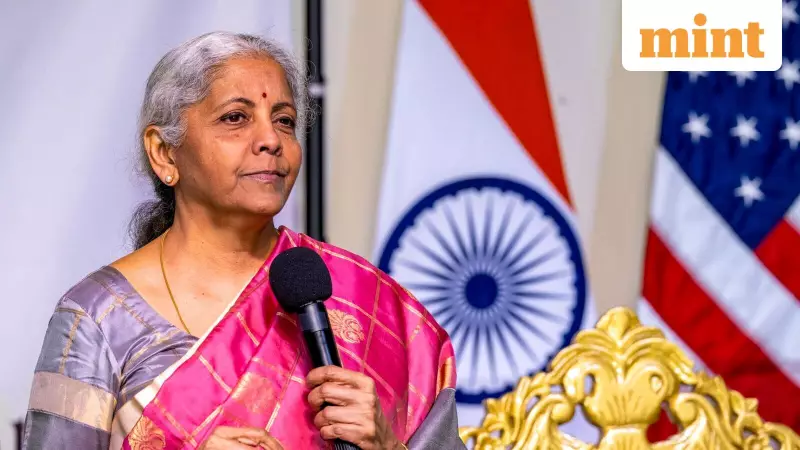
Finance Minister Nirmala Sitharaman presented a robust picture of India's economic health in the Lok Sabha on Monday, detailing a remarkable journey from vulnerability to strength over the past decade. Replying to the debate on supplementary demands for grants, she stated that the nation has solidified its position as the world's fastest-growing major economy after moving from a state of fragility in 2013.
From External Vulnerability to Resilience
Sitharaman drew a sharp contrast between the economic indicators of 2013 and the present day. She informed the House that in 2013, the current account deficit (CAD) was at a crisis level of 4.8% of GDP, the highest seen since 1970. At that time, foreign exchange reserves could cover only about seven months of imports.
In a significant turnaround, she revealed that for the financial year 2025, India's CAD stands at a manageable 0.6% of GDP. Furthermore, by June 2025, the country's forex reserves had swelled sufficiently to cover 11.4 months of imports. The minister emphasized that these reserves are now built on stable foundations and are not reliant on volatile capital flows.

Call for Collective Fiscal Responsibility
While highlighting the central government's success in reducing the fiscal deficit that had expanded during the COVID-19 pandemic, Sitharaman expressed concern over rising debt levels in several states. Without naming any specific state, she pointed out that the debt-to-Gross State Domestic Product (GSDP) ratio for many states is "shooting up."
She reminded the House that the central government has consistently lowered its fiscal deficit since 2020-21, adhering to its commitment to Parliament. "Equally, there should be concern about debt to GSDP of many states," Sitharaman stated, underscoring the need for a collective effort. "And therefore, collectively, we have to work to bring down the debt to GDP number and the debt to GSDP number."
Broad-Based Growth and Inclusive Development
The Finance Minister painted an optimistic picture of India's growth trajectory, stating it has become "quite broad-based" over the last ten years. She provided evidence of inclusive development, noting that people from the bottom rung of society are now acquiring assets.
Sitharaman explained that inequality in asset ownership has seen a massive decline, especially in urban areas, for key items like motor vehicles and refrigerators. She also highlighted a significant growth in the purchasing power of the rural poor, indicating a deepening of economic prosperity.
During the debate, Congress MP K.C. Venugopal raised concerns about the depreciation of the Indian rupee against the US dollar and questioned the reliability of GDP data, citing IMF reservations. In response, Sitharaman clarified that the base year for GDP computation is scheduled to be updated next year.
On the topic of supplementary demands, the minister defended them as "absolutely necessary" for a responsive government to meet critical funding needs of departments and states. However, she noted that the government has disciplined the process by limiting such demands to a maximum of two per year. Sitharaman also justified the government's increased outlays for crucial sectors like fertilizers, defence, education, and research and development.






