

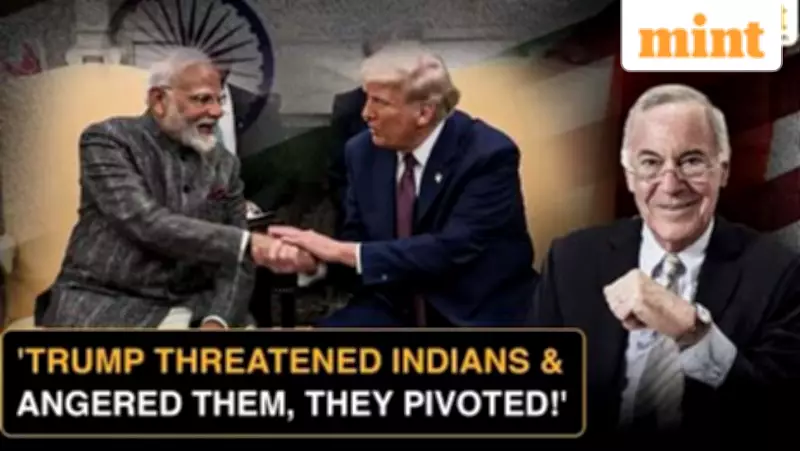
US Economist Decodes How Trump's Tariffs Transformed Into a Strategic Victory for India
In a revealing analysis, distinguished American economist Steve Hanke has articulated why the tariff policies implemented by former US President Donald Trump against India ultimately catalyzed a significant strategic advantage for the South Asian nation. Hanke, a professor of applied economics at Johns Hopkins University, provided detailed insights into this counterintuitive outcome during a recent interview.
A Pivotal Moment for Economic Realignment
Hanke explained that the imposition of tariffs by the Trump administration, initially perceived as a trade barrier, compelled India to reassess its economic positioning on the global stage. This external pressure created a rare and urgent impetus for India to diversify its trade partnerships and reduce dependency on traditional markets. According to Hanke, the tariffs acted as a catalyst, pushing India toward a more proactive and strategic foreign economic policy.
The economist emphasized that this scenario presented India with a dual opportunity:

- To forge new and robust alliances with other major economies seeking to counterbalance US trade policies.
- To accelerate internal economic reforms and liberalization measures that had previously faced political or bureaucratic inertia.
Seizing the Opportunity: The Modi Government's Response
Hanke highlighted the role of Prime Minister Narendra Modi's administration in effectively leveraging this situation. The government's response was characterized by swift diplomatic outreach and decisive policy adjustments aimed at enhancing India's trade competitiveness and attracting foreign investment. This included engaging more deeply with regional trade blocs and negotiating bilateral agreements that expanded India's economic footprint.
Furthermore, Hanke pointed out that the tariff environment encouraged a focus on domestic manufacturing and export diversification, aligning with initiatives like 'Make in India'. This strategic pivot not only mitigated the immediate impact of the tariffs but also positioned India for long-term growth in a shifting global economic order.
Broader Implications for India's Economic Trajectory
The interview underscored that the episode transcended mere trade dynamics, influencing India's broader economic philosophy. Hanke suggested that the experience reinforced the value of economic agility and liberalization, potentially leading to more sustained reforms in sectors such as agriculture, retail, and labor.
In conclusion, Steve Hanke's analysis presents a compelling narrative where a perceived adversarial trade policy became a transformative win for India, fostering strategic autonomy and economic modernization under Prime Minister Modi's leadership.






