

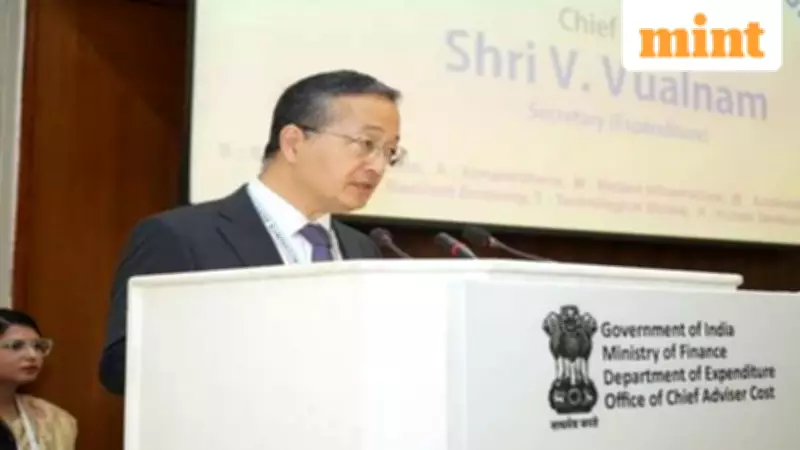
Expenditure Secretary V. Vualnam has emphasized that subsidies in India continue to serve critical national needs and cannot be withdrawn abruptly. In a detailed interview, he outlined a gradual course correction in the country's subsidy and spending framework, highlighting the government's commitment to rationalizing subsidies while leveraging technology for better optimization.
Essential Role of Subsidies in Food Security and Agriculture
Vualnam stressed that food subsidies are essential to ensure food security for poorer sections of the population across different regions, even as declining poverty levels are acknowledged. Similarly, fertilizer subsidies reflect a firm government commitment to ensure adequate availability of fertilizers for farmers. The government aims to achieve this rationalization by maintaining constant engagement with key stakeholders, including the Ministry of Agriculture, the Department of Food and Public Distribution, the Department of Fertilizers, and the Indian Council of Agricultural Research (ICAR).
Optimizing Fertilizer Use Through Technology
At the same time, the government is exploring ways to optimize fertilizer use through better data and technology, amid concerns about overuse in certain regions and the resulting impact on soil health. Vualnam noted that platforms such as AgriStack, along with pilot projects carried out in states like Haryana and Madhya Pradesh, have shown encouraging results in mapping fertilizer consumption patterns and farmer databases.

"These efforts would be scaled up in a step-by-step manner without diluting the government's commitment to provide farmers with the fertilizers required for their crops," said Vualnam. This approach is significant as India's food subsidy is estimated at ₹2.28 trillion in the coming financial year beginning 1 April, slightly lower than the revised estimate for the current financial year.
Key Subsidy Figures and Initiatives
Major expenditure on food subsidy is under the Pradhan Mantri Garib Kalyan Anna Yojana (PMGKAY), under which the government supplies free ration to more than 810 million beneficiaries. The fertilizer subsidy is also projected lower at ₹1.7 trillion for the next financial year, compared to the revised estimate of ₹1.86 trillion for the ongoing 2025-26 fiscal. The total subsidy on urea is projected at ₹1.16 trillion while that for non-urea fertilizers is at ₹54,000 crore during FY27.
On the Bharat VISTAAR initiative announced in the budget, Vualnam explained that it would be anchored by the Ministry of Agriculture, with AgriStack being linked to ICAR's knowledge databases. The aim is to ensure that farmers are better informed about the correct type and quantity of fertilizer, as well as appropriate crop choices, enabling more efficient input use over time.
Addressing Fiscal and Infrastructure Priorities
Addressing concerns about fertilizer prices amid geopolitical disruptions and a reduction in fertilizer subsidy outgo, Vualnam said that careful planning and better targeting would help contain pressures. He also highlighted the government's continued emphasis on capital expenditure, noting that infrastructure creation is yielding strong results.
Key infrastructure achievements include:
- Construction of around 10,000km of national highways annually
- Expansion of the rail network by about 3,000km a year
- Rapid growth of metro rail systems, with India now having the largest metro network globally
- Shipbuilding emerging as a new focus area, reflecting the broader push for infrastructure-led growth
Project Monitoring and Fiscal Consolidation
On ensuring that higher capital expenditure translates into timely asset creation, Vualnam detailed that project monitoring is being carried out at multiple levels. Ministries have strengthened internal monitoring mechanisms, while greater use of public-private partnership models has improved implementation discipline. At the central level, the Project Monitoring Group tracks all large projects above ₹300 crore, reviewing delays and calling in departments to address bottlenecks.

Regarding fiscal consolidation, Vualnam stated that while reducing fiscal deficit remains important, the government's focus has now shifted to managing the debt-to-GDP ratio, as outlined in the budget. India is targeting a debt-to-GDP ratio of around 50%, plus or minus one percentage point, by 2030-31. With economic growth remaining strong and expenditure being closely monitored, the government is confident of staying on the announced fiscal glide path.





