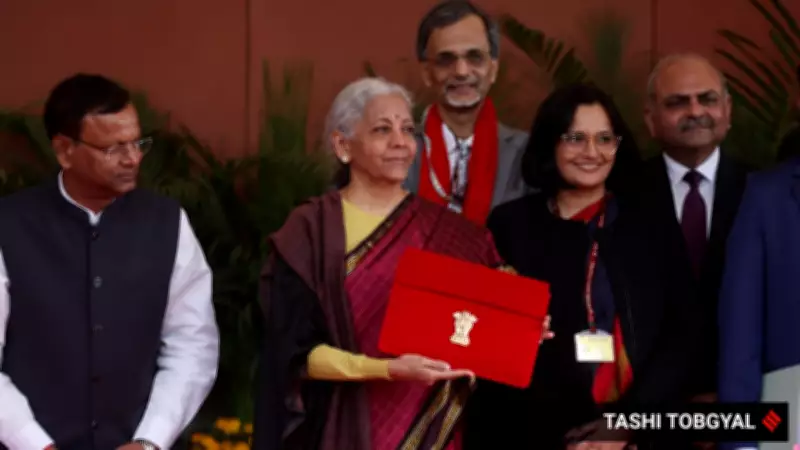
Union Finance Minister Nirmala Sitharaman presented the Union Budget 2026 on February 1, marking her ninth consecutive budget, with a strong focus on fiscal prudence, stability, and long-term growth in alignment with the Viksit Bharat vision. The budget projects a nominal GDP growth of 10.4 per cent for FY 2026-27, supported by expansions in manufacturing and services sectors, while balancing strategic global partnerships and shifting towards resilience in a dynamic economic environment.
Tax Reforms and Simplification Initiatives
The Budget confirms the implementation of the Income Tax Act, 2025, from April 1, 2026, accompanied by simplified rules and forms. Key tax proposals aim to support technology investments, streamline capital markets, and reduce controversies. For instance, due dates for filing returns have been staggered, TDS/TCS rates streamlined, and IFSC unit tax rates set at 15 per cent, following a 20-year tax holiday extension.
Technology Sector Boost with AI Focus
India's IT industry is undergoing transformation through rapid AI adoption. To incentivize this, the Budget proposes a tax holiday until 2047 for foreign companies using data centre services from Indian facilities, promoting data centre business growth. Additionally, a 15 per cent safe harbour margin is introduced for data centre services involving related parties, reducing benchmarking disputes. From an Indian transfer pricing perspective, a uniform 15.5 per cent safe harbour margin is proposed by consolidating activity categories and increasing the revenue threshold to Rs 2,000 crore, a move welcomed by industry stakeholders.

Litigation Reduction and Compliance Ease
The Budget addresses long-standing disputes through retrospective amendments to the Income Tax Act, 1961, and parallel changes in the 2025 Act, focusing on issues like DIN validity and re-assessment proceedings. This is expected to significantly reduce pending litigation. Compliance is eased with decriminalization of procedural defaults, introduction of single combined orders for assessment and penalty proceedings, and no interest on penalties until appellate disposal, enhancing fairness in dispute resolution.
Indirect Tax and Broader Economic Priorities
On the indirect tax front, amendments to place of supply rules for intermediary services shift taxation to the recipient's location, enabling zero-rated supplies for services rendered from India to foreign recipients, benefiting the services sector. Unlike previous years with middle-class relief, Budget 2026 avoids populism, prioritizing higher capital expenditure, structural reforms, and a predictable tax environment for sustained growth.
Overall, Budget 2026 reinforces a forward-looking policy framework that balances stability with innovation, aiming to foster economic resilience and tax certainty in pursuit of national development goals.