

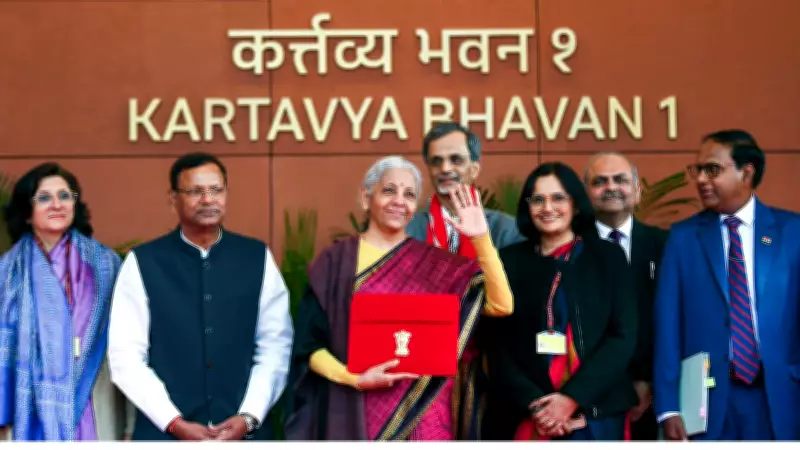
Union Budget 2026: Key Tax Changes Announced by FM Nirmala Sitharaman
Finance Minister Nirmala Sitharaman presented the Union Budget for 2026 on Sunday, introducing several significant tax adjustments aimed at providing relief in certain areas while generating additional revenue through targeted measures. The budget notably left income tax slabs unchanged but made foreign travel and education remittances cheaper while increasing costs for futures and options (F&O) trading.
Income Tax Slabs Remain Unaltered
In a move that maintains the status quo for individual taxpayers, FM Sitharaman announced no changes to the existing income tax slabs. This decision means taxpayers will continue under the current structure without the anticipated revisions that many had speculated about ahead of the budget announcement.
Similarly, there were no modifications announced regarding long-term capital gains (LTCG) tax or adjustments to the standard deduction under the new tax regime. LTCG refers to profits earned from selling capital assets held for an extended period, including real estate properties like land and buildings as well as financial instruments such as equity shares and mutual funds.

Foreign Travel and Education Become More Affordable
The budget introduced welcome relief for Indians planning international travel or sending money abroad for educational purposes. FM Sitharaman reduced the tax collected at source (TCS) rate for overseas tour packages from the previous 5% or 20% to a uniform 2% without any amount limitations.
Previously, tour packages costing up to Rs 10 lakh per financial year attracted a 5% TCS, while those exceeding Rs 10 lakh faced a substantial 20% charge. This reduction is expected to make foreign vacations more accessible to middle-class families.
Additionally, the Finance Minister lowered the TCS rate for education and medical remittances under the Liberalised Remittance Scheme (LRS) from 5% to 2%. This change will particularly benefit parents supporting children studying abroad, easing the financial burden of international education expenses.
F&O Trading Faces Increased Taxation
In what she described as a "reasonable course correction" for the capital markets, Sitharaman announced substantial increases in the Securities Transaction Tax (STT) on futures and options trading. The STT on futures transactions will rise to 0.05% from the current 0.02%, while the tax on options premium and exercise of options will increase to 0.15% from the existing rates of 0.1% and 0.125% respectively.
These adjustments aim to generate additional government revenue while addressing concerns about excessive speculation in the derivatives market. The Finance Minister emphasized that these changes were necessary to ensure balanced growth in the F&O segment while contributing to national fiscal requirements.
New Foreign Asset Disclosure Scheme for Small Taxpayers
The government introduced a one-time, six-month foreign asset disclosure scheme specifically designed for small taxpayers, including students, young professionals, tech employees, and relocated NRIs. This initiative addresses practical challenges faced by these groups in declaring overseas assets and income.
The scheme applies to two distinct categories of taxpayers:
- Category A: Individuals who have not disclosed their overseas income or assets. For this group, the limit for undisclosed income/assets is set at Rs 1 crore. They must pay 30% of the fair market value of the asset or 30% of undisclosed income as tax, plus an additional 30% in lieu of penalties, to receive immunity from prosecution.
- Category B: Taxpayers who have disclosed overseas income and paid due taxes but failed to declare acquired assets. For this category, the asset value limit is Rs 5 crore, with immunity from both penalties and prosecution requiring payment of a Rs 1 lakh fee.
Additional Budget Provisions and Corporate Benefits
The budget included several other noteworthy changes:

- Customs duty on goods imported for personal use reduced to 10% from the previous 20%
- Basic customs duty exemption extended to 17 drugs (including cancer medications) and treatments for seven additional rare diseases
- Minimum Alternate Tax (MAT) rate reduced from 15% to 14% and made a final tax, with no further credit accumulation allowed from April 1, 2026
- Tax holiday until 2047 proposed for foreign companies providing global cloud services using Indian data centers, provided they serve Indian customers through local reseller entities
These comprehensive measures reflect the government's balanced approach to taxation in Budget 2026, providing targeted relief while ensuring revenue generation through strategic adjustments in specific sectors.





