

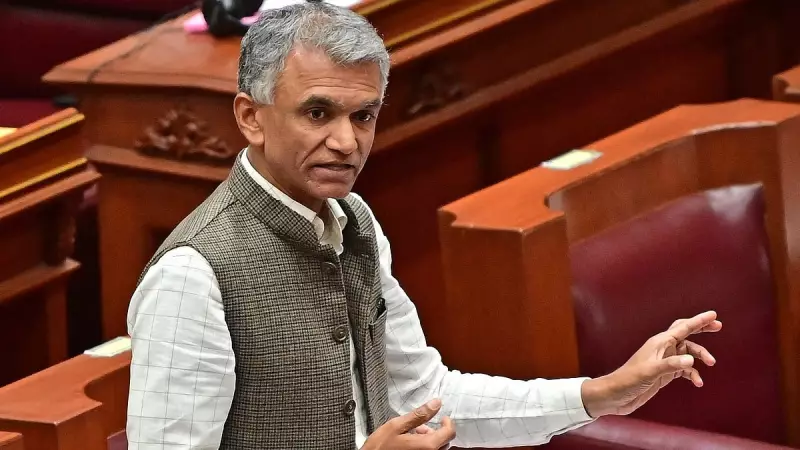
Karnataka's Finance Minister, Krishna Byre Gowda, has made a pressing appeal to the central government, highlighting a severe financial strain on the state's coffers. The minister has urged the Centre to address what he terms as the state's 'shrinking fiscal space' in the upcoming Union Budget.
The Core of the Fiscal Crisis
The heart of the issue lies in a significant drop in Goods and Services Tax (GST) collections following a rationalisation process. Minister Gowda presented stark figures to underscore the crisis. He pointed out that after the rationalisation, Karnataka's annual GST growth rate plummeted from a robust 12 per cent to a mere 5 per cent.
This dramatic slowdown has translated into a direct and substantial revenue loss for the state. The immediate shortfall for the current financial year is estimated at a staggering Rs 5,000 crore. More alarmingly, the state anticipates this gap to widen, projecting an annual revenue deficit of approximately Rs 9,000 crore every year going forward.

Implications for Karnataka's Development
This massive fiscal hole poses a serious threat to Karnataka's ambitious development agenda and its ability to fund critical state-run schemes and infrastructure projects. The reduced financial headroom could impact spending on sectors like:
- Social welfare programs
- Public health and education infrastructure
- Road and urban development projects
- Investment in new industries and job creation
The appeal, made on 10 January 2026, is strategically timed ahead of the Union Budget presentation. It places the onus on the central government to devise a mechanism, possibly through increased compensation or grants, to bridge this gaping revenue shortfall caused by the national GST policy shift.
A Call for Cooperative Federalism
Minister Gowda's statement is more than a request for funds; it is a call for reinforcing the principles of cooperative federalism. The argument underscores how decisions taken at the national level, such as GST rate rationalisation, can have unintended but severe consequences for individual states' financial health.
Karnataka, often hailed as an economic powerhouse and a major contributor to the national tax pool, now finds its own fiscal autonomy constrained. The state government's plea highlights the need for a more responsive and equitable framework where the Centre proactively addresses such disparities, ensuring that states are not left to manage the negative fallout of centralised tax reforms alone.
The coming Union Budget will be closely watched to see if the Centre heeds this call from Bengaluru and provides a concrete solution to alleviate Karnataka's pressing financial constraints.






