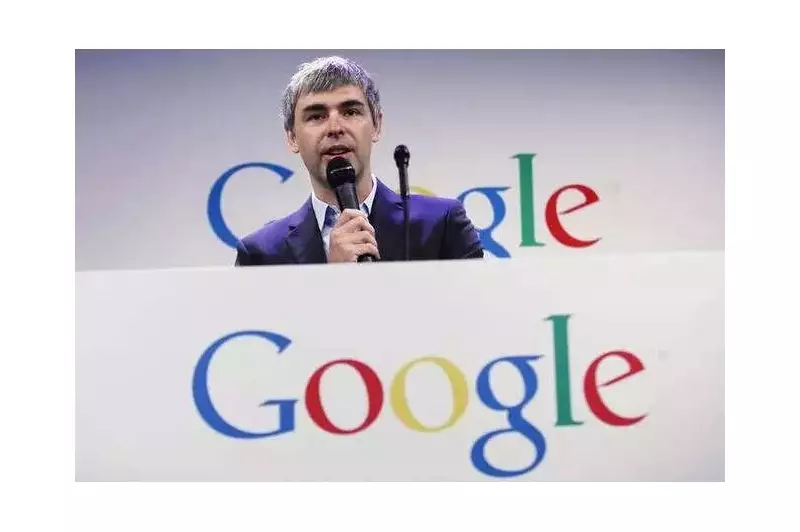
In a significant move shaking the foundations of Silicon Valley, Google co-founder Larry Page has officially cut his business ties with California. This action ends a relationship spanning decades with the state that was instrumental in the birth of his technology empire. The billionaire strategically moved several crucial business entities out of California by the end of December 2025, as per official filings examined by Business Insider.
The Great California Exit: Beating the Tax Deadline
The restructuring was a race against time, specifically aimed at beating a critical year-end deadline. This deadline is linked to a controversial proposed wealth tax in California. Page converted his family office, known as Koop, from a California to a Delaware incorporation in late December 2025. This was not an isolated move. Several other entities under his control followed the same path.
These include Flu Lab LLC, which funds his influenza research initiatives, and One Aero, his ambitious flying car venture. Following the shift, Flu Lab now lists its principal address in Nevada, while One Aero is registered in Florida. A source close to Page confirmed to Business Insider that the Google cofounder has already left California, though his permanent relocation status remains unclear.

California's Billionaire Tax: Sparking a Tech Exodus
This mass corporate migration is a direct response to a hotly debated ballot measure in California. The proposal seeks to impose a one-time 5% tax on residents with a net worth exceeding $1 billion. If voters approve the measure in the November 2026 election, it would apply retroactively to anyone living in California as of January 1, 2026.
For Larry Page, who is currently ranked as the world's second-richest person by the Bloomberg Billionaires Index, this tax could translate into a staggering bill of over $12 billion. The New York Times reported in December that Page had informed associates he was considering a move to Florida specifically because of this tax proposal. He is not alone in his apprehensions.
The potential tax has triggered concerns among other tech elites, leading to a noticeable exodus. Fellow billionaire Peter Thiel has established a Miami office for his investment firm, Thiel Capital. Similarly, prominent venture capitalist David Sacks has launched operations in Austin, Texas, distancing himself from California's fiscal landscape.
The proposed tax is backed by the healthcare union SEIU-United Healthcare Workers West. Its supporters argue that the revenue, estimated to raise $100 billion over five years from California's roughly 200 billionaires, would help offset expected federal budget cuts to vital programs like healthcare, education, and food assistance.
Beyond Taxes: The Privacy Appeal of Delaware
While tax avoidance is a primary driver, the shift to Delaware offers significant additional advantages, particularly concerning privacy. Delaware law does not require Limited Liability Companies (LLCs) to publicly disclose the names and addresses of their directors during incorporation. This provides an extra layer of anonymity, a feature highly valued by Page, whose family office is known for operating under exceptional secrecy managed by CEO Wayne Osborne.
The move to Delaware wasn't limited to his core tech and research ventures. Page also converted the LLCs previously used to purchase private islands in Puerto Rico, the Virgin Islands, and Fiji from California to Delaware. In a telling sign of a comprehensive shift, even his wife Lucinda Southworth's marine conservation charity, Oceankind, made the switch to Delaware incorporation in December.
California Governor Gavin Newsom has publicly opposed the wealth tax proposal, warning that it would inevitably trigger an exodus of the state's wealthiest residents. The ballot measure still requires approximately 870,000 signatures to qualify for the November vote. However, billionaires like Larry Page are not waiting to see the outcome. They are taking preemptive action to protect their assets now, potentially signaling a long-term goodbye to Silicon Valley as we know it.