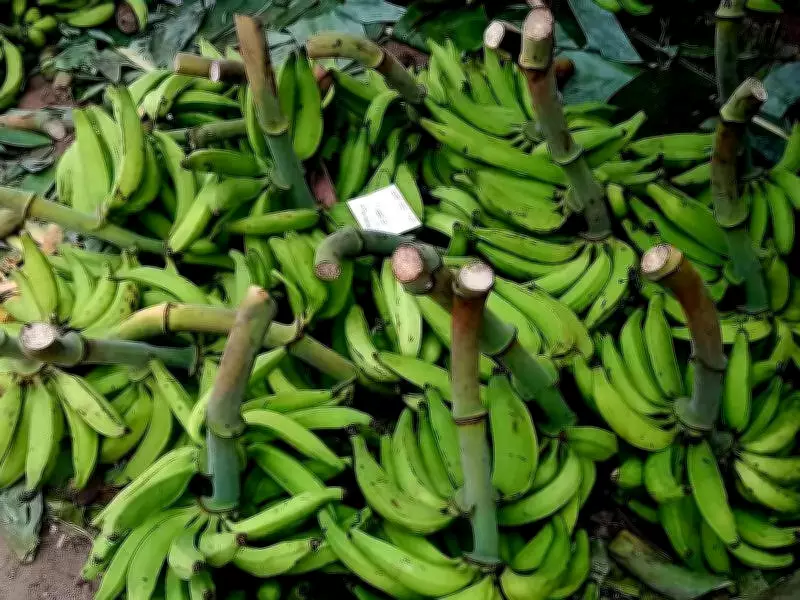
Tamil Nadu Banana Farmers Face Severe Distress as Nendran Prices Crash to 15-Year Low
Farmers across Tamil Nadu are expressing deep distress as the wholesale price of quintal nendran bananas has plummeted dramatically to just ₹5–10 per kilogram. This sharp decline represents a catastrophic drop from last year's prices, which reached up to ₹60 per kilogram. Meanwhile, consumers continue to pay significantly higher retail prices ranging from ₹25 to ₹50 per kilogram, creating a concerning disparity that highlights market inefficiencies.
Extensive Cultivation and Regional Impact
The quintal nendran banana variety, prized for making chips and pazhampori, is cultivated across more than 12,000 acres in Tamil Nadu districts including Coimbatore, Tirupur, Erode, and Trichy. Approximately 6,000–8,000 acres of this cultivation are concentrated specifically in Coimbatore and Tirupur districts. According to S Muthukrishnan, a farmer from Bhavanisagar in Erode district, the current price of around ₹7 per kilogram represents a drastic fall from previous highs.
"While the quintal nendran variety fetched prices of up to ₹60 per kilogram last year, the price has now fallen drastically to around ₹7 per kilogram this year," Muthukrishnan stated, capturing the severity of the situation facing agricultural communities.

Agricultural Shift and Market Consequences
In the irrigated belt stretching from Mettupalayam in Coimbatore district to Bhavanisagar in Erode district, farmers have traditionally cultivated banana varieties such as kathali and sevvazhai. However, over the past year, approximately 80% of cultivation in this region has shifted to the quintal nendran variety. This significant transition was driven by better prices received last year, combined with the crop's advantages of requiring less labor and involving lower production costs compared to other banana varieties.
The resulting increase in cultivation and higher production has now created a supply glut, directly contributing to the steep price fall that threatens farmer livelihoods across the region.
Quality Produce and Market Dynamics
The Bhavanisagar irrigated region produces particularly high-quality nendran bananas that are ideally suited for chips manufacturing, featuring optimal weight and characteristic green coloration. This quality makes the produce highly preferred by traders from Kerala, who rely heavily on bananas from this agricultural belt. The geographical proximity to Kerala further facilitates easier transportation, strengthening this trade relationship.
K Chinnaraj, a private banana mandi operator from the Mettupalayam region, provided historical context: "Quintal nendran bananas are currently being sold in wholesale markets at ₹5 to ₹10 per kilogram, and such a sharp price fall has not been witnessed in the past 15 years."
Multiple Factors Driving Price Collapse
Several interconnected factors have contributed to this unprecedented price crash. The decline in banana consumption during summer months represents one significant element reducing demand. Additionally, Chinnaraj noted that produce is exported to Gulf countries including Dubai, suggesting international market dynamics may also play a role.
Market structure changes have further complicated the situation. The arrival of nendran bananas at traditional mandis has reduced recently as traders increasingly bypass these intermediaries, visiting farms directly to procure produce from farmers. While this might reduce some transaction costs, it appears insufficient to prevent the broader price collapse affecting the entire supply chain.
Retail Perspective and Price Fluctuations
S Karuppaiah, engaged in retail sales of various banana varieties, reported that nendran bananas priced at ₹52 per kilogram just two months ago are now being procured in mandis at ₹25–30 per kilogram. He added that he recently sold one kilogram of nendran bananas for ₹40, indicating some retail price adjustment but not matching the wholesale collapse.

S Prakash, a chips vendor in Avarampalayam, confirmed similar trends: "Nendran bananas, which were purchased at ₹50 per kilogram two months ago, are being bought at around ₹25 per kilogram over the past four days." He further noted that nendran banana prices have experienced significant fluctuations over the past eight months, suggesting this crisis has been building gradually rather than occurring suddenly.
The widening gap between collapsing wholesale prices and relatively stable retail prices raises serious questions about market efficiency and equitable distribution of agricultural risks and rewards. As farmers struggle with prices at 15-year lows, the sustainability of quintal nendran cultivation in Tamil Nadu faces unprecedented challenges that demand attention from policymakers and market participants alike.