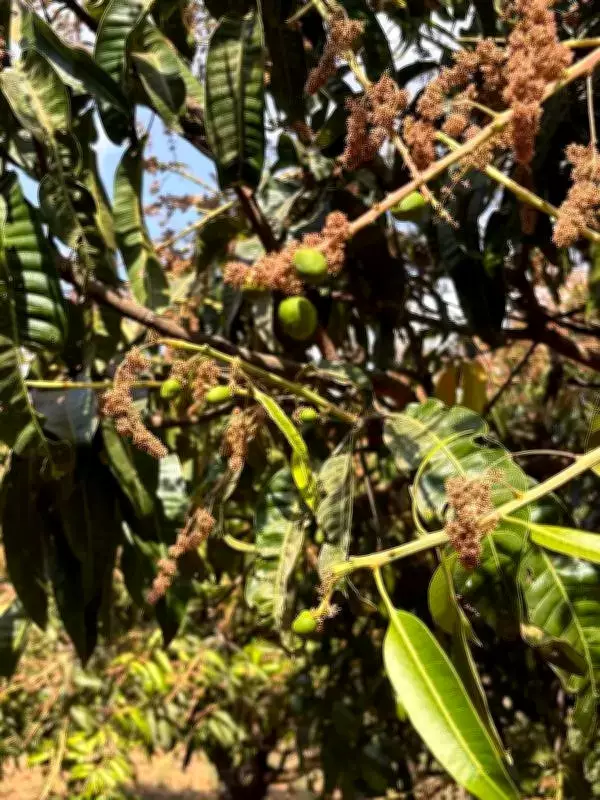
Belagavi's Mango Harvest Faces Major Setback Due to Adverse Weather Conditions
Mango orchards across Belagavi district in Karnataka experienced extensive flowering this season, initially raising growers' hopes for a record-breaking harvest. However, those expectations have been severely dampened as a significant portion of the blossoms withered over the past month, threatening the district's mango production.
Significant Reduction in Expected Yield
Mango cultivation spans approximately 3,100 hectares in Belagavi district, with the prized Alphonso variety dominating nearly 85–90% of the cultivated area. Horticulture officials now estimate that only 40–50% of the flowers will mature into fruit based on current fruit set observations. This represents a substantial reduction from initial projections following the abundant flowering.
Weather Patterns Blamed for Flower Drop
Progressive farmer Rajesh Savalekar from Khanapur identified two key weather factors contributing to the poor fruit set. "Poor pollination occurred due to unusually low temperatures during December and January," he explained. "Subsequently, unseasonal fog and drizzle over the last 15–20 days caused large-scale flower drop, further diminishing our prospects for a good yield."

Ajit Shirgapur, a farmer from Kittur, echoed these concerns, stating that unseasonal rains and persistent fog have resulted in widespread flower shedding. "This year, the trees bloomed beyond our expectations, but adverse weather conditions completely dashed our hopes for an exceptional crop," he lamented.
Varietal Impact and Cultivation Distribution
While Alphonso trees have been hardest hit by the weather-related flower drop, other varieties including Kesar, Mallika, Ratnagiri, Totapuri and Neelam may still produce around 40–50% of their expected yield according to farmer estimates. Savalekar noted that remaining flowers of Kesar and Neelam varieties could potentially yield up to half of what was originally anticipated.
The area under mango cultivation has expanded across several taluks in recent years. Khanapur taluk leads with 1,400 hectares dedicated to mango farming, followed by Channamma Kittur (875 hectares), Belagavi (414 hectares), Bailhongal and Savadatti (80 hectares each), and Athani (65 hectares). Mudalagi has only three hectares under cultivation.
Market Demand Remains Strong Despite Challenges
Despite the production challenges, Belagavi mangoes continue to enjoy robust demand in local markets and neighboring regions including Goa and Maharashtra. Traders anticipate that business will improve if weather conditions become more favorable in the coming weeks, though farmers now estimate that less than half of the trees have successfully set fruit.
Expert Recommendations for Recovery
Mahantesh Murgod, deputy director of the horticulture department, explained the scientific basis for the crop damage. "Cloudy, moist or rainy weather increases flower drop and reduces yield potential significantly," he stated. "If conditions improve, some recovery may still be possible."
Murgod emphasized the importance of implementing proper pest and disease control measures alongside appropriate nutrient management to ensure good-quality fruit from the remaining crop. These interventions could help maximize whatever yield survives the challenging weather conditions.
The situation highlights the vulnerability of agricultural production to climate variability, with Belagavi's mango growers now hoping for improved weather patterns to salvage what remains of their season's potential harvest.