

Mumbai-Ahmedabad Bullet Train Project Advances with Second TBM Assembly
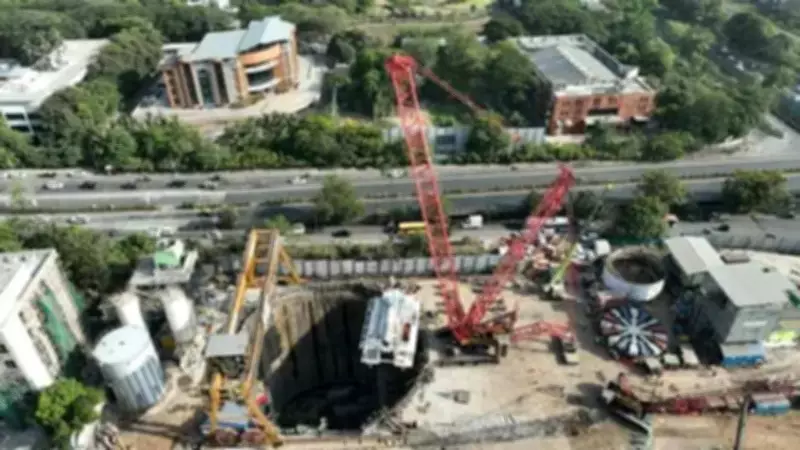
The ambitious Mumbai–Ahmedabad Bullet Train project has reached another crucial phase with the assembly of the second tunnel boring machine (TBM) at Sawli near Ghansoli. This development follows closely after the assembly of the first TBM began at Vikhroli just two days earlier, marking significant progress for India's flagship high-speed rail initiative.
Underground Excavation Timeline and Technical Specifications
Tunnel boring operations for the project's extensive underground section are scheduled to commence in July 2026. The second TBM is currently being assembled at the Sawli shaft, positioned 39 metres below ground level. From this strategic location, it will begin tunneling toward Vikhroli as part of the comprehensive excavation plan.
On Friday, project engineers successfully lowered a massive 190-metric-tonne gantry into the Sawli shaft. This substantial structure measures 18 metres in length, 10 metres in width, and 9 metres in height, representing a critical component of the TBM assembly process. Meanwhile, at the Vikhroli site, assembly of the first TBM began on Wednesday with the lowering of one of six main shield segments weighing approximately 170 metric tonnes to a depth of 56 metres – equivalent to the height of a 20-storey building.

Comprehensive Tunnel Network and Construction Methodology
The two advanced TBMs will excavate a 16-kilometer tunnel stretch between Bandra Kurla Complex (BKC) and Sawli. This section forms part of the larger 21-kilometer underground alignment between BKC and Shilphata, which notably includes India's pioneering 7-kilometer undersea rail tunnel beneath Thane Creek.
Of the total underground alignment, 5 kilometers have already been completed using the New Austrian Tunneling Method (NATM). The remaining 16 kilometers will be executed using the sophisticated tunnel boring machines, representing a shift in construction methodology for the more complex sections.
Engineering Marvel: Tunnel Design and Operational Capabilities
The single-tube tunnel boasts an impressive diameter of 13.1 metres, specifically designed to accommodate twin tracks for high-speed operations. It will run at varying depths ranging from 25 metres to 57 metres below ground level, with the deepest point reaching 114 metres beneath Parsik Hill.
These state-of-the-art machines can operate at a maximum cutterhead speed of 4 revolutions per minute, with an excavation rate reaching up to 49 millimetres per minute. This controlled progress ensures high safety standards throughout the tunneling process, particularly important given the complex urban and geological conditions.
Strategic Shaft Placement and Machine Specifications
Three primary shafts have been constructed specifically for the tunneling operations: a retrieval shaft at BKC and launch shafts at both Vikhroli and Sawli. According to the project plan, TBM-1 will advance from Vikhroli toward BKC, while TBM-2 will progress from Sawli toward Vikhroli, creating a coordinated excavation approach.
The TBMs themselves represent engineering marvels, weighing 3,080 tonnes and 3,184 tonnes respectively. They employ advanced Mix Shield/Slurry technology specifically designed for the complex geological conditions encountered along the route. Each machine extends 95.32 metres in length with a substantial cutterhead diameter of 13.6 metres.
Project Timeline and Safety Measures
Project officials have indicated that the main tunneling drive is expected to begin in October 2026. Extensive monitoring instruments are being deployed throughout the excavation process to ensure safe operations and protect nearby structures from potential impacts.
This milestone represents significant progress toward completing India's first bullet train corridor, which will dramatically reduce travel time between Mumbai and Ahmedabad while establishing new benchmarks for high-speed rail infrastructure in the country.






