Byadagi: A Town Seasoned by the Chilli Trade
For generations, Byadagi in Karnataka has built its identity around the chilli trade, sustaining farmers, traders, commission agents, labourers, transporters, spice manufacturers and thousands of other people. The town, known as Asia's largest chilli market, is home to the Byadagi Agricultural Produce Market Committee (APMC), which handles vast quantities of red chillies daily.
The Heart of the Trade: Byadagi APMC
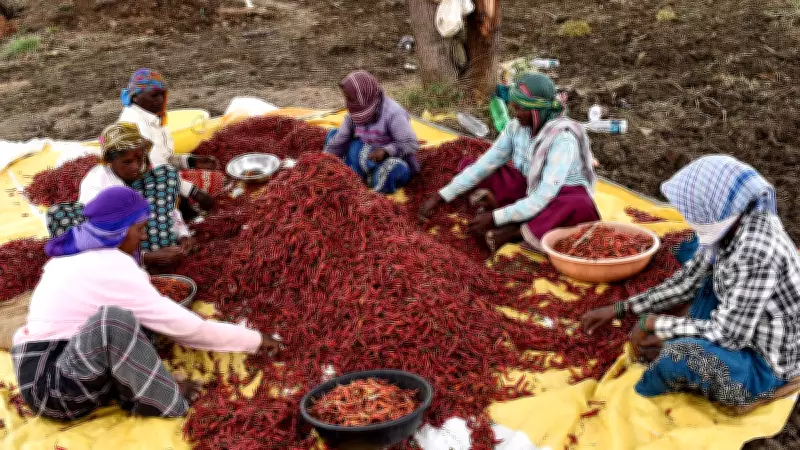
An aerial view of the Byadagi chilli market reveals sprawling grounds covered with drying chillies, a sight that defines the town's economy. Labourers work tirelessly sorting, grading and packing the chillies, which are then dispatched across India and abroad. According to local traders, the market processes thousands of tonnes of chillies each year, with the Byadagi variety being prized for its deep red colour and mild pungency.
Livelihoods Built on Red Gold
The chilli trade is the lifeblood of Byadagi, supporting a complex ecosystem of stakeholders. Farmers from surrounding regions bring their harvest to the APMC, where commission agents facilitate sales. Transporters move the produce to spice manufacturers and traders, while labourers earn daily wages. As one local trader noted, 'The chilli market is not just a business; it is the identity of our town.' The industry also supports ancillary businesses like gunny bag suppliers and packaging units.

Challenges and Resilience
Despite its success, the Byadagi chilli market faces challenges such as price volatility and climate impacts. However, the community's resilience has kept the trade thriving. The APMC has modernised facilities to improve storage and grading, ensuring that Byadagi chillies maintain their premium status. The town's economy remains deeply intertwined with the spice, making it a unique example of a single-commodity-driven local economy in India.