China's 'Life in Venice' Ghost Town Transforms into Youth Haven
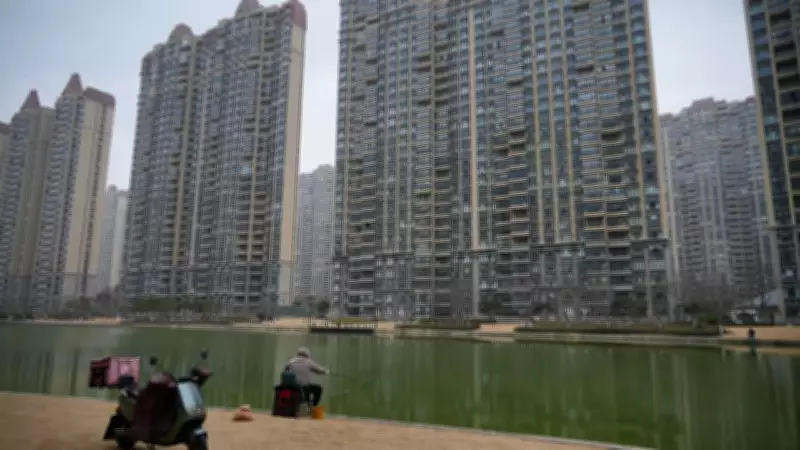
A sprawling multibillion-dollar housing development known as "Life in Venice," constructed as a meticulous replica of the Italian city on China's eastern coast in Jiangsu province, has undergone a remarkable transformation. Once a symbol of luxury and excess, this vast complex featuring thousands of homes now stands predominantly quiet and empty, with many units unfinished or vacant. However, in a surprising turn of events, the area has begun attracting a new demographic: young Chinese citizens searching for a slower-paced and more affordable lifestyle away from the country's frenetic megacities.
The Great Urban Exodus: Economic Pressures Drive Migration
Experts identify a significant and growing trend across China where younger generations are actively leaving expensive metropolitan hubs like Shanghai and Beijing to settle in smaller towns and cities where housing costs and daily expenses are substantially lower. This demographic shift has become increasingly pronounced following the Covid-19 pandemic and amid a broader slowdown in China's national economy. In previous decades, the dominant narrative involved young people migrating to major urban centers in pursuit of superior career prospects and opportunities. Today, that dynamic is reversing as economic growth moderates and job market competition intensifies.
Many large corporations, particularly within China's technology sector, enforce the notoriously demanding "996 work culture," requiring employees to work from 9 a.m. to 9 p.m., six days per week. This grueling and stressful schedule has prompted numerous young professionals to reconsider their priorities, leading some to abandon high-pressure careers in favor of pursuing simpler, more balanced lives elsewhere.

The Rise and Fall of a Luxury Dream
The "Life in Venice" project was originally conceived and developed in the early 2010s by the property giant Evergrande. It was designed as an opulent weekend resort destination catering to affluent residents from nearby Shanghai. However, the development's fortunes changed dramatically following the collapse of China's prolonged property boom and the subsequent bankruptcy of Evergrande in 2024. Housing prices within the complex have plummeted in recent years, mirroring the broader weakness in China's real estate market.
Today, this massive development encompassing approximately 46,000 apartments stands largely deserted. Estimates indicate that less than twenty percent of the homes are currently occupied, with numerous villas remaining incomplete. The streets are lined with empty commercial shops and ubiquitous "For Sale" signs, while abandoned boats sit idle near the project's piers, painting a picture of stalled ambition.
Finding Peace and Affordability in Unlikely Places
Despite the quiet and somewhat eerie surroundings, the few residents who have moved in report that the area offers a notably peaceful and cost-effective lifestyle. Meals at local restaurants can cost less than three dollars, and the neighborhood provides basic conveniences such as grocery stores and small eateries. This affordability is a primary draw for the new wave of inhabitants.
According to Xiang Biao, director of the Max Planck Institute for Social Anthropology in Germany, this trend reflects a fundamental shift in attitudes among China's youth. "People are quitting this competition and the clear upward career track," he observed. "It's a broader trend where individuals are consciously stepping away from the traditional path of intense professional rivalry."
Broader Economic Context and Alternative Destinations
China's economy has indeed decelerated in recent years, recording growth of around five percent in 2025. Concurrently, job opportunities for young people have become increasingly constrained. Official data reveals that by the end of the previous year, 16.5 percent of Chinese citizens aged 16 to 24 who were not enrolled in education were unemployed.
"Life in Venice" is not the only location benefiting from this migration pattern. Another destination attracting new residents is Hegang, a former coal-mining city in northeastern China. As local mines shuttered and the population dwindled, housing prices there collapsed entirely. Today, apartments in Hegang can be purchased for less than the price of a car.

Local realtor Yang Xuewei reported selling over one hundred low-priced apartments to buyers from across China and even some international clients who discovered the city through his online property tours. A modest one-bedroom apartment can cost as little as $3,000, while a spacious four-bedroom home may sell for approximately $13,000.
Economists conclude that the dual pressures of soaring living costs in major cities and diminishing job prospects are compelling young people to fundamentally rethink their futures and lifestyle choices, leading to this quiet but significant demographic redistribution across the country.