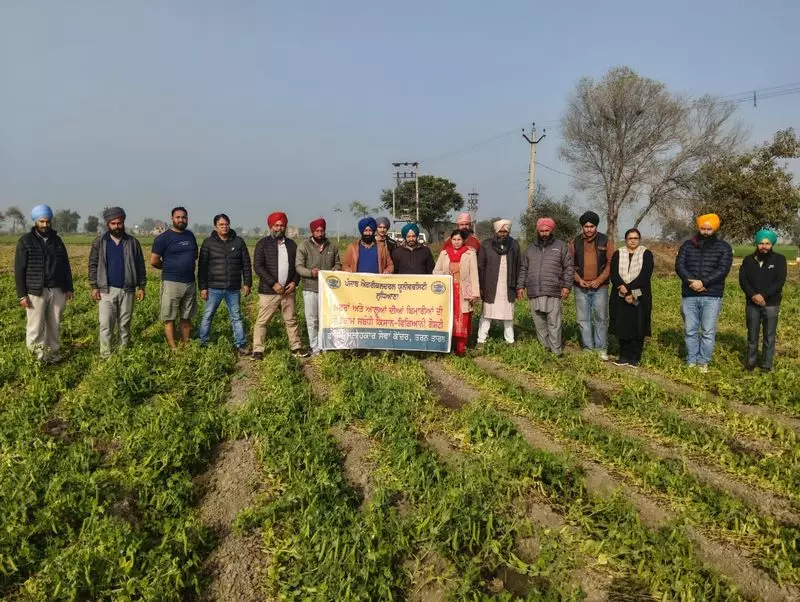
In a significant move to bolster agricultural resilience, scientists from Punjab Agricultural University (PAU) recently convened a workshop with local farmers in Amritsar. The focus was squarely on tackling the persistent and economically damaging diseases affecting two vital crops: peas and potatoes.
Empowering Farmers with Scientific Solutions
The interactive session, held at the Krishi Vigyan Kendra (KVK) in Amritsar, served as a vital bridge between cutting-edge agricultural research and on-ground farming practices. Experts from PAU's Department of Plant Pathology took the lead, providing farmers with detailed, actionable knowledge. The primary goal was to equip cultivators with the tools to identify, manage, and prevent key diseases, thereby securing their yield and livelihood.
Dr. R.K. Gumber, Additional Director of Research at PAU, inaugurated the workshop. He emphasized the critical importance of such direct knowledge-transfer initiatives. Stressing the need for proactive disease management, he guided farmers on the judicious use of chemical pesticides and the growing significance of adopting integrated disease management strategies.

Focus on Pea and Potato Ailments
Dr. Lakhwinder Kaur, a senior plant pathologist from PAU, delivered an in-depth presentation on the specific threats to potato crops. She meticulously detailed the symptoms and control measures for major diseases like late blight, early blight, and black scurf. Farmers received practical advice on fungicide application schedules and cultural practices to mitigate these risks.
Shifting focus to the legume crop, Dr. Amandeep Kaur, another expert from the department, addressed the diseases plaguing pea cultivation. She provided comprehensive insights into managing powdery mildew and rust, two common fungal diseases that can severely impact pea quality and production. Her recommendations covered both chemical and non-chemical intervention methods.
Beyond Theory: Field Visits and Demonstrations
The workshop extended beyond the classroom. To ensure the lessons were firmly grounded in reality, the scientists organized a hands-on field visit. This practical component allowed farmers to observe disease symptoms firsthand in actual crop settings. Experts pointed out the tell-tale signs of various infections on potato and pea plants, enabling farmers to improve their diagnostic skills.
Furthermore, a live demonstration was conducted on the correct methods for preparing and applying fungicidal sprays. This addressed a common gap in farm-level implementation, ensuring that protective measures are both effective and economically efficient.
The event concluded with an extensive question-and-answer session, where farmers clarified doubts specific to their fields. Dr. G.S. Buttar, Associate Director of KVK Amritsar, expressed gratitude to the PAU team and the participating farmers. He reiterated KVK's ongoing commitment to acting as a local hub for disseminating advanced agricultural technologies and knowledge directly to the farming community.
This collaborative workshop underscores a proactive approach to agricultural challenges in Punjab. By directly arming farmers with scientific knowledge on potato and pea disease management, the initiative aims to reduce crop losses, minimize unnecessary pesticide expenditure, and promote sustainable farming practices in the Amritsar region.