The historic handloom sector in Vijayawada is undergoing a remarkable renaissance through the strategic integration of contemporary technology. This quiet revolution is revitalizing an industry that has long grappled with escalating costs, labor shortages, and intense competition from powerlooms. By embracing upgraded looms and semi-automated machinery, weavers are experiencing unprecedented improvements in productivity, economic stability, and working conditions while meticulously preserving their ancestral craftsmanship.
National Handloom Development Programme Drives Transformation
This comprehensive modernization initiative is being implemented under the National Handloom Development Programme (NHDP), with substantial financial backing from the central government. Special Chief Secretary (Textiles and Handlooms) RP Sisodia confirmed that the project will receive significant funding through this scheme. The programme represents a structured approach to sectoral enhancement, providing critical subsidies and support mechanisms to facilitate technological adoption.
Technical Upgrades and Productivity Gains
Handloom units across weaving clusters are now being equipped with advanced accessories and mechanical attachments that dramatically enhance operational efficiency. These technological interventions specifically address traditional limitations without compromising the essential handcrafted nature of the products. While skilled artisans continue to oversee yarn preparation and intricate design work, mechanical support systems now reduce physical exertion and ensure consistent quality standards.

The impact has been quantitatively significant. Previously constrained by labor-intensive processes and physical fatigue, weavers are reporting productivity increases approaching 90% in certain units. This substantial output enhancement translates directly to improved economic outcomes. Artisans who previously generated fabric worth only a few thousand rupees monthly are now significantly scaling their production capacity, resulting in substantially enhanced earnings and financial security.
Youth Engagement and Sectoral Sustainability
Perhaps most promisingly, these technological advancements are successfully attracting younger generations back to the weaving profession. For decades, the sector witnessed declining interest due to perceived low income potential and physically demanding work conditions. The combination of improved machinery, comprehensive training support, and enhanced market access is gradually transforming perceptions, reestablishing handloom weaving as a viable and respectable livelihood option.
Strategic Advantages in Competitive Markets
Industry analysts emphasize that while powerlooms dominate mass production segments, handloom fabrics maintain distinctive identity and premium market value precisely because of their artisanal craftsmanship. The selective integration of technology actually strengthens this uniqueness rather than diluting it. Enhanced processes ensure consistent quality control, reliable delivery timelines, and reduced raw material wastage—all critical factors in contemporary markets.
Economic Efficiency and Market Expansion
Another crucial benefit emerges in cost management. Weavers report meaningful savings in labor expenditures and more efficient yarn utilization, enabling competitive pricing while maintaining fair profit margins. This economic efficiency has unlocked new opportunities in urban domestic markets and international export channels, where consumer demand for authentic, high-quality handloom products continues to grow steadily.
Implementation Framework and Financial Support
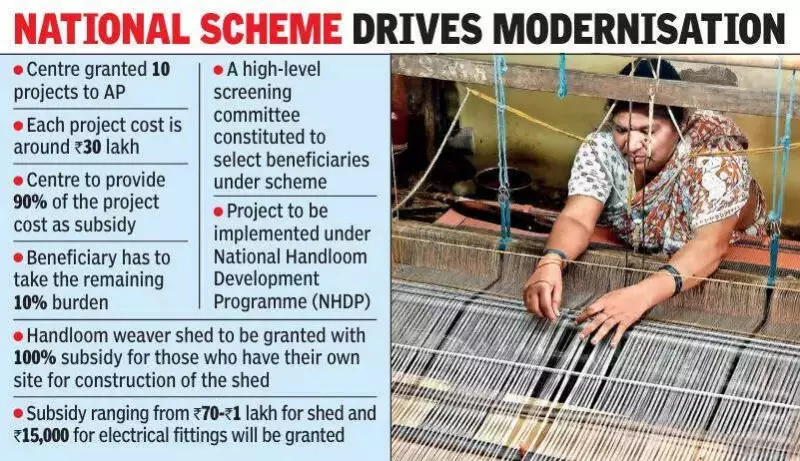
The modernization drive follows a carefully structured implementation model. The central government has granted ten projects specifically to Andhra Pradesh, with each project costing approximately thirty lakh rupees. Notably, the Centre provides ninety percent of project costs as direct subsidy, while beneficiaries assume the remaining ten percent financial responsibility.

A high-level screening committee has been constituted to meticulously select beneficiaries under the scheme. Additional support includes hundred percent subsidies for handloom weaver sheds on owned construction sites, with subsidies ranging from seventy thousand to one lakh rupees for shed construction and fifteen thousand rupees specifically for electrical fittings.
A Sustainable Model for Cultural Preservation
Ultimately, this technological upgrade represents a sustainable revival model for traditional industries. It demonstrates convincingly that heritage crafts need not be replaced by mechanization but can be strengthened through thoughtful, respectful innovation. With continued investment in training programmes, credit accessibility, and marketing infrastructure, this initiative could genuinely mark a historic turning point for thousands of handloom families across the region, ensuring both cultural preservation and economic prosperity.