

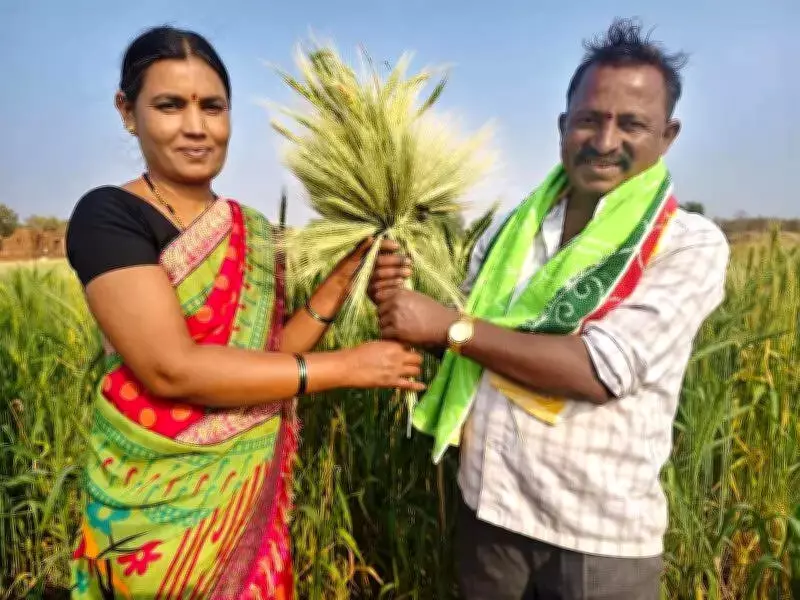
Hubballi Farmer's Indigenous Wheat Cultivation Draws National Interest
Chandrappa Hadimani, a 45-year-old farmer from Malali village located approximately 15 kilometers from Hubballi, has achieved a remarkable agricultural feat by growing 42 distinct indigenous varieties of wheat. His innovative farming project has attracted seed conservationists and progressive farmers from across India, turning his field into a significant destination for agricultural enthusiasts.
Second-Year Success on Expansive Plot
Hadimani informed TOI that this marks the second consecutive year of his successful experiment, conducted on a substantial 30,000-square-foot plot. "I initiated this project during the rabi season because wheat typically thrives in moderate climates and requires minimal water," he explained. "We meticulously collected seeds from diverse regions including Karnataka, Maharashtra, Gujarat, Punjab, Odisha, Assam, and several other states."
Unique Qualities of Indigenous Varieties
The farmer elaborated on the exceptional characteristics of some varieties. "Certain types, like black wheat, possess medicinal properties beneficial for combating severe illnesses such as cancer. Others hold historical significance; for instance, the Amrut variety is connected to the Amruteshwar Temple in Annigeri," he noted.

Historical and Regional Significance:
- The Paigambari variety, originally cultivated during the Sindhu Valley Civilisation, was later revived by Gujarat-based agriculturist Padam Jain, who shared seeds with Hadimani. This variety is now extensively grown in northwest India.
- Varieties such as Kudarat from Varanasi, Mundapeace, and black wheat demonstrate resilience to excessive rainfall due to their shorter stature compared to conventional types.
Guidance from Conservation Organization
Hadimani credited Bengaluru-based organization Sahaja Samruddha for providing crucial guidance in conserving indigenous seeds. "The chapati made from black wheat resembles a ragi rotti! Grains of the 'Garuru' variety, featuring half-foot-long ears, are somewhat thick. The small-eared, long 'Moti wheat' offers more fodder for animals and yields a higher harvest when combined with the 'MR' variety here," he described.
"Additionally, Java wheat, highly popular among North Karnataka residents, is ideal for preparing traditional dishes like upma and payasa," he added, highlighting the culinary versatility of these indigenous strains.
Field Becomes Educational Hub and Festival Site
Hadimani's agricultural plot has evolved into a visiting spot for wheat consumers, hoteliers, agriculture enthusiasts, and scientists. A field festival has been organized on his land for the past two years, fostering community engagement. "Last year, we produced a minimal quantity, but this year we are experiencing a very good yield," Hadimani reported optimistically.
Inspiring Fellow Farmers
Manju Alagavadi, a farmer from Mattigatti who visited the field, shared that after previously growing only one or two varieties, he has now decided to cultivate two additional types to aid in conservation efforts. Similarly, Firoji Lokunde, another farmer who had never cultivated wheat before, has committed to growing Paigambari wheat, inspired by Hadimani's work.
Conservation Mission Against Hybrid Dominance
Krishna Prasad, director of Sahaja Samruddha, emphasized the organization's goal to conserve and promote indigenous varieties that are increasingly overshadowed by hybrid crops. "Since hybrid varieties are linked to health issues among consumers, many are avoiding wheat products. Consuming indigenous wheat in forms like chapati, upma, or payasa offers numerous health benefits," he stated.
"In this way, we are raising awareness among all consumers and encouraging growers. Hadimani is a front-runner in this vital initiative," Prasad concluded, underscoring the broader impact of such agricultural conservation projects on public health and traditional farming practices.






