

Hyderabad Eateries Grapple with Severe Financial Crisis Amid LPG Shortage
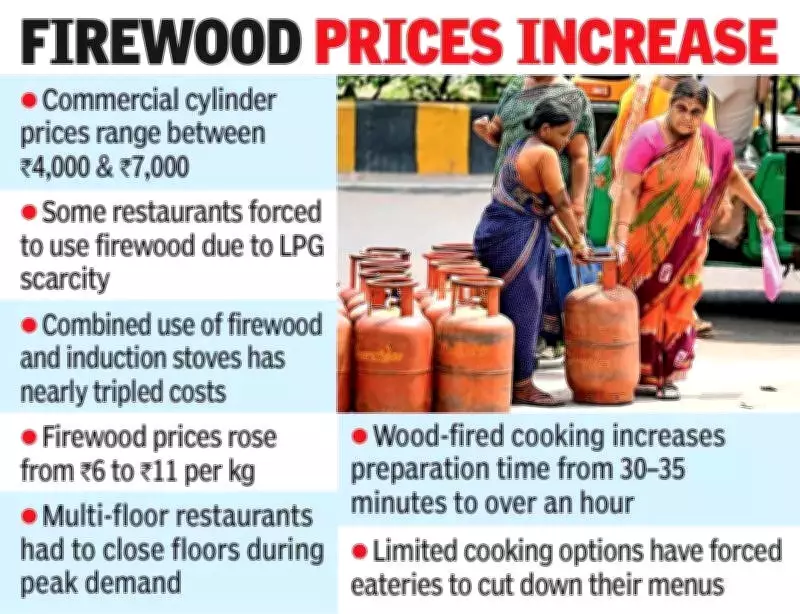
Restaurants across Hyderabad are facing mounting financial pressure as an ongoing LPG shortage continues to disrupt daily operations. Many establishments are reporting significant losses ranging from 40% to 45%, with owners attributing the crisis to skyrocketing commercial LPG cylinder prices that currently fluctuate between ₹4,000 and ₹7,000.
Forced Transition to Alternative Cooking Methods
With the LPG shortage showing no signs of abating, restaurant owners have been compelled to explore alternative cooking methods. N Bharan, who operates a chain of restaurants in the city, revealed the difficult choices facing the industry. "We are left with no choice but to switch to firewood due to the LPG shortage, but this is not a viable long-term solution," he explained. "We are also using induction stoves, but all of this combined has increased input costs nearly threefold."
The transition to firewood has brought its own set of challenges. According to Bharan, "The cost of wood has risen, and we are spending more than we used to on LPG. Despite that, efficiency has declined." He estimates current losses at approximately 30%, with a clearer financial picture expected by month's end.

Soaring Costs and Operational Challenges
The financial impact has been substantial across multiple fronts. Firewood prices have nearly doubled from ₹6 to ₹11 per kilogram. Restaurants typically order about 350 kg at a time, which lasts only four days at a single branch. Meanwhile, LPG prices continue their daily fluctuation between ₹4,000 and ₹7,000 per cylinder.
Bharan detailed the operational consequences: "We operate across multiple floors, but have had to close one. During Eid, and even two days before the festival, two floors remained closed as we could not cater to the surge in customers." He added that losses have now exceeded 40% for many establishments.
Slower Service and Reduced Customer Satisfaction
The shift to wood-fired cooking has significantly impacted food preparation times and customer experience. Restaurant operators report that wood-fired cooking has slowed down food preparation dramatically, leading to longer wait times and reduced table turnover.
An eatery owner from Tolichowki explained the practical implications: "We have already cut down the menu. Food that used to take 30–35 minutes on gas now takes over an hour. Customers are unwilling to wait, and we are losing business due to delays and limited options."
Industry Response and Future Solutions
The National Restaurant Association of India (NRAI), Hyderabad Chapter, is actively exploring alternatives to help the industry cope with the ongoing crisis. Sandeep B, president of the Hyderabad chapter, outlined the current approach: "Restaurants are already using a mix of firewood, induction, LPG, and charcoal. We are now examining the feasibility of shifting to piped gas."
He acknowledged the challenges but suggested a potential path forward: "While it has its own challenges, a hybrid model could help the industry navigate such crises, as the duration of the current situation remains uncertain."
The association's efforts come at a critical time for Hyderabad's restaurant industry, which continues to struggle with unprecedented operational challenges and financial losses stemming from the prolonged LPG shortage and price volatility.






