Brewing Success Abroad: The Global Rise of Indian-Inspired Alcohol Brands
Across continents, from the rainy streets of Dublin to the vibrant cities of North America and Europe, a fascinating trend is emerging. Indian-origin entrepreneurs are creating a new generation of alcoholic beverages that blend their cultural heritage with global brewing techniques. These diaspora founders are not merely importing products from India but are crafting locally-made spirits and beers specifically designed for international palates.
The Irish Connection: Maharani Gin's Journey to Mainstream Shelves
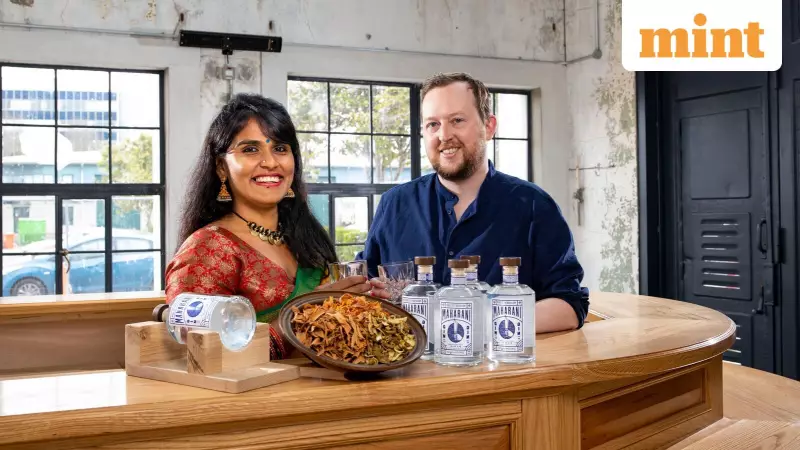
In Dublin, Bhagyalakshmi Barrett experienced a significant milestone when she spotted Maharani Gin on the shelves of Dunnes Stores, one of Ireland's largest supermarket chains. Co-founded with her Irish husband Robert Barrett at Rebel City Distillery, this gin incorporates distinctive South Asian botanicals including Kerala pepper, pomelo, and cassia. The nationwide listing marked a transition from being an "interesting newcomer" to approaching mainstream acceptance.
Dai Bowes, bar manager at The Friary pub in Cork, Ireland, became aware of Maharani Gin during COVID-19 lockdowns through local media coverage. After tasting the product, his establishment decided to list it. Bowes particularly appreciates the gin's smoothness compared to many market alternatives, noting it's "one of the few gins that I would drink just on its own with a bit of ice." He also praises the elegant bottle design that "looks very good on a shelf," though acknowledges that traditional brand loyalists might not immediately gravitate toward this Indian-inspired creation.

Pandemic Innovations: How COVID-19 Sparked Local Brewing Solutions
The global pandemic created unexpected opportunities for diaspora entrepreneurs. In Portland, Maine, brothers Vanit and Sumit Sharma observed firsthand the challenges facing Indian restaurants when imported beers like Kingfisher became unreliable due to supply chain disruptions. Rather than waiting for normalcy, they collaborated with brewmaster Alan Pugsley to create Rupee Beer—a low-carbonation brew incorporating basmati rice specifically designed to complement spicy Indian cuisine.
"If your mouth is on fire," explained Vanit Sharma, "you don't want a gassy beer—carbonated beers enhance your tongue's pain receptors when on fire from a spicy Indian curry." This insight drove their product development, creating a beer that enhances rather than conflicts with flavorful meals.
Similarly, on Canada's west coast, Vivek Taneja identified supply gaps in British Columbia's Indian beer market. As co-founder of Baadshah Beer, he noted that "Indian beer imports were inconsistent even before covid" and "practically vanished" during the pandemic. Launched in October 2022, Baadshah now pours in nearly 100 Indian restaurants across BC, demonstrating how local production can ensure consistent supply and freshness.
Accidental Success: The Jugaad Story of Malayali Beer
Perhaps the most remarkable origin story belongs to Malayali Beer, born from necessity in Warsaw, Poland. Chandramohan Nallur, a teetotaller and vice-president of the Indo-Polish Chamber of Commerce, found himself with a container of rice flakes (poha) after a client backed out due to Russia-Ukraine war uncertainties. Facing mounting storage costs and rejected by pet food companies and health bar manufacturers, Nallur discovered references to rice-flake beer.
What began as an inventory-clearing exercise—distributing 4,000 liters of white-label beer to Indian restaurants—turned into a sustainable business when restaurants began reordering. European diners appreciated the beer's lighter quality with Indian food, avoiding the heavy "burping" sensation associated with gassier lagers. "Women drank it," Nallur observed, "and restaurants asked for more."
Today, Malayali Beer is produced through contract breweries across five European countries and sold in 26 markets. Nallur emphasizes that consumption extends well beyond the diaspora: "Poland has 40 million people; Malayalis are just 5,000. Our consumers are Europeans who love Indian cuisine."

The Restaurant-First Strategy: Building Brands Through Dining Experiences
A common thread unites these diverse brands: restaurant-first distribution. Rupee Beer was developed and tested in dining rooms against actual spicy dishes. Baadshah scaled through restaurant taps before introducing canned products. Malayali Beer moved through Indian kitchens before reaching supermarket shelves. Maharani Gin's discovery engine operates through distillery tours and cocktail menus where consumers encounter Indian spices as part of a craft narrative.
This approach offers multiple advantages. Marketing becomes embedded in the dining experience, with every table serving as a discovery point. Trial is naturally built in as diners sample products alongside meals. Feedback arrives immediately from restaurant owners who quickly drop pairings that don't work. The strategy has proven particularly effective for communities like Malayalis and Punjabis, who have established restaurant networks globally that function as informal distribution infrastructure.
Pricing and Positioning: Finding the Right Market Niche
Strategic pricing has been crucial to these brands' acceptance. Maharani Gin retails at approximately £35 in Ireland, positioning it within the country's craft gin range rather than competing with mass-market labels. Rupee Beer's basmati rice lager is priced at $15.99 for a four-pack in the US, aligning with American craft beer norms. In British Columbia, Baadshah Beer sits at $7-9, comparable to other Canadian craft offerings. Malayali Beer costs roughly double mainstream Polish beers but remains competitive with other Indian-branded imports in Europe.
Traditional Spirits Reimagined: The Arrack Renaissance
Beyond beer and gin, diaspora entrepreneurs are reviving traditional Indian spirits within Western regulatory frameworks. Arrack, one of the subcontinent's oldest distilled beverages, faces legal restrictions across much of India but can be registered, taxed, and marketed in Western markets. Entrepreneurs like John Xavier of London Baron Ltd and Abish Cherian of Oxford Beverage Group have built arrack brands that commercialize what Indian law often treats as "illicit."
Cherian's Mandakini brand draws on centuries-old fermentation traditions, preserving methods that would otherwise remain confined to informal production. "You're not exporting alcohol; you're exporting knowledge—how it's made, how it's consumed," Cherian explains. "If you don't get the process right, branding won't save you. This is a technical product before it is a lifestyle product."
Mandakini, priced at CA$39.95 in Ontario, positions itself alongside premium heritage spirits, while Manavatty arrack maintains mid-premium positioning in both UK and Indian duty-free markets. Cherian notes that Mandakini approached $1 million in business last year after export expansion, emphasizing that "you survive until you do volume" in this challenging sector.
Challenges and Realities: Not Every Venture Succeeds
The path hasn't been smooth for all diaspora alcohol entrepreneurs. In Kraków, Lijo Philip launched Kalikut 1498, a wheat beer inspired by Kerala's spice routes, shortly before the pandemic. With restaurants as the only distribution channel, lockdowns froze logistics and forced the business to shut down in 2021. "Beer is a logistics business," Philip reflected. "When movement stops, everything stops."
The India Paradox: Inspiration Versus Market Reality
Despite drawing inspiration from Indian flavors and traditions, India remains a complicated market for these diaspora brands. Import costs, taxes, and positioning make products like Malayali Beer—priced at ₹480 per can at Kochi International Airport—uncompetitive with mass-market lagers typically priced between ₹150-250. Nevertheless, for founders like Nallur, seeing strangers pick up his product at Indian airports represents a significant "we have arrived" moment.
These India-inspired alcoholic beverages represent early-stage ventures rather than runaway successes, but they demonstrate how cultural heritage can be distilled into globally appealing products. Their creators have shown that Indian flavors can transcend borders when combined with local production, strategic distribution, and understanding of international markets. As these diaspora entrepreneurs continue to blend tradition with innovation, they're not just serving drinks—they're sharing cultural stories in every bottle.