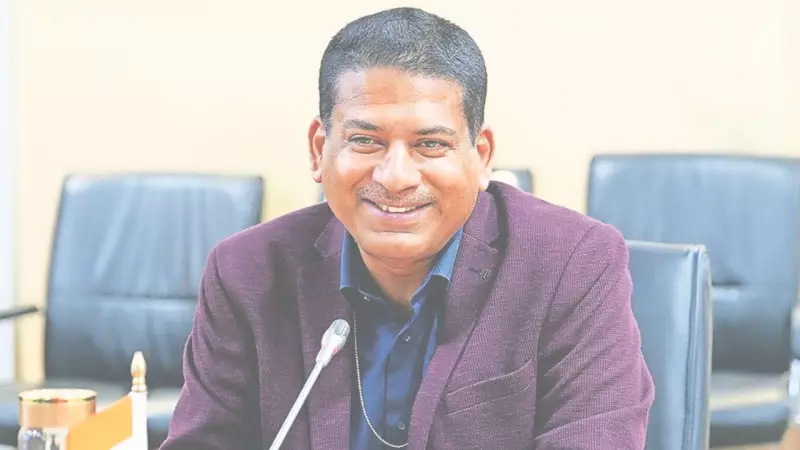
Indian Industry Exploring Diverse Pathways to Meet EU Carbon Tax Requirements
Indian industries are actively pursuing multiple decarbonization strategies to align with European Union carbon tax regulations, according to Santhosh Kumar Sarangi, Secretary of the Ministry of New and Renewable Energy (MNRE). In an exclusive interview, Sarangi emphasized that decarbonization initiatives are essential not only for European market access but also for India's own environmental sustainability goals.
Industry-Specific Decarbonization Approaches
The pathway to compliance varies significantly across different industrial sectors. Steel manufacturers are exploring multiple approaches, with some considering electric arc furnace technology that produces substantially lower emissions and may meet EU standards directly. Other steel producers are investigating green hydrogen integration into their manufacturing processes.
"JSW Steel is establishing a 7,200 tonnes per annum hydrogen production facility adjacent to their Vijayanagara steel plant," Sarangi revealed. "The objective is to decarbonize operations by directly incorporating hydrogen into their production methods."

Aluminum manufacturers, being highly electricity-intensive, are increasingly sourcing renewable energy to reduce their carbon footprint. Similarly, cement producers are adopting various decarbonization techniques, with some experimenting with carbon capture and storage technologies.
Renewable Energy Infrastructure Development
Addressing concerns about renewable energy intermittency for power-intensive industries, Sarangi highlighted significant advancements in energy storage and grid management technologies. Renewable energy systems can now deliver round-the-clock power through integrated combinations of solar, wind, and battery storage solutions.
"With battery prices declining dramatically over the past eighteen months, renewable-based continuous power is becoming increasingly cost-competitive compared to coal-based generation," Sarangi explained.
Recent tenders demonstrate this economic shift:
- SECI discovered tariffs of Rs 3.12 per unit for solar power combined with six hours of storage
- Indian Railways awarded a 1 GW renewable round-the-clock tender at Rs 4.35 per unit including battery storage
- Subsequent SECI bids have ranged between Rs 5.06-5.30 per unit, compared to Rs 6.50-7 for new coal plants
Energy Storage Expansion
Pumped storage projects are gaining momentum, utilizing surplus daytime solar energy to pump water to elevated reservoirs for evening electricity generation during peak demand periods. The Ministry of Power has introduced a viability gap funding scheme that has tendered 43 gigawatts of battery energy storage capacity, signaling rapid deployment of storage infrastructure across India.
Sarangi acknowledged that while India achieved its target of 50% cumulative installed power capacity from non-fossil fuels in June 2025—five years ahead of schedule—thermal power still dominates actual electricity generation at over 70%.
Renewable Integration Challenges and Solutions
"In several months, renewable sources have contributed over 30% of total electricity generation," Sarangi noted. Variable renewables like solar and wind alone provide approximately 14%, increasing to nearly 30% when including hydroelectric and other non-fossil sources.
To enhance renewable integration, India is implementing:
- Advanced battery energy storage systems
- Pumped storage projects
- Grid-supporting technologies including grid-forming inverters
- Synchronous condensers and STATCOMs for reactive power management
"We are optimistic that by 2030, our grid infrastructure will be adequately prepared to accommodate substantially higher renewable energy shares," Sarangi affirmed.
International Solar Alliance Prospects
Regarding the International Solar Alliance (ISA), Sarangi expressed confidence in its future despite the United States' withdrawal announcement. "The ISA's focus remains on countries receiving maximum solar irradiation, particularly across the Middle East and Africa," he stated.

India continues to strengthen cooperation with Middle Eastern and African nations, with the ISA expanding interventions in regions where solar deployment remains limited. Sarangi emphasized that India and like-minded countries will persist in efforts to broaden solar energy adoption regardless of participation changes.
Critical Minerals and Manufacturing Independence
Addressing concerns about China's dominance in rare earth elements, Sarangi clarified that renewable energy projects don't heavily depend on these specialized materials. "Crystalline polysilicon, essential for solar manufacturing, is available globally, though sometimes at slightly higher costs," he explained, suggesting this wouldn't significantly impede domestic manufacturing growth.
Transmission Connectivity Policy Considerations
On proposals requiring signed power purchase agreements as prerequisites for transmission connectivity, Sarangi acknowledged both advantages and challenges. "While prior PPAs provide certainty about power off-take, alternative mechanisms like bank guarantees also ensure serious developer commitment," he remarked, noting substantial financial penalties for defaults that discourage non-serious participants.