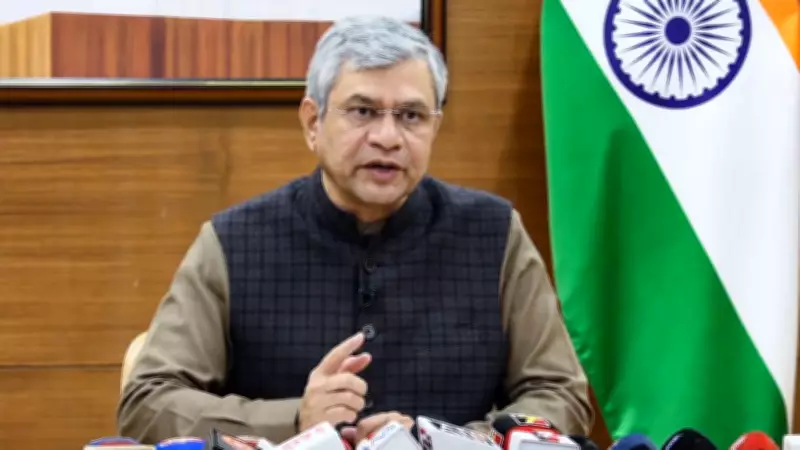
Union Minister for Railways Ashwini Vaishnaw has declared that India is poised to achieve complete self-reliance in the manufacturing of bullet trains, leveraging indigenous technologies for seven newly announced high-speed rail corridors. This ambitious initiative, part of the latest Budget announcements, marks a significant step towards enhancing the nation's infrastructure capabilities and reducing dependency on foreign collaborations.
Expanding the High-Speed Rail Network
In a detailed interview, Vaishnaw outlined the government's vision for the next phase of the bullet train project, which includes corridors such as Mumbai-Pune, Pune-Hyderabad, Hyderabad-Bengaluru, Hyderabad-Chennai, Chennai-Bengaluru, Delhi-Varanasi, and Varanasi-Siliguri. These routes, dubbed "Growth-Connectors," are designed to spur economic development across key regions, similar to the transformative impact seen in Japan's Tokyo-Osaka corridor.
Indigenous Technology and Manufacturing
The Minister emphasized that unlike the Mumbai-Ahmedabad project, which involved collaboration with Japan, the new corridors will utilize homegrown technologies. This includes advancements in track works, viaducts, pillars, foundations, overhead electrical systems, advanced stations, and signaling systems. Vaishnaw confidently stated that Indian Railways has mastered the complexities of high-speed rail systems and is ready to implement these projects independently.

Challenges and State Support
Land acquisition remains a primary hurdle for these projects, but Vaishnaw expressed optimism that all states will rally behind the initiative, recognizing it as a public demand. He highlighted the importance of state cooperation to ensure timely completion, drawing lessons from delays in the first bullet train project due to design changes, the COVID-19 pandemic, and political challenges.
Economic and Strategic Benefits
The new corridors, spanning approximately 4,000 kilometers with an estimated investment of Rs 16 lakh crore, are expected to boost connectivity between major economic hubs like Hyderabad, Chennai, and Bengaluru. Vaishnaw described this network as a "high-speed diamond" that will trigger widespread development along the routes, mirroring the economic activity witnessed in international examples.
Financing and Implementation
While Detailed Project Reports (DPRs) are being prepared, the financing strategy is still under process. The Minister assured that the work will proceed in a focused manner, with projects largely based on earlier DPRs to ensure equitable distribution across the country. He also addressed cost overruns in the initial project, noting that decisions on funding escalations are pending.
Technical Innovations and Self-Reliance
Vaishnaw detailed the critical factors in high-speed train design, including wheel-track interaction, pantograph efficiency, and airtight train construction to manage vacuum effects at speeds over 300 kmph. He revealed that propulsion systems, such as converters and inverters, are already being manufactured in India and exported globally, underscoring the nation's growing expertise.
Future Prospects and Diversification
Beyond passenger trains, the Minister discussed plans for the East-West dedicated freight corridor, aimed at linking industrial hinterlands to ports, and reforms in freight diversification, including e-commerce. Additionally, efforts to enhance passenger travel with new general and sleeper coaches, including Vande Bharat Sleeper trains, are underway to improve services for all income groups.
This comprehensive approach positions India on a path to becoming a global leader in high-speed rail technology, driven by a commitment to self-reliance and sustainable development.