India's Power Sector Embraces Hybrid and Storage Projects Amid Rising Demand
According to a comprehensive report by Nuvama Research, India's power sector is undergoing a significant transformation, with its tendering pipeline now decisively shifting towards hybrid and storage-based projects. This strategic pivot reflects a growing national focus on enhancing energy reliability and seamlessly integrating renewable energy sources into the grid.
Solar Supply Adequacy and Pricing Trends
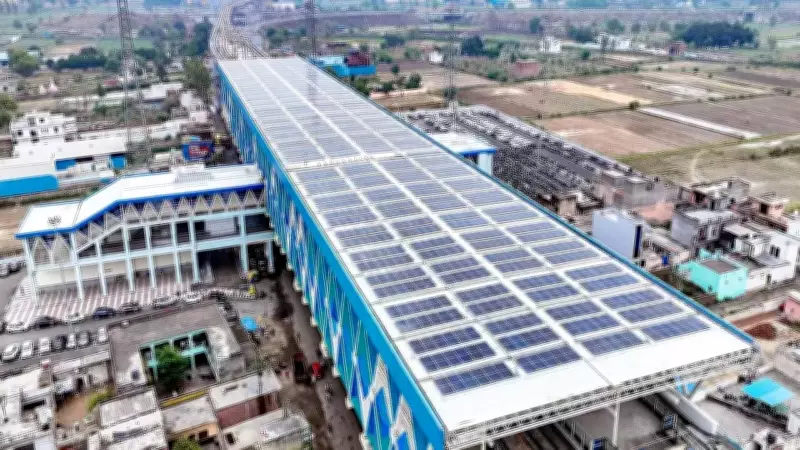
The report provides a detailed analysis of India's current power landscape. It highlights that the country currently maintains an adequate supply of solar power. During solar hours, electricity supply comfortably outpaced demand, resulting in virtually no deficit and indicating robust availability of solar energy. This stable daytime supply was reflected in pricing, with solar-hour electricity prices remaining notably low at Rs 4.3 per kWh in January 2026.
"Solar-hour prices stayed low at INR4.3/kWh in Jan-26. Tendering pipeline is now tilting towards hybrid and storage," the report stated, summarizing the dual trends of affordable solar power and evolving infrastructure priorities.

While solar-hour supply remained strong, the report noted that non-solar-hour supply stayed largely flat, reflecting balanced but steady power availability during evening and night periods.
Robust Growth in Power Demand
Amid these supply-side developments, India's power demand demonstrated continued strength. Aggregate power demand increased by 4.8 per cent year-on-year (YoY) in January 2026, a notable rise despite temperatures being similar to the same period last year.
"Demand pickup drives optimism...India's power demand increased 4.8% YoY," the report emphasized, pointing to sustained growth in electricity consumption across the nation.
Peak power demand also saw an increase during the month, rising by approximately 3 per cent YoY to reach around 245 GW in January 2026, compared to about 237 GW in January 2025. This upward trend underscores higher electricity usage and growing energy requirements across industrial, commercial, and residential sectors.
Thermal Generation Stability and Trading Activity
The report further examined the performance of conventional power sources. Thermal power plant utilization remained stable, with the all-India thermal plant load factor (PLF) recorded at 67.7 per cent in January 2026, compared to 68.8 per cent in January 2025. This indicates consistent and reliable use of existing thermal generation capacity.
Electricity trading activity witnessed significant expansion, reflecting a more dynamic power market. Volumes on the Indian Energy Exchange (IEX) rose by around 19.6 per cent YoY in January 2026. This growth was strongly supported by a surge of 52.8 per cent YoY in the Real-Time Market (RTM), highlighting increased market participation and flexibility.
However, the total volume growth was moderated to 4.9 per cent YoY due to a 13 per cent decline in Renewable Energy Certificate (REC) volumes, pointing to shifting dynamics within green energy trading mechanisms.
Strategic Shift Towards Grid Stability
The report concludes by underscoring the strategic intent behind the sector's shift. The move towards hybrid and storage-based projects is fundamentally aimed at improving grid stability and ensuring a reliable power supply as India continues to expand its renewable energy capacity. This evolution is critical for managing the intermittent nature of sources like solar and wind, thereby supporting the country's long-term energy security and sustainability goals.