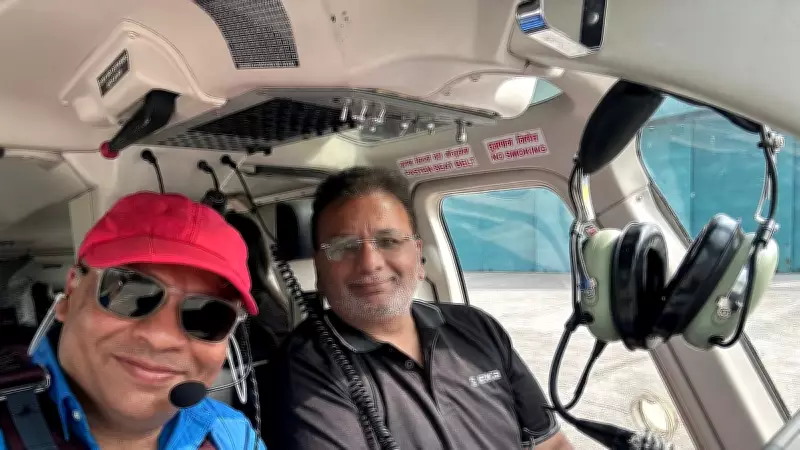
A prominent industrialist was forced to take a helicopter after being stuck for a grueling eight hours on the Mumbai-Pune Expressway, underscoring the severe traffic congestion plaguing one of Maharashtra's busiest highways. The incident, which occurred on February 4, 2026, has sparked widespread discussion about the need for better emergency planning and infrastructure on India's expressways.
Massive Traffic Jam Strands Thousands
The industrialist, identified as Dr. Sudhir Mehta, shared his harrowing experience on social media platform X (formerly Twitter). He posted aerial photographs from the helicopter, revealing a massive traffic jam stretching for kilometers on the expressway. According to his posts, the gridlock was caused by a single gas tanker incident, which led to thousands of vehicles being immobilized for up to 18 hours.
Calls for Emergency Infrastructure Improvements
In his social media posts, Dr. Mehta emphasized the urgent need for better planning to handle such emergencies. He suggested that expressways should have designated exit points at various intervals that can be opened to allow vehicles to turn back during prolonged stoppages. Additionally, he highlighted the relatively low cost of constructing helipads, noting that they can be built for less than Rs 10 lakhs, which could provide critical evacuation options in similar situations.

The industrialist's experience has resonated with many commuters who regularly use the Mumbai-Pune Expressway, a vital corridor connecting two of India's major economic hubs. The incident raises questions about the preparedness of authorities to manage disruptions on high-traffic routes, especially given the increasing vehicular density in the region.
Broader Implications for Maharashtra's Transport Network
This event highlights ongoing challenges in Maharashtra's transport infrastructure, where rapid urbanization and economic growth have outpaced the development of robust emergency response mechanisms. Experts argue that such gridlocks not only cause inconvenience but also lead to significant economic losses due to delayed shipments and productivity impacts.
As discussions continue, stakeholders are calling for a comprehensive review of expressway safety protocols, including the integration of technology for real-time traffic management and the establishment of more frequent emergency exits. The use of a helicopter in this case, while an extreme measure, serves as a stark reminder of the vulnerabilities in current systems and the need for innovative solutions to ensure smoother and safer travel on India's highways.