Culinary Careers Have Transformed Beyond the Stove
Today's chef may run a luxury hotel group's food operations, develop products for a food company, open their own restaurant, manage airline catering, or work in a research kitchen creating new dishes. Cooking is where the career begins but rarely where it ends. Institutions like Chitkara University in Chandigarh have built their culinary education around this wider reality.
Every Great Chef Learns Two Languages
The first language is knife skills, heat, timing, seasoning, and the feel of dough. It takes years to master. The second language is business: food costing, menu engineering, supply chains, wastage, rostering a team, and understanding why a dish that everyone loves is quietly losing money. A cook who speaks only the first language will always work for someone who speaks both. It is telling that the degree for the international culinary pathway is a Bachelor of Commerce, not a Bachelor of Arts or Science.
The Chef Is No Longer Just at the Back of the Restaurant
Many Indian families question whether cooking is a serious profession. That question has been overtaken by events. Chefs today run businesses, build brands, appear on national television, publish, consult, and are courted by hotel groups like senior executives. The food industry is one of the few fields where craft and enterprise sit in the same person.

India's Food Industry Needs More Than Skilled Cooks
Eating out in India has transformed in a decade: hotel groups expanding into smaller cities, international restaurant brands arriving, cloud kitchens, food halls, coffee chains, patisseries, airline catering, cruise lines, corporate dining, hospital and campus food services. Every one of these needs people who can cook and also cost, plan, and lead. The industry's biggest shortage is not cooks but people prepared to manage modern food businesses.
What Serious Culinary Training Actually Looks Like
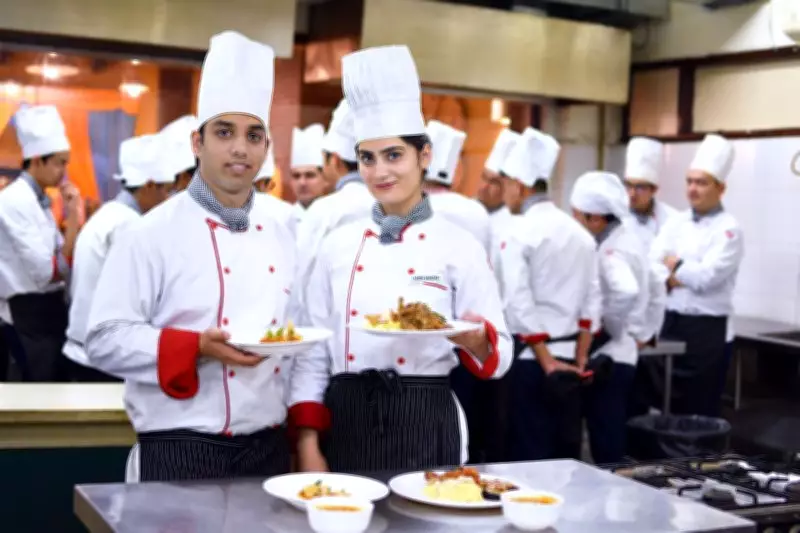
At Chitkara College of Hospitality Management, culinary programmes are built around professional kitchens and real operations. The B.Sc in Culinary Arts trains students across cuisines and techniques. The B.Sc in Culinary Arts with specialisation in Bakery and Pastry Art Management focuses on the chemistry of baking. The B.Sc in Hospitality Administration covers rooms, food and beverage, sales, and operations. Internships with Indian hotel groups including Taj, Oberoi, and ITC put students inside working kitchens. Bakery and confectionery labs and restaurant simulation spaces on campus let them make mistakes safely. Guest chefs bring current industry practice into the classroom.
Two Years in Chandigarh, Two Years in Toronto
The B.Sc in Culinary Management with George Brown Polytechnic lets students spend the first two years at Chitkara University and then transfer with full credit into the Honours Bachelor of Commerce in Culinary Management at George Brown in downtown Toronto. The Indian years build technique, grounding in Indian cuisine, and internships. George Brown's Chef School is one of Canada's leading culinary institutions, running a working restaurant, The Chefs' House. The two-year split reduces the overall cost of an international culinary degree substantially, and students receive a conditional offer from George Brown at the outset.
Where the Career Actually Goes
Graduates move into roles as chefs and sous chefs, food and beverage management, culinary research and development, bakery and patisserie ownership, restaurant consulting, food product development, catering and events, cruise and airline food services, and their own businesses. The underlying skills—execution under pressure, cost discipline, managing people, understanding a customer—hold value across all settings. The old image of the chef alone at a stove has been replaced by a kitchen that is a business, a brand, a supply chain, and a team anywhere in the world. The first language gets you hired; the second decides how far you go.

Disclaimer: The content above is presented for informational purposes as a paid advertisement. The Tribune does not take responsibility for the accuracy, validity, or reliability of the claims, offers, or information provided by the advertiser. Readers are advised to conduct their own independent research and exercise due diligence before making any decisions based on its contents.