

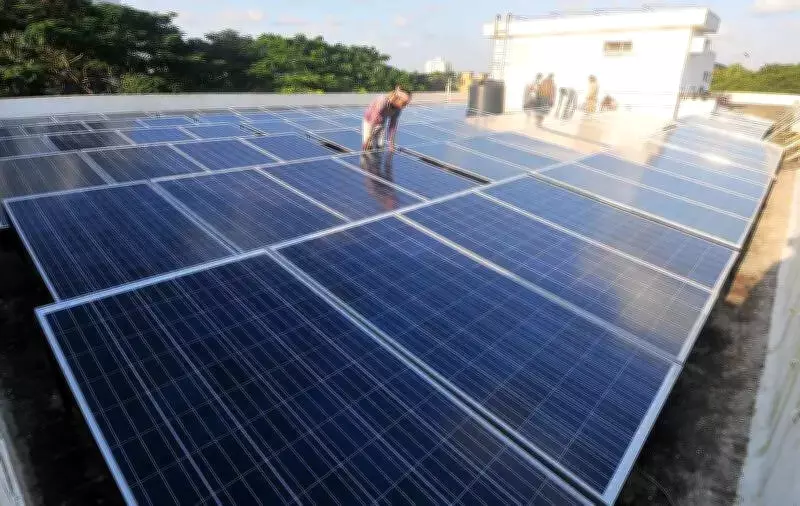
Kochi's Solar Power Surge Overwhelms KSEB Grid Infrastructure
In Kochi, a growing number of consumers are turning to solar energy to slash their electricity bills, but a critical bottleneck has emerged. New applicants in the city are finding themselves unable to connect their recently installed solar panels to the utility grid. The root cause lies in the Kerala State Electricity Board's (KSEB) transformers, which have reached their saturation point at multiple locations across Kochi.
Transformer Capacity Crisis Halts Solar Connections
According to KSEB officials, the capacity of transformers in many areas has maxed out, making it technically unfeasible to integrate new solar installations into the grid. "As per norms, solar panels can have grid connectivity up to 90% of transformers' capacity in a particular area. If connections exceed the limit, then that will result in the failure of transformers," explained a board official overseeing solar power in Kochi. This saturation poses a direct threat to the reliability of the electrical infrastructure, forcing KSEB to halt new connections until upgrades are implemented.
KSEB's Infrastructure Investment and Storage Initiatives
To address this gridlock, KSEB must undertake significant investments to augment its infrastructure. The board has already initiated steps to deploy Battery Energy Storage System (BESS) facilities statewide. A 250-megawatt BESS has been installed in Kannur, with similar projects planned for Ernakulam and other districts. However, officials caution that these isolated storage solutions alone cannot resolve the overarching issue of transformer overload.

"Consumers who generate solar power don't use much electricity during daytime and a significant percentage of it is supplied to KSEB's grid. The only solution is that consumers set up their own storage facilities and also take steps to use as much power as possible during daytime," the KSEB official added. This highlights a dual approach: encouraging personal storage and shifting consumption patterns to alleviate grid stress.
Impact on Solar Installations and Industry Insights
Kochi, which contributes approximately 20% of Kerala's total solar energy, is witnessing a noticeable slowdown in solar panel installations. While KSEB acknowledges this decline, it has not disclosed specific numbers or percentages. Industry estimates, however, suggest a drop of around 20% in recent months.
"In the past few months, there has been a sustaining dip in solar panel installations. The major issue is inadequacy of KSEB's infrastructure. In Kochi city, the board is not allowing solar panels to connect to its grid as transformer capacity has reached a saturation point," stated Georgekutty Kariyanippilly, founder secretary of the Kerala Renewable Energy Entrepreneurs and Promoters Association. He noted that most consumers prefer grid connectivity over procuring BESS due to the added cost, further complicating adoption.
Daytime Power Consumption: A Proposed Solution
In response, KSEB is actively advising consumers, particularly those with solar panels, to maximize electricity usage during daylight hours. "Power consumption is low during daytime because most people are away from their homes for jobs or other purposes. There are modern devices to control the use of household appliances like washing machines remotely. So, the consumers can switch on and switch off such appliances while they are away from home. Using electricity during daytime will help resolve overloading of our installations," a KSEB official elaborated. This strategy aims to balance supply and demand, reducing the strain on transformers.
The situation underscores a broader challenge in renewable energy integration: infrastructure must evolve in tandem with adoption. As Kochi's solar aspirations clash with grid limitations, collaborative efforts between KSEB and consumers will be crucial to sustaining the city's green energy momentum.






