Winter Chill Wreaks Havoc on Maharashtra's Tur Dal Production
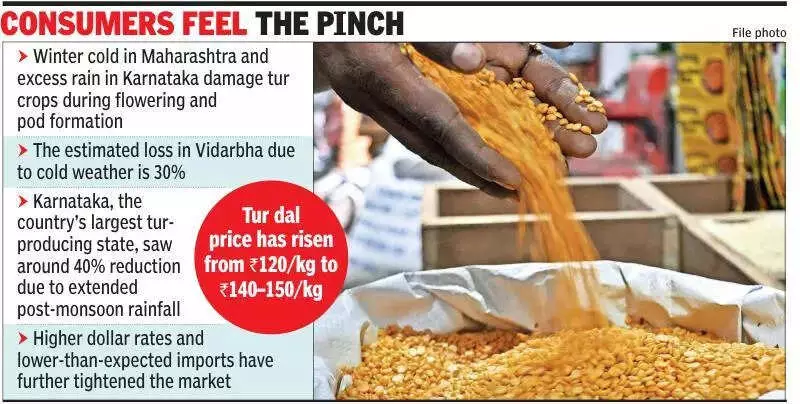
A severe winter spell during the critical flowering period has significantly impacted tur (pigeon pea) production across Maharashtra, triggering a sharp price increase and raising concerns about further escalation in the coming weeks. The unseasonal cold has created a perfect storm for one of India's staple pulses, with ripple effects being felt across wholesale and retail markets.
Price Surge Already Evident in Markets
Retail prices for tur dal have already witnessed a substantial jump of approximately Rs 10 per kilogram, climbing from Rs 120 to Rs 130. Market experts warn that this volatility is likely to continue due to reduced market arrivals and weakened production across major growing regions. The situation appears particularly concerning as harvesting has commenced, revealing production levels visibly below normal expectations.
Farmers Report Significant Crop Losses
Farmers in Vidarbha region have reported that the crop suffered most severely during December, when unusually low temperatures coincided with the crucial flowering and pod formation stages. "The cold weather substantially reduced yields since tur is highly sensitive to low temperatures," explained Milind Pachpande, a farmer from Vidarbha.

Pachpande elaborated on the extent of damage, noting that "overall, there is around 30% crop loss, with variations across different regions depending on the severity of the cold spell." This production shortfall has already manifested in wholesale markets, where tur prices have surged from approximately Rs 6,000 per quintal to Rs 8,000 per quintal.
Supply Pressure Extends Beyond Maharashtra
The production challenges are not confined to Maharashtra alone. Karnataka, India's largest tur-producing state, has also recorded a dramatic decline in output due to excessive and untimely rainfall. "Prices have increased because production is down significantly," stated Amit Kasat, a Pune-based grain broker.
Kasat detailed the situation in Karnataka, explaining that "output is about 60% of normal levels, meaning a 40% loss, primarily due to extended rainfall continuing even after the monsoon season. Excessive precipitation after sowing damages the crop as the soil absorbs too much water."
Combined Impact of Multiple Factors
Initial expectations for Vidarbha's crop have been dashed by the cold weather. "Earlier, we anticipated Vidarbha would deliver 100% output, but farmers are now reporting weak crops there as well due to the cold," Kasat added. He estimated an average 25% production shortfall when combining the impacts in Karnataka and Vidarbha.
Additional market pressures are exacerbating the situation. Kasat pointed to "higher dollar exchange rates and lower-than-expected imports" that have further tightened market supply. "Imports have become more expensive, and the flow isn't as smooth as last year. This is contributing significantly to the price increase," he emphasized.
Retail Market Feeling the Pinch
Bharatlal Unecha, a wholesaler and retailer in Gokhalenagar, confirmed the market shortage, stating simply that "tur dal retail price is increasing due to a shortage in the market."
Pawan Karnavat, a retailer at Nal Stop, provided specific figures: "Wholesale prices have increased by approximately Rs 10 to Rs 15 per kilogram, which has pushed retail prices up by nearly Rs 20 per kilogram. The current retail price now ranges between Rs 140 and Rs 150 per kilogram."
Regarding future trends, Karnavat offered cautious assessment: "Prices could potentially stabilize, but this depends entirely on crop arrivals. Predicting future prices is difficult. If crop arrivals improve, we might see a reversal, though currently the chances appear slim."
The combined impact of weather-related production losses in multiple states, coupled with import challenges and currency fluctuations, has created a complex scenario for India's tur dal market, with consumers likely to face continued price pressures in the near term.