Women Farmers Take Centre Stage at Maharashtra-MSSRF Stakeholder Consultation
The voices of women farmers resonated powerfully at a significant stakeholder consultation organized by the Government of Maharashtra's Department of Agriculture in collaboration with the M.S. Swaminathan Research Foundation (MSSRF). Held on January 23 in Mumbai, this gathering placed the everyday struggles and aspirations of female agricultural workers at the forefront of policy discussions.
Struggles with Recognition and Land Titles
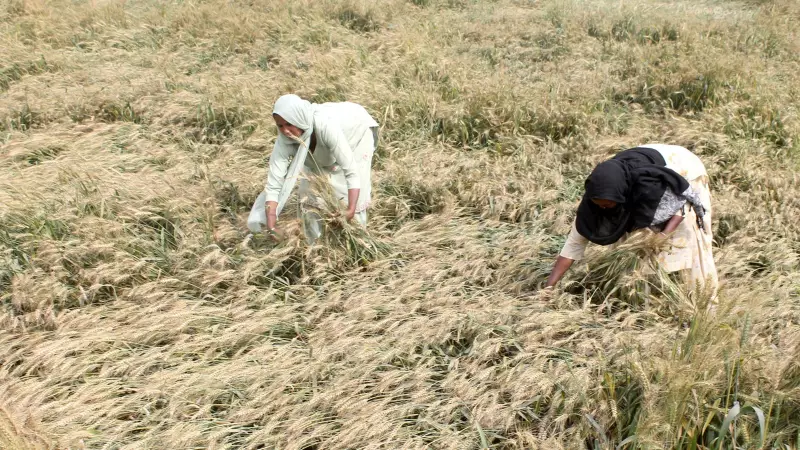
Women farmers from across Maharashtra shared poignant accounts of how the lack of formal recognition as farmers and the absence of land titles in their names create substantial barriers. Dwarkatai Waghmare from Beed expressed a common frustration, stating, "I work as a sugarcane cutter and also cultivate my small, rain-dependent land. But I am neither recognised as a farmer nor as a farm labourer. Because of this, I am unable to access many government schemes."
Vaishali Ghuge from Tuljapur, Dharashiv, echoed this sentiment, highlighting the practical difficulties: "Since the 7/12 land extract is not in my name, I face several difficulties in cultivating my land. Many women face this problem. Women can do much more, but we need recognition and opportunity."

Participants emphasized that this systemic issue severely limits women's access to:
- Credit and institutional loans
- Water resources
- A wide range of government agricultural schemes
High-Level Leadership and Collaborative Efforts
The consultation was chaired by Vikas Rastogi, Additional Chief Secretary of the Agriculture Department, Government of Maharashtra, and Dr. Soumya Swaminathan, Chairperson of MSSRF. Rastogi acknowledged the critical yet overlooked contributions of women, stating, "Women contribute immensely to agriculture in Maharashtra, yet their work remains largely unrecognised."
He detailed ongoing initiatives, noting, "During the 100th birth centenary of Prof. M.S. Swaminathan last year, the Government of Maharashtra declared his birthday as Sustainable Agriculture Day. We have had a series of discussions on the role of women farmers and the need to promote climate-resilient and nutritionally diverse crops since then and have also signed an MoU with MSSRF to strengthen sustainable agriculture, nutrition security, and gender justice across the state."
The event brought together a diverse group of stakeholders, including:
- Civil society organizations working with women in agriculture
- Researchers and policy experts
- Officials from departments of Animal Husbandry, Cooperatives, the Maharashtra State Rural Livelihoods Mission, and the Integrated Child Development Services scheme
Policy Recommendations and Forward-Looking Solutions
A draft policy paper on Women Farmers' Entitlements, jointly prepared by Vidhi Legal Centre and MSSRF, was presented at the consultation. This was followed by in-depth discussions on grassroots challenges and potential policy solutions. Key recommendations from the paper include:
- Adopting the National Policy for Farmers (2007) definition of a farmer based on work performed
- Issuing farmer identity cards to women engaged in agricultural activities
- Creating a comprehensive and updated database of women farmers in Maharashtra
Addressing Climate Challenges and Promoting Biohappiness
Dr. Soumya Swaminathan highlighted the compounded challenges faced by women farmers, noting, "Maharashtra's Chief Minister has been extremely supportive and encouraging of efforts to strengthen the role of women in agriculture. The state has a long legacy of working towards women's empowerment, including in agriculture. However, as women continue to struggle for recognition as farmers, their access to credit, institutional loans, water, and government schemes remains severely constrained. Climate change is further intensifying these challenges, creating a double burden for women farmers who are already navigating systemic barriers."

She referenced Prof. M.S. Swaminathan's concept of Biohappiness, which emphasizes well-being through harmony between ecological sustainability, human health, and social equity. "These conversations are critical to advancing biohappiness through strengthening the role of women farmers, identifying climate-resilient and nutritionally diverse opportunity crops, and other enabling interventions in agricultural systems," she added.
Broad Participation and Official Engagement
The consultation also featured insights from other key officials, including N. Ramaswami, Secretary of the Department of Animal Husbandry, Dairying and Fisheries; Pravin Darade, Principal Secretary of Cooperation and Marketing; and Suraj Mandhare, Commissioner of Agriculture for Maharashtra. Their participation underscored the multi-departmental approach needed to address the complex issues facing women in agriculture.
This stakeholder consultation marks a significant step toward acknowledging and addressing the systemic barriers that prevent women farmers in Maharashtra from fully accessing resources and recognition. By bringing together policymakers, researchers, and the women directly affected, the event has laid groundwork for more inclusive and effective agricultural policies in the state.